Science news and discussion on TalkFuse.
Did poop enable the evolution of complex animals?
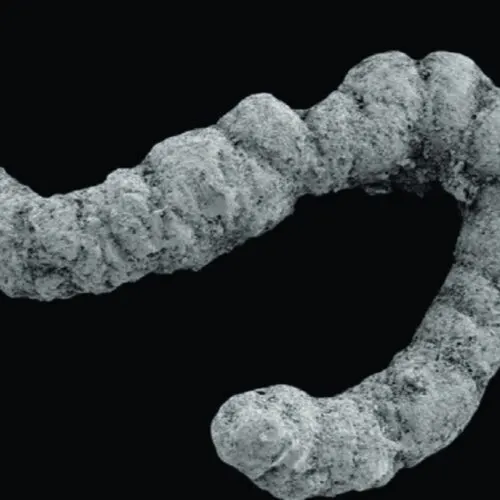
A new study suggests that the evolution of digestive systems and faeces may have helped drive the Cambrian Explosion, when animal life rapidly diversified around 540 million years ago. By carrying nutrients from surface waters to the seafloor, early faecal pellets could have made deeper marine environments more hospitable and supported larger, more varied animal communities.
Researchers Julien Kimming and Russell Bicknell reviewed fossilised digestive systems and Cambrian coprolites, then compared these findings with evidence and simulations of ancient ocean chemistry. They argue that pellets delivered organic carbon, iron, nitrogen and phosphorus to deeper waters, strengthening an early version of today’s oceanic “biological pump”. The evidence is suggestive rather than conclusive, but it offers a possible explanation for how nutrient availability supported increasing Cambrian biomass and diversity.
In short
- Early faeces may have helped fuel Cambrian animal diversification.
- Pellets could have transported vital nutrients into deeper seas.
- The study links digestion, ocean chemistry and evolving ecosystems.
Steelman: both sides, in good faith
The strongest fair case each way — we don't pick a winner.
The case for
This theory offers an elegant mechanism for how nutrient cycling through early digestive systems could have enabled rapid Cambrian diversification by efficiently transferring organic matter and key elements to deeper ocean regions. The fossil evidence of preserved coprolites and digestive systems, combined with simulations of ancient ocean chemistry, provides tangible support for this nutrient-delivery mechanism that would have expanded available ecological niches and supported larger animal populations.
The case against
Whilst the nutrient-cycling mechanism is plausible, attributing the Cambrian Explosion primarily to improved faecal pellet distribution risks oversimplifying a phenomenon with multiple contributing causes. Established factors like gradual ocean oxygenation, the emergence of predation, and innovations in animal body plans and sensory systems were likely far more decisive in enabling rapid diversification, and the incomplete fossil record of coprolites combined with inherently speculative ocean chemistry simulations make it premature to elevate faecal pellets as a primary driver.
Explained simply
The Cambrian Explosion was a period, beginning about 540 million years ago, when animal life in the seas became much more varied. Many animals lived near the seafloor, where the supply of food and nutrients could affect which communities could survive.
A digestive system breaks down food, and faeces can carry some of its nutrients away from where an animal fed. Scientists study ancient digestive traces and fossilised faeces, known as coprolites, to learn how this may have changed life in early oceans.
Researchers Julien Kimming and Russell Bicknell have considered whether these pellets carried nutrients from surface waters down to the seafloor, helping support more animal life there. Their idea may help explain the growth of marine communities, though the evidence does not establish that faeces caused the Cambrian Explosion.