Donald Trump lands in Dublin Airport at start of two-day trip to Ireland amid massive security operation
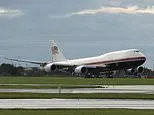
US President Donald Trump has landed at Dublin Airport at the start of a two-day visit to Ireland, prompting one of the largest security operations ever mounted by the Irish police service. The trip includes meetings with Irish President Catherine Connolly and Taoiseach Micheál Martin, alongside engagements in Dublin and at his Doonbeg golf resort, which is hosting the Irish Open. The visit matters both diplomatically, reinforcing US-Irish ties, and politically, as it has drawn significant public backlash and organised protests.
Trump is due to meet Connolly, a longstanding critic of his, at Áras an Uachtaráin before a nearby event with Martin at Farmleigh Estate, followed by a speech at Deerfield, the US ambassador's residence, attended by figures including former taoisigh Bertie Ahern and Enda Kenny, Ryanair's Michael O'Leary and entertainer Michael Flatley. Garda Commissioner Justin Kelly said peaceful protest would be facilitated but warned of "no tolerance" for disorder, with water cannon on standby. Some Dublin residents voiced anger over disruption and Trump's policies, while the visit follows an invitation extended by Martin during a St Patrick's Day meeting at the White House earlier this year.
In short
- Trump begins two-day Ireland visit amid huge security operation.
- He will meet President Connolly and Taoiseach Martin in Dublin.
- Protests planned; trip also includes Irish Open at his Doonbeg resort.
Steelman: both sides, in good faith
The strongest fair case each way — we don't pick a winner.
The case for
Supporters of the visit see it as a natural and valuable exercise in statecraft: Ireland and the United States share deep historical, economic and diplomatic ties, and hosting a sitting US president, however controversial his politics, is part of maintaining that relationship regardless of who occupies the office. They point out that Taoiseach Micheál Martin extended the invitation directly, that engagement keeps channels open on trade and investment that matter enormously to the Irish economy, and that facilitating peaceful protest alongside the visit shows a mature democracy can accommodate both hospitality and dissent without treating one as a betrayal of the other.
The case against
Critics argue that rolling out a state-level welcome, complete with a huge security operation and access for well-connected figures, risks normalising and lending prestige to a president whose policies many Irish citizens find genuinely harmful, and that ordinary Dubliners are being made to bear real disruption and cost for an event they did not choose. They contend that a president's office does not entitle him to insulation from the consequences of his record, that meetings with a long-standing critic like President Connolly can feel like enforced diplomatic theatre rather than genuine dialogue, and that the scale of policing resources diverted for the visit reflects a troubling set of priorities.
Americas Art Celebrity Culture Entertainment Government Politics World