World news and discussion on TalkFuse.
Donald Trump made $15 million from Nvidia shares after Jensen Huang’s return
Developing story first seen 7 hours ago
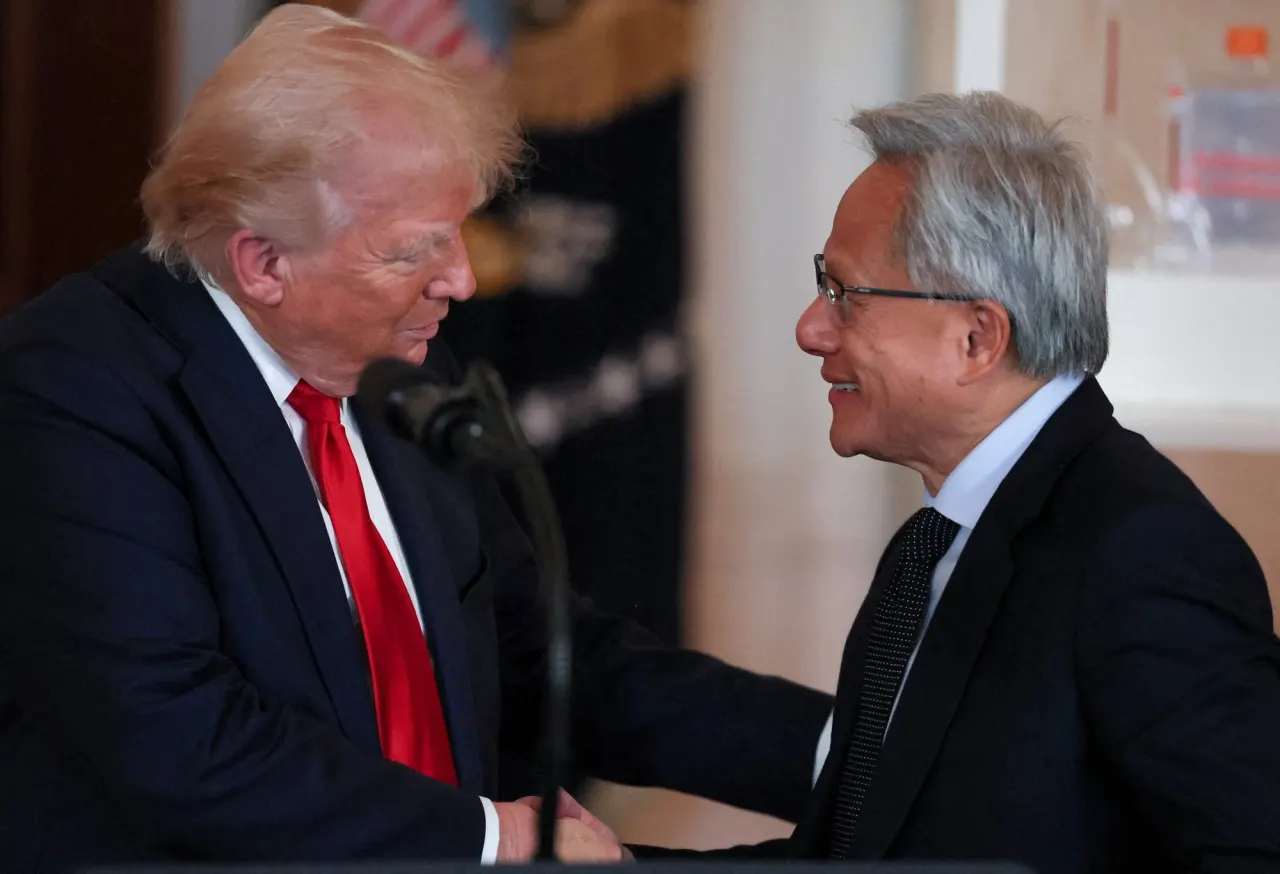
Nvidia shares fell 7 per cent early on Tuesday after reports of Donald Trump’s involvement in Jensen Huang’s reinstatement prompted renewed scrutiny. Trump may have gained about $15 million from the shares’ earlier rise, although his exact financial benefit is unknown; lawmakers have raised concerns about conflicts of interest and national security.
Huang returned as Nvidia’s chief executive on Monday after Trump said he had persuaded the company to reinstate him. Nvidia shares rose 31.5 per cent that day, adding about $950 billion to the company’s value, following a sharp fall around Huang’s departure. The latest available data cited in the article suggests Trump may have held up to 370,000 shares as of 30 September. Huang had stepped down amid reports of alleged links between a former executive and China; Nvidia’s board has begun an independent investigation.
- Sources
- 2
- Outlets
- 2
- Left · Centre · Right
- 0 · 0 · 2
In short
- Nvidia shares fell 7 per cent early Tuesday amid scrutiny of Trump’s role.
- Trump may have gained about $15 million from the earlier share surge.
- Lawmakers questioned potential conflicts of interest and national security.
How this story developed
- 4 hours ago Donald Trump may have gained about $15 million from Nvidia shares after its former chief executive Jensen Huang was reinstated, following Trump’s intervention. The reported financial benefit has prompted criticism from lawmakers over possible conflicts of interest and questions about national security.
- 4 hours ago Nvidia shares fell 7 per cent early on Tuesday after reports of Donald Trump’s involvement in Jensen Huang’s reinstatement prompted renewed scrutiny.
Full account
Donald Trump’s Nvidia holdings may have risen in value by as much as $15 million after the company’s shares jumped when Jensen Huang returned as chief executive. The estimate is based on the latest available financial disclosures, which indicate that Trump may have held up to 370,000 Nvidia shares at the end of September. The actual gain cannot be confirmed from those figures, and the headline amount is a potential paper profit rather than evidence that he sold shares.
Huang left his leadership roles on 12 November amid scrutiny over his relationship with Alice Huang, a former executive at Singapore-based Megaspeed whom US authorities had identified as a potential Chinese spy. Nvidia’s share price had fallen sharply during the preceding period. The board reinstated him on Monday after Trump said he had spoken to directors and helped secure the decision.
Nvidia shares rose about 31.5 per cent on Monday, adding roughly $950 billion to the company’s market value. Trump praised the board’s decision and said the market response showed it was right. He argued that Huang’s leadership mattered to Nvidia and the US economy, while dismissing lawmakers’ national security concerns. The White House said Trump had lobbied the board; reports also said senior Justice Department officials told him there was no evidence Huang had broken the law.
The intervention prompted criticism from lawmakers in both parties, who questioned the national security implications and whether Trump’s financial interests could be affected by his role. Nvidia’s sharp rise also proved volatile: reports cited a further fall in the shares on Tuesday. The episode therefore combined a striking market rebound with unresolved questions about the company’s internal decision-making, the security concerns surrounding Huang, and the president’s involvement.
Where outlets differ
From the full account, which is AI-written from the sources:
Source 1 centres on the possible $15 million increase in Trump’s Nvidia holdings and the political criticism of his intervention, including objections from Democrats and some Republicans. Source 2 focuses more on Trump’s public defence of Huang’s return, his appeal to the market reaction, and the reported White House account of his lobbying and Justice Department advice.
The accounts give slightly different descriptions of the stock rally: Source 1 says 31.5 per cent and roughly $950 billion added, while Source 2 rounds the rise to 31 per cent and nearly $1 trillion. The reported Trump gain is an estimate based on potentially held shares; neither account establishes that he realised the gain by selling.
Steelman: both sides, in good faith
The strongest fair case each way — we don't pick a winner.
The case for
If Trump’s intervention helped restore confidence in Nvidia and contributed to the share-price rise, any gain from shares he held could be an incidental consequence of a decision made for broader policy reasons. The reported figures do not establish his exact holdings, profit, or motive, and the board’s independent investigation may clarify the circumstances around Huang’s departure and return.
The case against
A president’s intervention in a company facing scrutiny over alleged China ties raises legitimate concerns when he may hold a substantial stake in that company. Even without proof of improper intent or a precisely established gain, the appearance that public decisions could affect personal wealth can undermine trust and warrants scrutiny of conflicts of interest and national-security considerations.
Explained simply
Nvidia is a US technology company best known for making chips used in artificial intelligence and computer graphics. Its chief executive, Jensen Huang, has led the company for decades, and its shares can rise or fall sharply as investors react to news about its business and leadership.
Donald Trump is the US president, and his personal investments have drawn scrutiny when they may be affected by government decisions. The reported Nvidia shareholding has led lawmakers to question whether his actions involving the company could create conflicts of interest or raise national security concerns.
Coverage · 2 sources
Bias meters
From 2 rated sources.
Asia Business Companies Government Markets Politics World