World news and discussion on TalkFuse.
Don’t get salty… but this is the white mountain created by Maldon Sea Salt’s German supplier
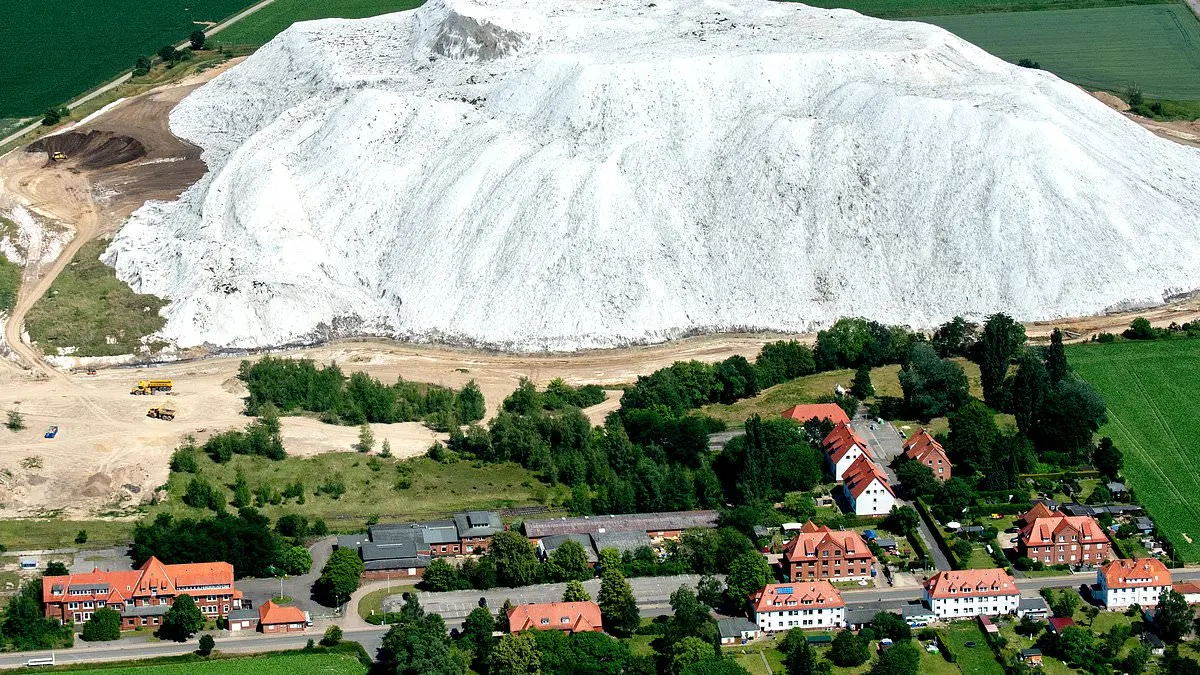
A man-made mountain of salt waste looms over Widdershausen in Germany, where mining company K+S produces potash and salt. The company has also supplied rock salt used in making Maldon Sea Salt, prompting questions about the Essex brand’s claims that its flakes were made solely from seawater.
Maldon says it has long used a “salt-on-salt” method, adding natural rock salt to seawater to enrich it with minerals and help extract crystals with less energy. An investigation found the product now predominantly comprises imported K+S salt. Separately, K+S’s waste salt heaps have raised environmental concerns because rain washes salt into nearby waterways: in 2024, about four million cubic metres of saline water were discharged into the River Werra.
In short
- Maldon Sea Salt uses German-mined rock salt in production.
- The company describes this as a long-established method.
- K+S salt waste heaps raise concerns about river salinity.
Steelman: both sides, in good faith
The strongest fair case each way — we don't pick a winner.
The case for
Maldon’s account is that the rock salt is a processing aid in its longstanding salt-on-salt method, used to enrich seawater with minerals and make crystallisation less energy-intensive. If the finished flakes retain the qualities customers value and the company is transparent about the method, using it could be seen as a practical way to preserve production while reducing energy use.
The case against
Consumers may reasonably understand claims that the flakes are made solely from seawater to mean that seawater is their only salt source; if imported rock salt now makes up most of the product, that description could be materially misleading. The supplier’s saline waste discharges also raise a fair question about whether the sourcing and environmental impacts match the brand’s expectations, and customers should be able to assess that for themselves.
Explained simply
Maldon Sea Salt is an Essex brand known for its thin, crunchy flakes. Its traditional method combines seawater with natural rock salt, which the company says adds minerals and helps crystals form using less energy. K+S, a German mining company, produces potash and rock salt and has supplied salt used in Maldon’s process.
K+S’s mines also leave large heaps of waste salt near communities such as Widdershausen. Rain can wash salt from these heaps into local waterways, including the River Werra. This links questions about how Maldon’s salt is sourced with wider concerns about the effects of salt mining on the environment.