Don’t tell me that I am not British: Mrs Badenoch gives Reform both barrels for ‘trying to take the UK backwards’
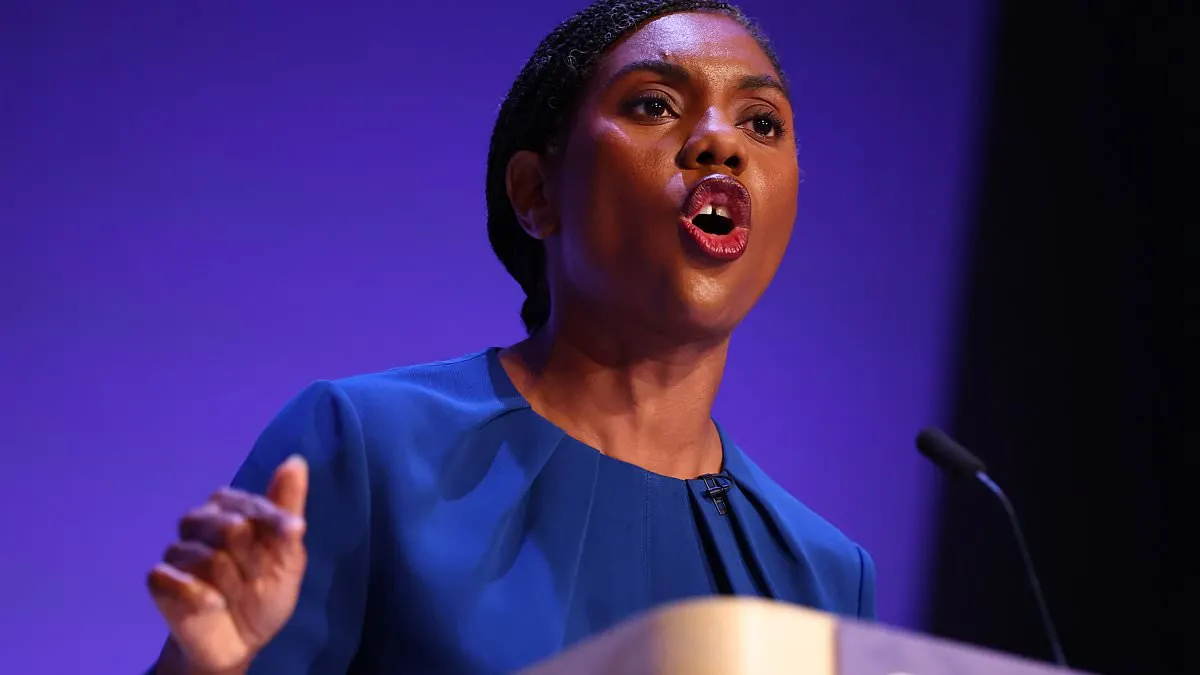
Kemi Badenoch used her speech at the Conservative Party conference to condemn what she described as Reform UK’s outdated views on race and national identity. Calling herself a “proud black Briton”, she argued that people of different backgrounds can be English and urged Reform voters to return to the Conservatives.
Her remarks followed Suella Braverman’s comments that, despite being born in London, she does not consider herself English because of her Asian heritage. Badenoch also referred to Reform’s former Welsh leader Nathan Gill, who was jailed for taking Russian bribes, and to investigations involving party figures and donations. She called a £5 million gift to Nigel Farage from a cryptocurrency billionaire “fishy”, saying it was the subject of a parliamentary probe.
- Badenoch calls herself a proud black Briton.
- She accuses Reform of taking the UK backwards on identity.
- She urges Reform voters to return to the Conservatives.
New here? Start with this
Kemi Badenoch is a Conservative politician who recently became her party's leader. Reform UK is a rival political party that has grown in electoral support by promising significant political change. The two parties are in sharp disagreement over national identity and the country's direction.
The key dispute concerns questions of race, ethnicity and who can be considered truly British. Conservatives, including Badenoch, contend that people from any background can be fully British, whereas Reform holds different views on these matters. These debates about identity and belonging reflect broader divisions in British society.
Reform has also faced scrutiny over its finances and the conduct of some figures, including a former Welsh leader imprisoned for accepting bribes from abroad. These controversies feed into the broader political competition between the parties over their contrasting visions for Britain.
Both sides, in good faith
The strongest fair case each way — we don't pick a winner.
The case for
Reform UK articulates concerns about immigration, integration and rapid cultural change that resonate with significant numbers of voters who feel unheard by Westminster consensus. Whilst others disagree with their specific policies, these concerns about demographic change and social cohesion represent legitimate political questions worthy of substantive debate rather than dismissal as inherently backwards. Democratic politics requires engaging seriously with these voters' genuine anxieties rather than caricaturing their motivations.
The case against
Reform UK's vision fundamentally excludes citizens of minority backgrounds from full belonging in British society, and its leadership has demonstrated serious integrity failures. Beyond specific policy disagreements, the party's rhetoric consistently portrays immigration and diversity as threats rather than strengths, whilst modern Britain's cohesion depends on an inclusive national identity where all citizens—regardless of heritage—can feel authentically British. Such exclusionary politics represents a genuine regression from the inclusive values necessary for democratic health.