Dozens of villagers are threatening to ‘sell up and move’ as they fear the arrival of more than 1,000 migrants who could soon be housed in nearby RAF base
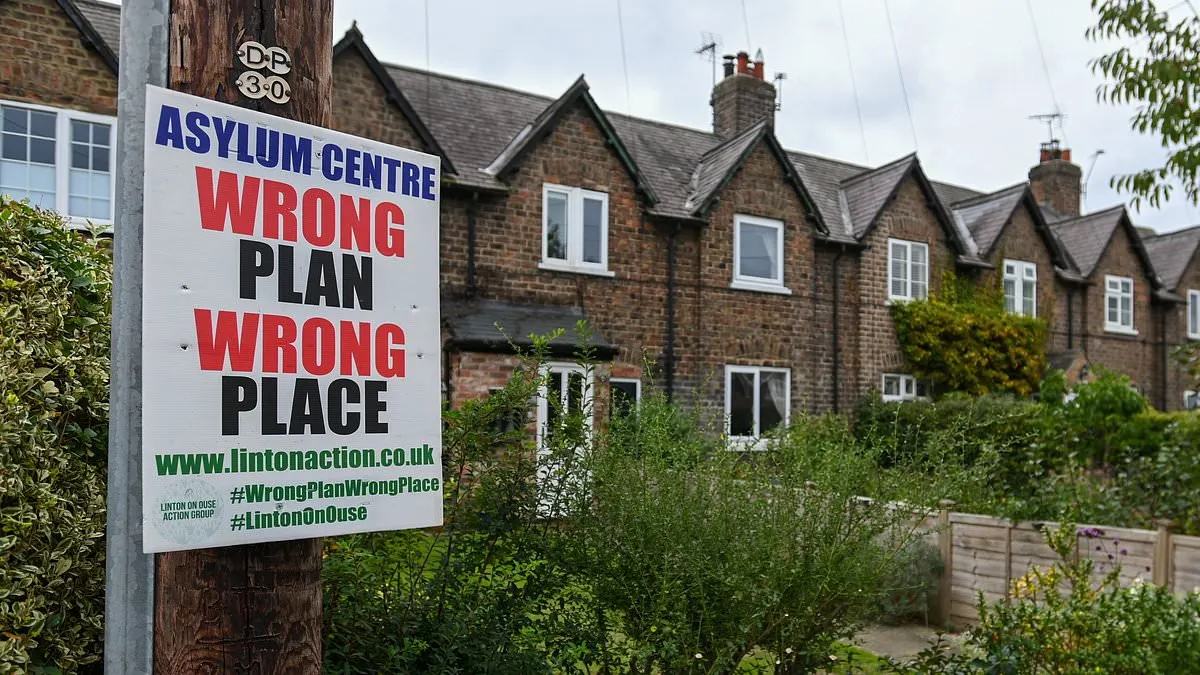
Residents of Linton-on-Ouse in North Yorkshire say uncertainty over plans to house asylum seekers at a former RAF base is prompting some to consider leaving or sell their homes. The Government has not decided whether the site is suitable, but villagers and campaigners say the proposal is already affecting confidence in the area and the local property market.
The village has about 700 residents, while the proposed accommodation could house up to 1,200 single male asylum seekers. A residents’ group survey of 404 people found 60 per cent of renters questioned said they were very likely to leave if the plans were approved; residents also say around 35 refurbished homes are vacant. One homeowner estimates selling could cost her family £100,000, while any scheme would still require planning permission and other approvals.
- A former RAF base could house up to 1,200 asylum seekers.
- Some Linton-on-Ouse residents say they may move.
- The Government has yet to decide whether the site is suitable.
New here? Start with this
Linton-on-Ouse is a small village in North Yorkshire with approximately 700 residents. The Government is considering housing up to 1,200 single male asylum seekers at a former RAF base near the village, though it has not yet decided if the site is suitable.
The proposal has created uncertainty in the village, with residents concerned about potential impacts on property values and community stability. Any scheme would require planning permission and other formal approvals before it could proceed.
Both sides, in good faith
The strongest fair case each way — we don't pick a winner.
The case for
Residents have legitimate concerns about the pace and scale of change in their community. A single housing scheme introducing 1,200 people to a village of 700 represents profound demographic upheaval that could strain local services, schools, and infrastructure without adequate preparation or consultation. The uncertainty surrounding approval is itself destabilising property markets and community confidence. Residents are not necessarily opposed to asylum seekers, but they reasonably question whether their concerns about absorptive capacity, community cohesion, and property values have been properly weighed against the proposal.
The case against
The UK has a legal and humanitarian obligation to house asylum seekers safely and promptly, and reusing an existing public facility rather than dispersing vulnerable people through the private rental market is both efficient and responsible. Communities often adapt successfully to new residents and may benefit from increased diversity and vitality. Residents' concerns about property values and social disruption, whilst understandable, should not override the pressing needs of people seeking sanctuary. Alternative approaches would likely prove more expensive, fragmented, and ultimately more disruptive than one well-managed site with dedicated support services.