Drones deliver food and remove bodies after Nepal’s flood disaster
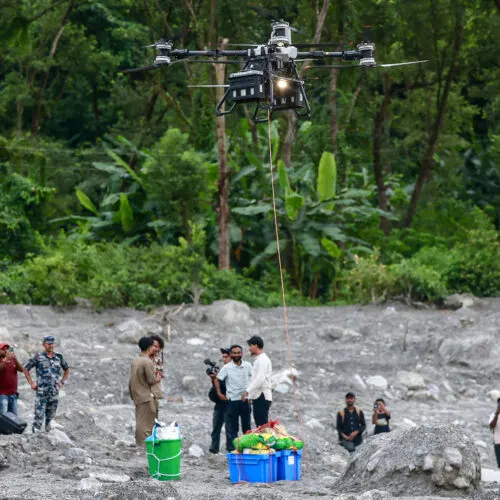
Chinese-made DJI drones are playing a central role in Nepal's flood relief effort, delivering food to survivors and removing bodies from areas devastated by flash floods along the Nepal-Tibet border. The floods struck on 26 August after a partial glacier collapse in the Himalayas sent water, mud and debris crashing through border crossings, valley communities and hydropower sites, and the disaster has since become one of the region's deadliest in recent years.
Nepal's army is using four DJI FlyCart 100 drones, donated by China, to make 10 to 16 aid deliveries daily, each carrying around 132 pounds of supplies via a winch system. As of 9 September, Nepal's official death toll stood at 1,369, with more than 5,000 people still missing, including 587 foreign nationals; over 13,600 people have been rescued and the UN is seeking $20.5 million to help 43,000 affected people. Smaller drones fitted with microphones have also aided search-and-rescue work inside flooded hydropower tunnels, while China has reported 43 deaths and over 500 missing on its side of the border. The drones' use follows their established role supplying Everest expedition camps, a programme that has also become entangled in US-China tech rivalry after Nepal denied a US team permission to fly a rival American drone in May.
In short
- DJI drones deliver food and retrieve bodies after Nepal's deadly floods
- Death toll reaches 1,369, with over 5,000 still missing
- Drones also aid tunnel rescues and expose US-China tech rivalry
Explained simply
The Nepal-Tibet border lies in a steep Himalayan region where communities, roads and hydropower sites sit close to river valleys. On 26 August, a partial collapse of a glacier sent water, mud and debris downstream, cutting off some areas and causing widespread destruction.
Nepal’s army is responsible for much of the country’s disaster response, while China is assisting across the border. DJI is a Chinese drone maker; its aircraft have previously carried supplies to high-altitude camps on Mount Everest, where difficult terrain can make transport by road or foot challenging.
The disaster has affected people on both sides of the border and damaged infrastructure, including hydropower facilities. International agencies such as the United Nations coordinate relief and seek funding to support people whose homes and livelihoods have been disrupted.