Business news and discussion on TalkFuse.
DTCC, Barclays Say Tokenization’s Real Prize Is Unlocking Idle Collateral
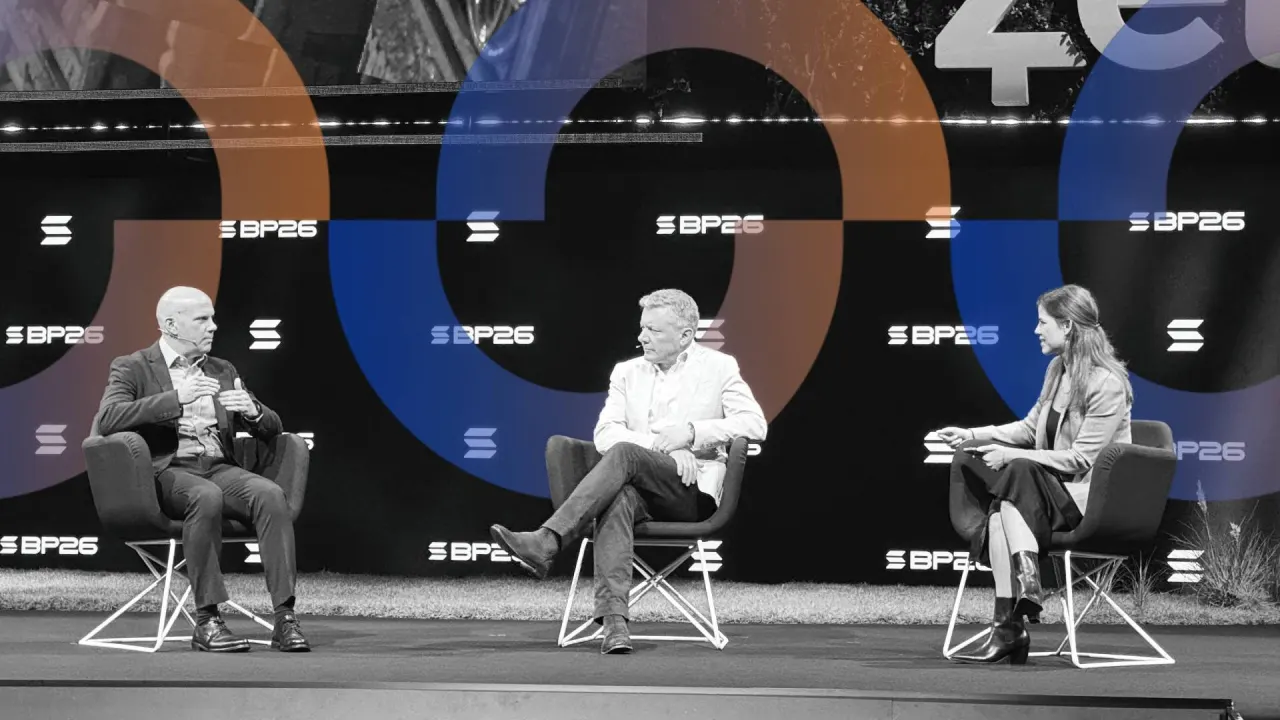
Executives from the Depository Trust & Clearing Corporation (DTCC) and Barclays said tokenisation’s main benefit may be making collateral easier to use, rather than simply putting traditional assets on a blockchain. They argue that firms could free up money and balance-sheet capacity by moving assets more efficiently, including when markets are closed.
DTCC’s tokenisation service launched on 28 October and covers Russell 1000 shares, major index-tracking ETFs and US Treasury securities held at its depository. The tokens retain the same legal and economic rights as the underlying securities, and DTCC expects them to reach Solana in the second half of 2027. The executives said adoption is still at an early stage, with traditional and digital systems likely to operate side by side for years; Barclays is also exploring tokenised structured products with Ironlight.
In short
- DTCC and Barclays see collateral mobility as tokenisation’s main promise.
- DTCC expects tokenised assets on Solana in the second half of 2027.
- Executives say adoption remains early.
Steelman: both sides, in good faith
The strongest fair case each way — we don't pick a winner.
The case for
Tokenisation could make high-quality assets usable as collateral more quickly and across more hours of the day, helping firms release funds and balance-sheet capacity that would otherwise sit idle. If tokens preserve the same legal and economic rights while connecting existing securities to more efficient infrastructure, this could improve market liquidity without requiring firms to abandon traditional systems at once.
The case against
The claimed gains depend on market participants adopting compatible systems and on legal, operational and liquidity arrangements working reliably across them; those benefits remain uncertain while adoption is at an early stage. Running tokenised and traditional infrastructure side by side for years could add complexity and costs, so firms may not free up meaningful capital unless the new system proves broadly interoperable and dependable.
Explained simply
Collateral is money or other assets that firms pledge to support a loan or trade. It can include shares and government bonds, but moving it between institutions and systems may take time, leaving some assets unavailable when they are needed.
Tokenisation represents an asset as a digital token that can be transferred using a blockchain, a shared digital record. The Depository Trust & Clearing Corporation (DTCC) helps hold and process securities in the US, while Barclays is a major bank; both are exploring how digital tokens might make assets easier to move and use as collateral.
The issue matters because quicker transfers could help financial firms use their existing assets more efficiently, including outside normal market hours. Any shift is expected to take time, with digital and traditional systems operating alongside each other.