Dyson CameraJet toothbrush launches in UK for £419.99
Developed over time first seen 2 months ago
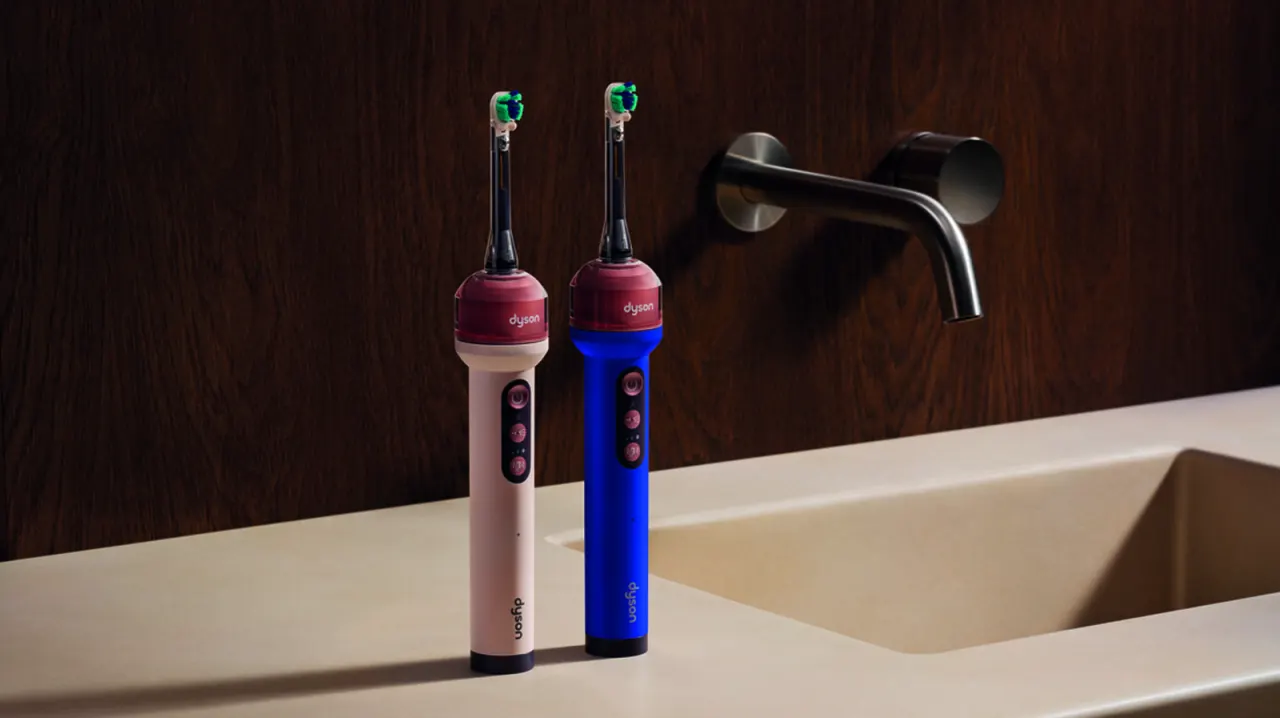
Dyson has launched a £419.99 electric toothbrush in the UK featuring a built-in camera and mouthwash jets, marking the vacuum cleaner maker's move into oral hygiene. Unveiled by founder James Dyson in Paris, the CameraJet took six years and 661 engineers to develop, and uses a tiny camera to detect gaps between teeth so it can spray mouth rinse to remove plaque while brushing, alongside live footage viewable via an app.
Dyson claims the device removes up to 72% more plaque than leading electric toothbrushes and describes it as part of a "complete dental system" that also includes matching toothpaste and mouth rinse, each priced at £8.50. The toothbrush enters a crowded premium market that already includes rivals such as the £600 Philips Sonicare DiamondClean, though the British Dental Association has cautioned that expensive gadgets are no substitute for a proper twice-daily brushing routine.
- Dyson launches £419.99 toothbrush with built-in camera and mouthwash jets
- Claims to remove up to 72% more plaque than rival electric brushes
- Dental association says pricey gadgets can't replace good brushing habits
New here? Start with this
Dyson is best known for vacuum cleaners, fans and air purifiers, but in recent years it has expanded into personal care products such as hair tools, air-purifying headphones and now toothbrushes. The CameraJet is its latest device in this area, combining a tiny built-in camera with artificial intelligence to spot gaps between teeth and a jet of rinse designed to clean those areas, similar to what flossing achieves.
The product responds to a common problem: most people in Britain do not floss regularly, leaving plaque to build up between teeth where a standard brush cannot easily reach. Rather than a thread-based floss, the CameraJet aims to combine brushing and interdental cleaning into a single automated device that tracks where it has cleaned via a connected smartphone app.
At £419.99, the CameraJet sits at the premium end of the oral care market, reflecting Dyson's usual positioning of its products as higher-priced alternatives to conventional versions. Its UK launch is part of a broader trend of technology firms moving into health and personal care devices, an area increasingly seen as a growth market beyond household appliances.
Both sides, in good faith
The strongest fair case each way — we don't pick a winner.
The case for
Supporters view the CameraJet as genuine engineering innovation that delivers measurable health improvements through advanced technology; if the 72% plaque reduction claim is validated, such premium products justify their investment and drive progress that eventually benefits broader markets. For consumers willing to invest in oral health, sophisticated engineering offers meaningful value beyond basic equipment.
The case against
Critics argue this represents unnecessary luxury when proper oral hygiene fundamentally depends on brushing technique and habits, not expensive technology. As the BDA cautioned, premium gadgetry risks creating false confidence whilst actual plaque problems stem from inadequate daily care—an issue no amount of engineering can substitute for personal discipline.
Full account
Dyson has launched its first electric toothbrush, the CameraJet, in the UK at a price of £419.99, extending the company's push into personal care beyond hairdryers, straighteners, headphones and air purifiers. The device is notable for housing a tiny camera in the brush head, a first for an electric toothbrush, which works alongside artificial intelligence to identify gaps between teeth and fire a fine jet of mouth rinse into them as the user brushes, effectively combining brushing and flossing in a single action. The toothbrush is being sold in ceramic blue and ceramic pink finishes and comes with a charging dock that automatically tops up its mouthwash reservoir.
At the heart of the CameraJet is a macro lens camera, described by Dyson as having a resolution of around 100,000 pixels, mounted just below the brush head alongside a strobing LED light that helps stabilise the images it captures. Software Dyson calls Gap Optical Targeting analyses 28 images every second, and when it spots a gap between teeth it triggers a cone-shaped burst of mouth rinse within roughly a tenth of a second, aiming to dislodge plaque more effectively, and with less force on the gums and enamel, than the needle-like jets used in conventional water flossers. Dyson says the underlying machine-learning system was trained on hundreds of thousands of dental images and built on millions of lines of code, though the company stresses that no pictures are stored on the device or uploaded to the cloud; the camera can also be used to livestream a view of the user's mouth to a smartphone via the companion MyDyson app over Wi-Fi.
The brush head itself oscillates at high speed, using an outer ring of softer bristles designed to protect the gumline and a stiffer inner set intended to tackle staining, with the angle of movement varying continuously during use. Each replaceable head carries an RFID tag that lets the toothbrush monitor wear and prompt a replacement roughly every three months, while the mouthwash tank is refilled via an internal air bladder so it can dispense fluid correctly regardless of the angle at which the brush is held. Sir James Dyson, the firm's founder, said the product was designed to solve three problems at once: seeing the gaps where plaque builds up, removing it, and improving overall brushing performance, by bringing together camera technology, machine learning, precision fluid dynamics and connectivity in one device.
The launch has drawn attention chiefly for its cost, with commentators noting that £419.99 (around $499 in the US) sits well above mainstream electric toothbrushes, though only modestly above some existing premium smart models that lack a camera or automated rinsing system. Dyson has pointed to internal testing suggesting the CameraJet removes significantly more plaque than leading premium electric toothbrushes, and has framed the device as a response to widespread failure to floss regularly. Reporters who tried the toothbrush ahead of launch generally described the camera-and-jet concept as an unusual but logical extension of Dyson's engineering background in moving air and fluids into tight spaces, even if the name itself gives little away about what the product actually is.
Where outlets differ
Pricing emphasis: The Verge cites the US price of $499, while the Daily Mail focuses on the UK price of £420 and frames it as 'jaw-dropping', drawing a comparison to Dyson's £820 headphones with air purification.
Only the Daily Mail includes Dyson's specific plaque-removal claim (up to 69% more than market-leading premium electric toothbrushes) and cites a statistic that just 10% of Britons floss daily, plus development details such as 661 engineers working for six years.
The second source (an outlet with a hands-on demo) includes a direct quote from Sir James Dyson and first-person impressions from trying the device, along with technical detail on the machine-learning training data (470,000 dental images) and code base (16 million lines), and the water tank's precise 12.5ml capacity — details largely absent from the other two accounts.
The Verge places more emphasis on hardware specifics such as brush oscillation speed, the dual-bristle design, RFID-tagged replacement heads and the air-bladder refill mechanism, which are not mentioned in the Daily Mail's report.
Coverage
- The Verge — Dyson made a camera-equipped toothbrush that flosses for you
- Engadget — Dyson’s CameraJet is a $500 three-in-one toothbrush that scans your maw