Culture news and discussion on TalkFuse.
EA’s Saudi takeover will be “a real waste” if it turns the publishers into a “sequel-and-mega-franchise machine”, Helldivers 2 studio boss says
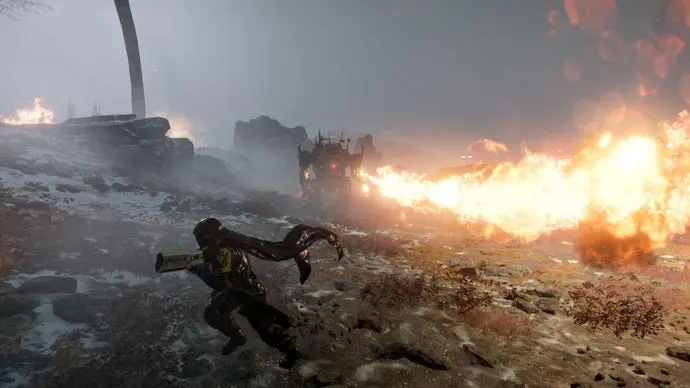
EA's $55 billion leveraged buyout by Saudi Arabia's Public Investment Fund, Silver Lake and Jared Kushner's Affinity Partners has officially completed after receiving European Commission approval, taking the publisher private. Arrowhead CEO Shams Jorjani, whose studio makes Helldivers 2, has warned that the deal risks being "a real waste" of EA's diverse catalogue if the new ownership pushes the company towards becoming purely a "sequel-and-mega-franchise machine" rather than preserving the range of projects, from blockbusters to smaller titles, that have defined its output.
The takeover has loaded EA with roughly $18 billion in debt, and while its annual Ebitda of around $1.5 billion should cover interest payments, the publisher has reportedly told debt investors it plans to cut $700 million in annual costs, including $170 million in "organisational efficiencies" — widely interpreted as further layoffs. This follows existing concerns, such as job cuts at BioWare after Dragon Age: The Veilguard, and casts doubt on whether EA will revive shelved series like Burnout or invest beyond its biggest cash cows such as EA FC, Battlefield, Madden and The Sims.
In short
- EA's $55bn Saudi-backed private buyout has officially completed.
- Helldivers 2 studio boss fears EA will over-focus on mega-franchises and sequels.
- EA reportedly plans $700m in cost cuts, including likely layoffs.
Steelman: both sides, in good faith
The strongest fair case each way — we don't pick a winner.
The case for
An $18 billion debt load creates strong pressure to prioritise high-return franchises and sequels over creative risk-taking and experimental projects. The planned $700 million in annual cost cuts, including substantial job losses, will simultaneously deplete both financial flexibility and creative talent. Leveraged buyouts in entertainment typically prioritise debt service and financial returns, particularly affecting mid-tier and new intellectual property ventures that require longer investment horizons.
The case against
Private ownership removes the quarterly earnings pressure that previously constrained EA's strategic decision-making, potentially enabling longer-term creative thinking and investment. The company's $1.5 billion annual Ebitda provides a solid foundation for debt service, and substantial capital reserves from the new owners offer financial flexibility beyond basic operational needs. EA's dominant market position and proven franchises generate stable revenue streams that can support both blockbuster titles and selective investment in diverse projects without necessarily compromising creative ambition.
Explained simply
Electronic Arts (EA) is a major video game publisher behind series such as EA Sports FC, Battlefield, Madden and The Sims, as well as smaller or less frequent releases. It owns studios including BioWare, which makes role-playing games, and publishes games developed by independent studios such as Arrowhead, the team behind Helldivers 2.
The Public Investment Fund is Saudi Arabia’s sovereign wealth fund; Silver Lake is an investment firm, and Affinity Partners is led by Jared Kushner. Their purchase, alongside EA’s existing catalogue and studios, puts the company under private ownership and adds substantial debt, while planned cost reductions could affect its workforce and spending.
The questions are whether the new owners will keep investing across EA’s range of games or focus more heavily on its biggest franchises, and what that might mean for staff and series that have not had recent releases. Those choices matter to players and developers because they can shape which games get made and how much variety EA’s catalogue retains.
Art Business Companies Culture Entertainment Europe Gaming Middle East