East’s astronomers plan for solar eclipse
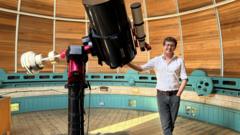
Astronomers across the East of England are preparing for Wednesday evening's solar eclipse, with the region set to see a partial eclipse offering the greatest coverage of the Sun since 1999. While areas including Cambridgeshire, Essex, Suffolk, Norfolk, Hertfordshire and Buckinghamshire will host community watch parties, many professional astronomers, including Cambridge University's Dr Matt Bothwell, have travelled to Spain, Iceland or the Faroe Islands, where the eclipse will be total, leading to what one astrophysicist described as an "astronomer exodus" from Cambridge.
Watch events are planned at locations including Ferry Meadows in Peterborough, Stopsley Common in Bedfordshire, West Stow Country Park in Suffolk, Southend-on-Sea pier in Essex, and Bramfield Village Hall in Hertfordshire, among others. In Northamptonshire, where over 90% of the Sun will be covered, 14-year-old astronomy ambassador Aston is hosting a neighbourhood event with telescopes and donated solar glasses. The eclipse coincides with the peak of the Perseid meteor shower, and organisers stress that eye protection remains essential even during a partial eclipse; those unable to attend an event can watch a livestream of the total eclipse via the European Space Agency on YouTube.
- East of England to see its biggest partial solar eclipse since 1999.
- Many astronomers have travelled abroad to see the total eclipse.
- Watch parties planned across the region, with eye protection essential.
New here? Start with this
Astronomers across the East of England are getting ready for a solar eclipse on Wednesday evening, when the Moon will pass in front of the Sun. From this region the event will only be partial, but it will be the deepest coverage of the Sun seen here since 1999, which is why it has generated so much interest.
Because a partial eclipse is less dramatic than a total one, several professional astronomers, including Cambridge University's Dr Matt Bothwell, have travelled abroad to countries such as Spain, Iceland and the Faroe Islands, where the Sun will be completely blocked out. Meanwhile, community watch parties are being organised across towns and counties in the East of England, often run by local astronomy groups and volunteers, so that people who stay at home can view the partial eclipse safely.
The event matters both as a rare astronomical spectacle and as a chance for public engagement, with organisers keen to stress that looking directly at the Sun, even during a partial eclipse, can damage eyesight without proper protection such as certified solar glasses.