Emergency Alert startles millions in England and Wales as public warned over wildfires threat – latest
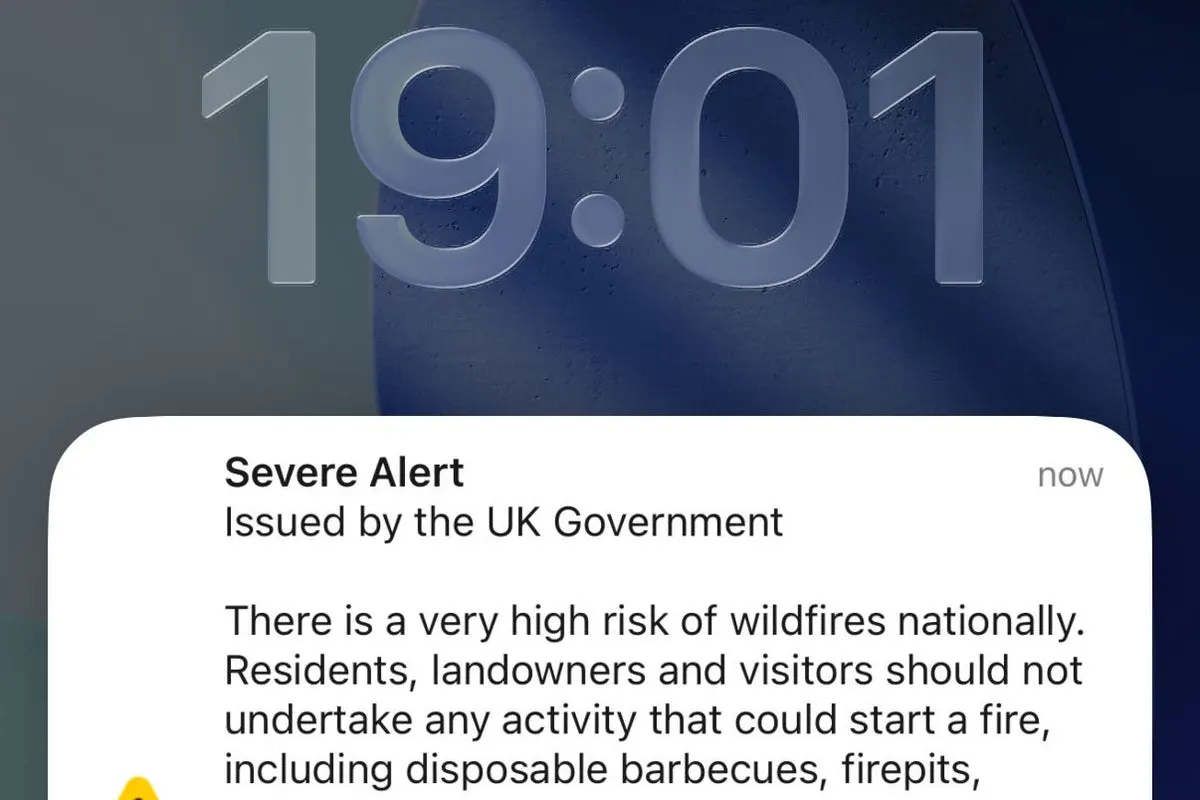
An emergency alert was sent to millions of phones across England and Wales from about 7pm, warning people not to light barbecues, campfires or fireworks and to report fires immediately by calling 999. The government acted as firefighters tackled major wildfires, including a blaze in Stourbridge in the West Midlands where 19 homes were destroyed, highlighting the risks posed by hot, dry conditions.
Ministers said the military had been called in, a ban on disposable barbecues announced, and firefighting aircraft would be commissioned to help contain future blazes. The alert was reportedly the system’s most extensive use to date, but it also disrupted television broadcasts, concerts and public transport, while critics argued its broad use caused unnecessary alarm in places facing no immediate danger.
- Millions received a wildfire warning across England and Wales.
- Nineteen homes were destroyed in a Stourbridge fire.
- Ministers announced extra measures to tackle wildfire risks.
New here? Start with this
Emergency phone alerts are a government system for warning people about serious risks in a particular area. They can reach compatible mobile phones nearby, with a loud sound and a message explaining what people should do.
Wildfires can spread quickly when vegetation is hot and dry, and may threaten homes and communities. Fire and rescue services lead the response, with government and local authorities able to bring in extra support, including the military.
The alerts are intended to help people act quickly, but sending them across a wide area can affect people far from the immediate danger. Their use raises questions about how warnings should balance reaching people at risk with avoiding unnecessary alarm.
Both sides, in good faith
The strongest fair case each way — we don't pick a winner.
The case for
The government faced unprecedented wildfire conditions with demonstrated harm—homes burning in the Midlands—and an emergency alert reaching millions ensured no one in affected regions missed critical guidance to avoid ignition sources. The disruption to services, whilst notable, pales against the catastrophic risks of preventable fires spreading through dry vegetation. Safety protocols require erring on the side of caution when lives and property hang in the balance.
The case against
Whilst the threat was real, sending a system-wide alert disrupted essential services across all of England and Wales, including areas with minimal fire risk. A more targeted geographical approach would have warned genuinely at-risk communities without generating unnecessary alarm and chaos in lower-risk zones. Balancing effective warning with operational impact requires distinguishing between high-risk regions and those facing distant, hypothetical threats rather than deploying the system at maximum scale.