World news and discussion on TalkFuse.
EPA finds no airborne lead after Iowa ammunition plant blast
Developed over time first seen 1 day ago
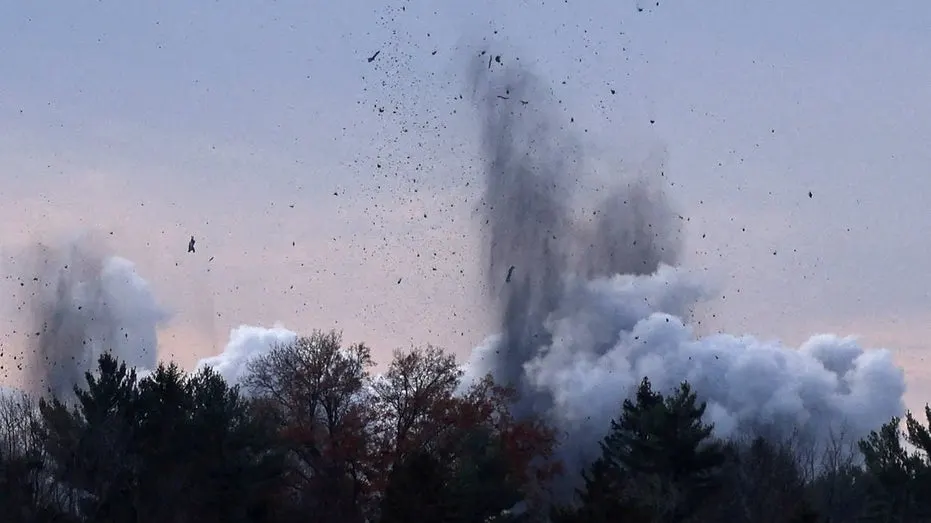
The EPA reported no detectable airborne lead across the region on Thursday, a day after a controlled detonation destroyed a stockpile of lead azide at the Iowa Army Ammunition Plant. The result addresses concerns that potentially toxic dust from the blast could drift towards Missouri, while environmental monitoring continues.
About five tons of degraded, unstable lead azide were destroyed in Middletown, Iowa. The EPA said it had taken more than 1,000 samples after the detonation, following nearly 1,600 baseline samples beforehand; checks covered homes, parks, drinking water intakes and nearby farms, with sampling also planned at schools, playgrounds, daycares and churches.
- Sources
- 2
- Outlets
- 2
- Left · Centre · Right
- 0 · 1 · 1
In short
- EPA monitors detected no airborne lead after the Iowa detonation.
- About five tons of unstable lead azide were destroyed.
- More than 1,000 post-detonation samples were collected.
How this story developed
- 19 hours ago The EPA added churches and other sites to the locations receiving further sampling, while describing Thursday’s no-lead result as an early finding from ongoing monitoring.
- 1 day ago The EPA said on Thursday that regional air tests still showed no detectable lead, as monitoring continued and further sampling was planned at schools, playgrounds, daycares and churches.
- 1 day ago The EPA found no detectable airborne lead a day after five tons of unstable lead azide were destroyed in a controlled blast at the Iowa Army Ammunition Plant, following extensive checks prompted by fears dust could reach Missouri.
Full account
The US Environmental Protection Agency says its monitors have detected no airborne lead in the area around the Iowa Army Ammunition Plant, a day after the Army destroyed a stockpile of degraded lead azide in a controlled blast. The material, used in making explosives, had been judged unsafe and unstable. The operation took place near Middletown, Iowa, amid concern that dust from the detonation might travel towards Missouri.
The EPA said it had collected more than 1,000 samples after the explosion. Beforehand, it took close to 1,600 samples of air, water, soil and dust to establish a baseline for comparison. The agency said it had tested homes, parks and drinking-water intakes in the area identified by its plume modelling, and was continuing with checks at places including schools, childcare centres, churches and playgrounds.
Monitoring also extended to farms, with the EPA working alongside the US Department of Agriculture, and to water across the Mississippi River watershed. The agency said lead-sampling equipment would be replaced so air testing could continue, while soil and dust collection was expected to finish on Thursday. EPA Administrator Lee Zeldin described the detonation as having gone better than expected. The agency said it would remain on site as long as needed.
The reported absence of airborne lead reflects the EPA’s monitoring so far; it does not by itself describe the full results of the wider sampling programme. The second report also noted that independent experts were conducting tests outside government. It said results from the EPA’s analysis were expected as soon as the following day, while the first report gave more detail about the types of locations and environmental samples being checked.
The outlets frame the news differently. The first focuses at length on the EPA’s sampling operation, including its work at farms and across the river watershed, and quotes the agency’s commitment to continued monitoring. The second gives the finding a brief place in a wider news roundup, mentions the Army’s two controlled explosions and independent testing, and says the agency was analysing more than 1,000 samples. The reports differ in detail about the sampling: the first specifies air, water, soil and dust, while the second summarises the categories as air, soil and water.
Where outlets differ
From the full account, which is AI-written from the sources:
The first report is devoted to the Iowa detonation and describes a single controlled detonation of nearly five tons of lead azide. The second is a general news roundup; it refers to two controlled explosions and calls the material toxic explosives.
The first details post-blast sampling at homes, parks, drinking-water intakes, farms and across the Mississippi River watershed, and says some sampling was expected to conclude that day. The second gives fewer operational details, notes that independent experts were also testing, and says EPA results could be available as soon as the following day.
The first includes the EPA’s pledge to maintain a presence in the area and comments from Lee Zeldin and Donald Trump. The second briefly reports the finding alongside unrelated stories about tariffs and Russia and Ukraine.
Centre outlets 1
Only here: wrap, zero
Right-leaning outlets 1
Only here: finds, ammunition, plant, blast
Every side used: airborne, lead, iowa
Headline columns compared word for word; nothing in them is AI-written.
Explained simply
The Iowa Army Ammunition Plant is a US military site in Middletown, near the Missouri border. It stores and handles explosives, including lead azide, a chemical used to set off other explosives that can become dangerous as it degrades.
The material destroyed was an unstable stockpile weighing about five tons. A controlled detonation is a planned explosion used to dispose of hazardous explosives; the concern was that it might send dust containing lead into nearby communities or across the state line.
The US Environmental Protection Agency monitors environmental risks such as pollution in air, soil and water. Its checks around homes, farms and public places are intended to assess possible exposure and compare conditions after the detonation with samples collected beforehand.
Coverage · 2 sources
Bias meters
From 2 rated sources.
Read the full article at the source →
Originally published by Fox News as “EPA reports ‘zero detection of airborne lead’ day after Iowa lead azide detonation”.