Epic Games Pivots to AI-First Development for Delayed $1.5B Disney Game Project
Developing story first seen 1 hour ago
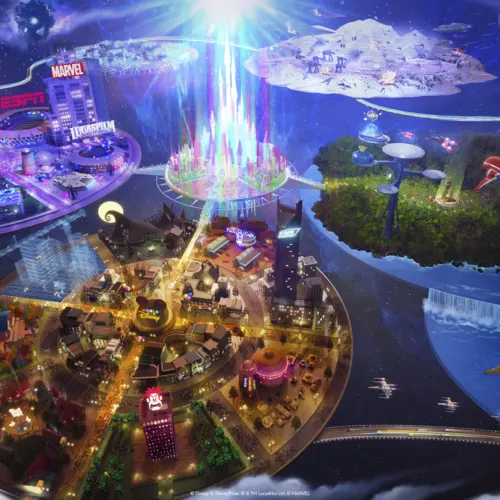
Epic Games has mandated that its Disney game project adopt an "AI first" production strategy, with all code to be AI-generated and no hand-written code permitted. The directive has provoked resistance from some developers and highlights growing industry scepticism about generative AI: a Games Developers Conference survey found 52 per cent of developers now view AI as damaging to the industry, up from 30 per cent in 2025. The project, already delayed to March from an originally planned November release, is being restructured around this new production approach.
The underlying collaboration stems from Disney's $1.5 billion investment in Epic Games in 2024, intended to build a "games and entertainment universe." The project is understood to be an extraction shooter game similar to Arc Raiders, which had already faced scheduling pressures before the new AI mandate took effect. Epic has been integrating generative AI tools into its Unreal Engine platform throughout this year, with the company's Communications Director stating the studio is "embracing AI-accelerated development, led by Epic developers who are the visionaries and creative drivers for everything we do."
- Epic mandates AI-only development for $1.5B Disney game project
- Developer opposition to AI grows; 52 per cent see it as harmful
- Project delayed to March amid internal team resistance
New here? Start with this
Epic Games, which developed the Unreal Engine used by many game developers and created the popular game Fortnite, has been working on a major collaboration with Disney for several years. The project is a shooter game featuring characters from Marvel and Star Wars, with a budget of $1.5 billion. It represents one of the entertainment industry's largest investments in a gaming project.
The game's development has just undergone a significant change in direction. Rather than following traditional game development, where programmers write code by hand and artists create assets manually, Epic Games will now use artificial intelligence systems to generate both the code and the artwork. The company has described this shift as a "maximum AI acceleration" approach to production.
This approach represents a notable departure from industry practices, where AI typically serves as a supplementary tool rather than the primary production method. Epic Games is now committing to having AI generate all code and artwork, which requires retraining developers and restructuring its workflows. The additional delays to the project reflect the scope of this transition.
Both sides, in good faith
The strongest fair case each way — we don't pick a winner.
The case for
AI-driven development at this scale could dramatically accelerate timelines and reduce production costs whilst maintaining quality through sophisticated curation. With a $1.5 billion budget, Epic Games is well-positioned to leverage advanced AI for code generation and asset creation, potentially delivering faster iteration and innovation than traditional methods. Early adoption of transformative technology often yields competitive advantages, and if properly managed, AI-generated content can meet the standards expected of a major franchise.
The case against
Game development—especially for beloved franchises—requires artistic vision, creative nuance, and human judgment that AI models may struggle to capture authentically. A project this high-stakes and already delayed risks compounding its problems by implementing an unproven workflow; AI-generated code and assets typically demand significant human review and refinement anyway, potentially creating new bottlenecks. Eliminating experienced human creators from core roles threatens to sacrifice the institutional knowledge and emotional depth that distinguishes exceptional games from competent but derivative ones.
Full account
Epic Games is fundamentally restructuring its approach to a major collaborative games project with Walt Disney Company, shifting towards artificial intelligence-driven development as its primary production methodology. The studio has mandated that all future work on its forthcoming Marvel and Star Wars-themed shooter utilise computational models for code generation and visual asset creation, with human developers transitioning into supervisory and editorial roles.
The $1.5 billion partnership, announced in early 2024, was initially scheduled to launch in March 2027. The project has now been postponed indefinitely as teams undergo retooling to implement the new strategy, which explicitly mandates abandonment of traditional hand-written code in favour of entirely algorithmic workflows for both programming and artwork. Leadership indicated that artificial intelligence systems, including Anthropic's Claude, would handle primary creative generation whilst human staff provide creative oversight and direction.
The directive has generated mixed reactions within the development workforce, with some employees questioning the authenticity of the mandate. Epic's executive leadership has characterised the transition as a means to expand creative scope rather than reduce staffing levels, with chief executive Tim Sweeney positioning the pivot as enabling substantially more ambitious projects. Sweeney has previously championed AI's potential to revolutionise game development by facilitating procedurally-generated narratives and expansive interactive worlds achievable by smaller teams.
The strategic shift reflects deepening fault lines within the games industry regarding artificial intelligence integration. Industry surveys reveal mounting concerns about AI's influence, with majorities of professionals now expressing reservations about the technology's long-term effects. Notably, whilst AI tool adoption has become increasingly common among developers, utilisation patterns tend to concentrate on supplementary functions such as research and programming support rather than direct creative asset generation—distinguishing Epic's comprehensive approach from prevailing industry practice.
Where outlets differ
Source 1 emphasises Sweeney's historical vision for AI in gaming; Source 2 prioritises immediate practical changes to the project
Source 1 references the Darth Vader voice generation incident in Fortnite; Source 2 omits this prior context
Source 1 cites earlier GDC survey figures (36% use gen AI); Source 2 provides more recent negative sentiment (52% believe AI harmful, up from 30%)
Source 2 specifies the game's extraction shooter format and original November release date; Source 1 is less granular on these details
Source 1 quotes Tim Sweeney directly; Source 2 quotes Epic's Communications Director
Source 2 emphasises workforce scepticism and internal resistance; Source 1 does not address employee reception
Coverage
- Ars Technica — Epic reportedly plans AI-led development for delayed Disney game project
- Engadget — Epic reportedly delays its Disney video game so it can be made using more AI
AI Art Celebrity Culture Entertainment Gaming Software Technology