World news and discussion on TalkFuse.
European leaders renew offer to negotiate an end to Ukraine war
Developed over time first seen 2 days ago
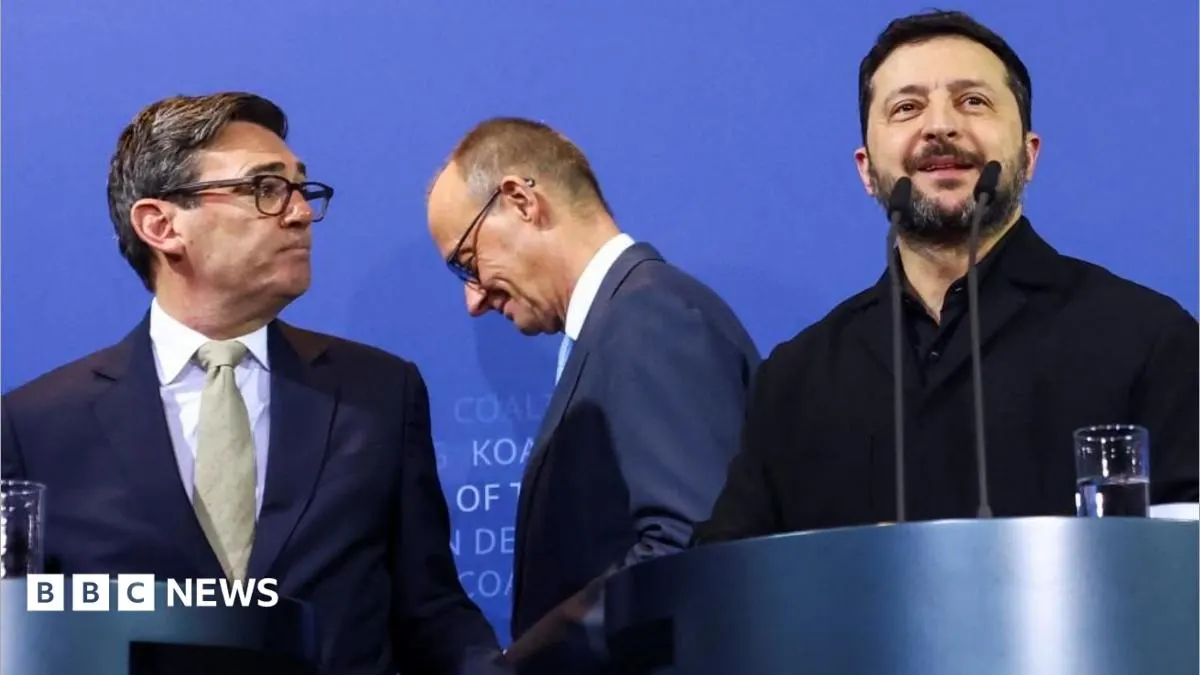
European leaders at a Berlin summit said they were ready to negotiate with Russia over ending the war in Ukraine, while insisting that Kyiv and Europe must be involved. Their offer signals support for Ukraine and responds to renewed US-led peace efforts, though Russia has yet to accept a European role in talks.
US envoy Jared Kushner said President Donald Trump believed peace was achievable and that Moscow was comfortable with Ukraine receiving security guarantees modelled on Nato’s Article Five. Ukrainian President Volodymyr Zelensky said Vladimir Putin had rejected proposals so far, and German Chancellor Friedrich Merz warned that Russia’s maximalist demands were unrealistic. Merz said Europe would discuss security with Moscow only alongside serious talks and a peace agreement with Ukraine.
- Sources
- 2
- Outlets
- 2
- Left · Centre · Right
- 0 · 2 · 0
In short
- European leaders renewed their offer to negotiate with Russia.
- Ukraine and Europe say they must be included in peace talks.
- US envoys say Moscow may accept Article Five-style guarantees.
How this story developed
- 1 day ago Vladimir Putin said Russia was open to European participation and invited European leaders to Moscow, even as German Chancellor Friedrich Merz called Russia’s demands unrealistic and said security talks must be tied to a peace agreement with Ukraine.
- 1 day ago Donald Trump joined the summit by phone after speaking with Vladimir Putin and Xi Jinping, as his envoy Jared Kushner said Moscow was comfortable with Ukraine receiving Nato-style security guarantees.
- 1 day ago European leaders at a Berlin summit offered to negotiate with Russia over ending the war in Ukraine, while insisting Kyiv and Europe must be involved in any talks.
Steelman: both sides, in good faith
The strongest fair case each way — we don't pick a winner.
The case for
Europe’s readiness to negotiate could give Kyiv and its allies a stronger voice in shaping a settlement and help ensure that any agreement includes credible security guarantees. A united European position may also make a durable peace more achievable by addressing wider European security concerns alongside the end of fighting.
The case against
Adding European leaders to talks could complicate negotiations and make agreement harder, particularly while Moscow rejects a European role and the proposed security guarantees remain uncertain. Advocates of keeping the process narrower may argue that focused, direct negotiations offer the best chance of reaching an agreement quickly, with broader security questions addressed afterwards.
Explained simply
Russia’s full-scale invasion of Ukraine began in 2022, widening a conflict that had been underway since 2014. Ukraine is seeking an end to the fighting while maintaining its independence and control over its territory; Russia has set conditions of its own, including opposing Ukraine joining Nato, the military alliance.
Ukraine’s allies, including European countries and the United States, have discussed ways to support Ukraine’s security if a peace deal is reached. Nato’s Article Five says an attack on one member is treated as an attack on all, so a similar guarantee for Ukraine would be significant even if it were not a Nato member.
Any negotiations would involve Ukraine and Russia, with questions about who takes part and what security arrangements might be agreed. The outcome matters to Ukrainians facing the effects of war and to wider European security.
Coverage · 2 sources
Bias meters
From 2 rated sources.
Europe Geopolitics Politics World
Read the full article at the source →
Originally published by BBC World as “Europe ready for talks with Russia on ending war in Ukraine, leaders say”.