Ex-England cricket captain Andrew Strauss’ damning verdict on warring Tory MPs: ‘I wouldn’t fancy that dressing room’
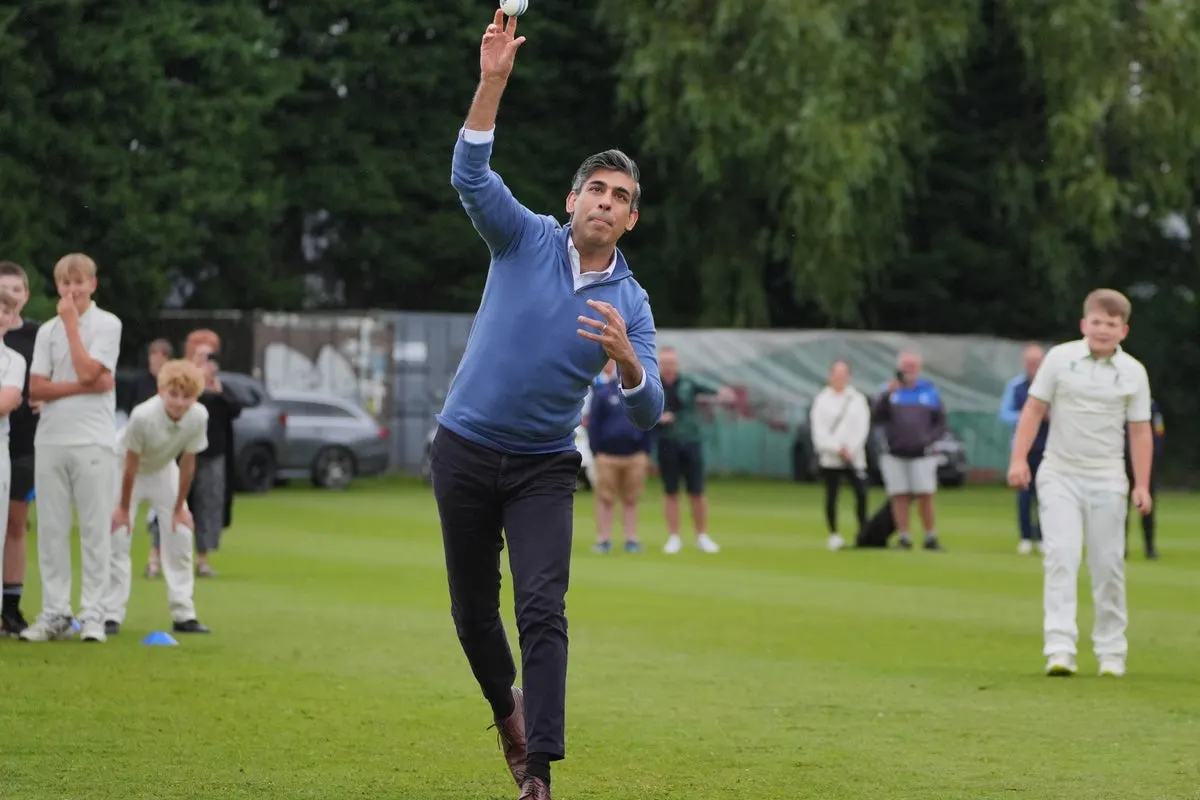
Former England cricket captain Sir Andrew Strauss told Conservative MPs that successful teams need to overcome dysfunction and collaborate, but later said he did not “fancy the dressing room” Rishi Sunak was leading. His remarks, revealed in a new book, underline the internal divisions that continued to affect the party before its heavy 2024 general election defeat.
Strauss spoke at a Conservative away day at the Fairmont Hotel in Windsor in March 2023, where Sunak hoped his experience of uniting England’s cricket team could encourage party discipline. The book says Strauss’s message was well received in theory, but MPs’ loyalty remained doubtful; Sunak stayed socialising until 3am, while drinks flowed and former MP Sir Robert Buckland sang Gilbert and Sullivan. Strauss’s views were shaped partly by his own experience of team conflict, including his dispute with former England batter Kevin Pietersen.
- Strauss doubted Sunak could unite divided Tory MPs.
- His warning preceded the Conservatives’ 2024 election defeat.
- The comments appear in a new book on Sunak.
New here? Start with this
In 2023, Rishi Sunak was prime minister and leader of the Conservative Party, whose MPs had spent years divided over policy and leadership. He invited former England cricket captain Sir Andrew Strauss to speak at a party gathering in Windsor, drawing on Strauss’s experience of leading a team.
Strauss captained England from 2006 to 2012, a period when the team had to work together despite disagreements among players. His own tenure included a public dispute with batter Kevin Pietersen, giving him direct experience of the strain that conflict can put on a team.
The episode offers a glimpse of the Conservative Party’s internal tensions before its heavy defeat in the 2024 general election. It also shows why Sunak sought advice on building cooperation among MPs.
Both sides, in good faith
The strongest fair case each way — we don't pick a winner.
The case for
Strauss’s assessment can be read as a fair warning that a governing party, like any high-performing team, needs sufficient trust and shared purpose to make difficult decisions and present a coherent programme. Persistent public factional disputes can weaken collective responsibility, distract from governing and leave voters unsure what the party stands for. On this view, stronger internal collaboration was not cosmetic but essential to effective leadership and electoral credibility.
The case against
Internal disagreement need not mean a party is dysfunctional: it can reflect legitimate differences over policy, principle and how to represent a broad electorate. MPs have responsibilities to constituents and may reasonably challenge their leader rather than suppress concerns for the appearance of unity, while a cricket dressing-room analogy may oversimplify democratic politics. On this view, the greater problem may have been the difficulty of reconciling real political choices, not a simple failure of discipline.