Experts battling extinctions after record heat
Scientists in the West of England have launched a project to update conservation guidance and prevent the extinction of rare species, as the UK approaches the end of its hottest-ever summer. The Royal Entomological Society, working with other groups and funded by Natural England and the Crown Estate, is focusing on grassland sites in Gloucestershire, Somerset and Wiltshire, warning that "urgent adaptations" are needed because climate change has accelerated well beyond what existing habitat guidance, some over 20 years old, was designed to address.
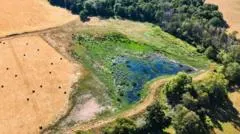
The project targets six species found in lowland chalk grassland, an internationally rare habitat: the large blue butterfly, Duke of Burgundy butterfly, marsh fritillary butterfly, wart-biter cricket, juniper and burnt-tip orchid. This year has seen 35C reached in three separate months for the first time on record, and England and Wales had their driest July in 190 years, with the Avon Wildlife Trust describing "devastating" effects including desiccated plants and soil erosion. By contrast, beaver-created wetlands at the National Trust's Holnicote Estate in Somerset have kept the area green through the drought, illustrating the value of "nature-based solutions" as one of 130 projects under Natural England's £60m Species Recovery Programme.
- UK's hottest-ever summer threatens rare grassland species with extinction
- Royal Entomological Society updating conservation guidance across three counties
- Beaver-made wetlands at Holnicote Estate stayed green despite drought