Culture news and discussion on TalkFuse.
F1 in Belgium: The 2026 cars look pathetic on all the best racetracks
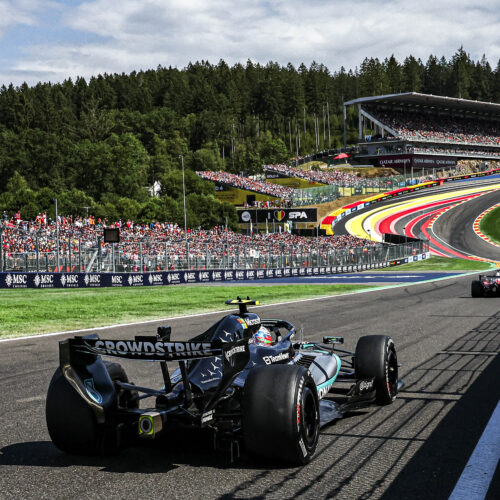
Formula 1 returned to the Spa-Francorchamps circuit in Belgium this weekend, but the race exposed how poorly suited the 2026 cars are to one of the sport's most storied tracks. The new hybrid power units allow only a few seconds of electric boost per lap, meaning cars run on minimal combustion power for much of the circuit, including through corners once regarded as tests of driver bravery and skill, echoing problems already seen at Japan's Suzuka circuit earlier in the season.
Spa predates the F1 world championship itself, with racing there dating back to 1922, and today's 4.3-mile layout remains the longest on the calendar despite being roughly half the length of its original public-road configuration. Red Bull's Max Verstappen said drivers spend much of the lap on engine power alone, comparable to a Formula 3 car, calling it "not very exciting to drive," while also facing ongoing speculation about his future amid contract clauses and rumoured interest from McLaren.
In short
- 2026 F1 cars struggle with power delivery on Spa's high-speed corners
- Hybrid batteries provide only seconds of boost per lap
- Verstappen says driving feels underpowered, likens it to F3
Steelman: both sides, in good faith
The strongest fair case each way — we don't pick a winner.
The case for
The 2026 hybrid power units fundamentally compromise Formula 1's appeal on its greatest circuits, where minimal combustion power reduces the extreme precision and physical demands that defined these iconic tracks. This prioritises a particular technological direction over the sport's core entertainment and competitive character, undermining the challenge and drama that once made venues like Spa legendary.
The case against
The 2026 hybrid system represents necessary evolution towards environmental responsibility and technological relevance in professional motorsport, aligning F1 with broader automotive industry advancement. Whilst the regulations inevitably affect racing characteristics on certain circuits, they still demand driver precision and skill, and the sport has successfully adapted to transformative rule changes throughout its history without sacrificing fundamental appeal.
Explained simply
Formula One introduced new hybrid power units for the 2026 season that limit how much electric boost drivers can use during each lap. At the Belgian circuit of Spa-Francorchamps, this has created a significant problem, as cars now spend much of the race running on minimal engine power with only brief periods of additional electric assistance.
Spa-Francorchamps is one of the world's most historic racing venues, with cars competing there since 1922, long before the Formula One world championship even began. The circuit stretches 4.3 miles and remains the longest on the modern Formula One calendar, featuring high-speed sections and challenging corners that were designed to test the skill and courage of drivers running powerful engines.
The limited power available under the new regulations creates a difficult combination on circuits designed for much faster cars. Similar problems have already emerged at Japan's Suzuka circuit earlier this season, prompting concerns about how well the 2026 engine rules suit the sport's most demanding, historic tracks.