Sport news and discussion on TalkFuse.
Las Vegas Grand Prix delivers 352 position changes in close race
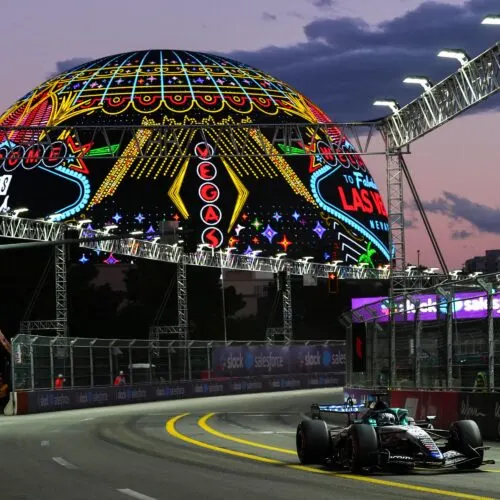
The Las Vegas Grand Prix produced unusually close, high-overtaking racing, fulfilling promises of a spectacle for the first time since the event began in 2023. Its long straights and powerful slipstreaming let cars repeatedly pass one another, while the tight, low-speed corners helped keep the action competitive.
The race saw 352 position changes, including 35 changes for the lead. Cold conditions and the concrete street surface meant low grip but little tyre wear or overheating; the new aerodynamic rules also strengthened the slipstream effect. Kimi Antonelli took pole but started sixth after a grid penalty, leaving Max Verstappen and George Russell on the front row, where they repeatedly traded the lead.
In short
- Las Vegas delivered a rare, high-overtaking F1 spectacle.
- There were 352 position changes, including 35 for the lead.
- Slipstreaming and the circuit’s conditions shaped the close racing.
Explained simply
Formula One is a series of races in which drivers compete in highly engineered cars, with points awarded towards drivers’ and teams’ championships. The Las Vegas Grand Prix is held on a street circuit, using roads around the city rather than a permanent race track.
The circuit’s long straights give cars a chance to follow closely and pass, while its slower corners can keep them within reach of one another. Cold weather and the smooth concrete surface affect how much grip the tyres provide, and changes to the cars’ aerodynamics can influence how easily they follow another car.
The key competitors include Max Verstappen and George Russell, who started at the front, and Kimi Antonelli, who secured pole position but had to start further back after a grid penalty. How the track and rules shape overtaking helps explain why the race can produce frequent changes in position.
Read the full article at the source →
Originally published by Ars Technica as “F1 in Las Vegas: You’ve never seen an F1 race like this before”.