Technology news and discussion on TalkFuse.
Faisal Islam: Fears over the AI boom haven’t gone away
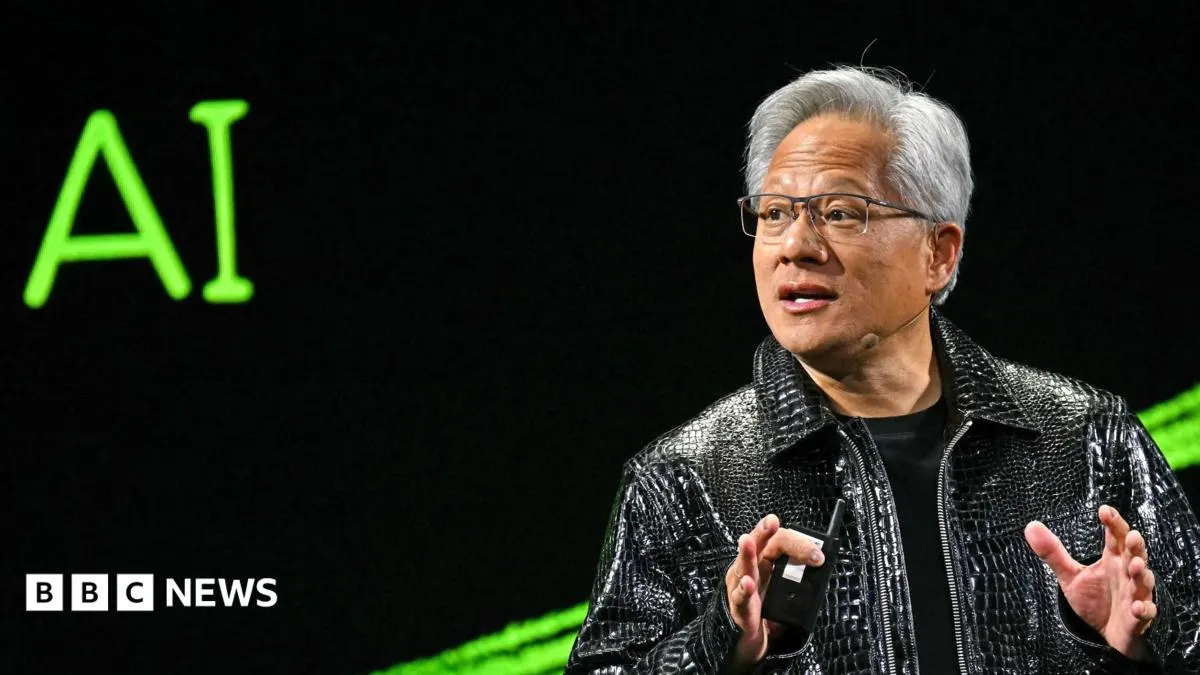
Nvidia shares fell at the Nasdaq, extending a decline of almost 30% over six months, as investors remained uneasy about whether the AI boom can last. The article argues that political intervention to bring Jensen Huang back to lead Nvidia has not resolved concerns and has made the company’s position appear politically fragile.
Anthropic, the first purely AI company to list publicly, is trading below its flotation price, raising questions about investor appetite and OpenAI’s possible listing. Nvidia generates about $400bn (£304bn) in annual chip sales and sits at the centre of financing arrangements supporting data centre expansion. The article also points to political resistance to data centres and the possibility that businesses could switch from costly frontier AI models to cheaper alternatives from China.
In short
- Nvidia shares are down almost 30% in six months.
- Anthropic trades below its flotation price.
- Political and commercial risks continue to cloud AI investment.
Steelman: both sides, in good faith
The strongest fair case each way — we don't pick a winner.
The case for
The pullback in Nvidia and Anthropic shares may reflect a reassessment of valuations and near-term risks rather than a collapse in demand for AI. Supporters argue that Nvidia’s scale and central role in data centres, alongside continued investment by businesses and governments, leave room for substantial long-term growth as AI becomes more useful and widely adopted.
The case against
The declines may signal that investors are questioning whether enormous AI infrastructure spending can earn sustainable returns. Critics point to the sector’s reliance on complex financing, political exposure and public resistance to data centres, as well as the risk that customers choose cheaper models, all of which could weaken demand for costly chips and frontier AI services.
Explained simply
Nvidia makes chips used to train and run artificial intelligence systems, and its sales have grown as technology firms build data centres to support those systems. Its chief executive, Jensen Huang, has become a prominent figure in the industry. The company’s performance is closely watched because many other businesses are investing in AI infrastructure.
AI firms, including OpenAI and Anthropic, develop the models that power chatbots and other tools. They rely on investment and computing capacity, while data centres need large amounts of money, energy and space. Investors are weighing the potential returns against these costs and the prospect that businesses may choose cheaper AI models, including ones developed in China.