Farage signs pact with French firebrand Jordan Bardella to ‘stop the boats forever’
Developed over time first seen 2 months ago
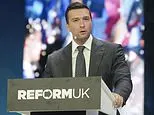
Nigel Farage and French National Rally leader Jordan Bardella signed a memorandum of understanding at Reform UK's party conference in Birmingham, pledging joint action to end Channel small boat crossings. Farage said the pact would "stop the boats forever" and formed part of Reform's wider pledge to end the crisis within 100 days of entering government, while Bardella promised his party would ensure France is no longer a "gateway for illegal migration into the UK" if it wins next year's elections. The agreement marked a notable show of cross-Channel cooperation between two right-wing populist parties and came as Farage sought to shift attention away from a donations scandal that had forced two senior aides to step aside.
Under the deal, migrants who reach British waters after setting off from France would be returned across the Channel by the Royal Navy, an approach the two men said was designed to break the smugglers' business model. Bardella, seen as a contender to become French prime minister should National Rally triumph next year, appeared on stage alongside Farage, who described the pact as a new "entente cordiale". Farage used the conference to reassert Reform's agenda, later telling activists he would declare a "national emergency" on his first day in power and push Parliament to sit through the summer to pass a raft of new legislation.
- Sources
- 2
- Outlets
- 2
- Left · Centre · Right
- 1 · 0 · 1
In short
- Farage and Bardella signed a pact to stop Channel boat crossings
- Deal would see migrants returned to France by Royal Navy
- Comes amid Reform donations row and ahead of French elections
How this story developed
- 2 months ago Nigel Farage and French National Rally leader Jordan Bardella have signed a memorandum of understanding at Reform UK's party conference in Birmingham, pledging joint action to stop Channel small boat crossings.
- 2 months ago Nigel Farage and French National Rally leader Jordan Bardella have signed a memorandum of understanding pledging joint action to stop Channel small boat crossings, in a move Farage says could halt arrivals within 100 days.
- 2 months ago Nigel Farage and French National Rally leader Jordan Bardella signed a memorandum of understanding at Reform UK's party conference in Birmingham, pledging joint action to end Channel small boat crossings.
Full account
Nigel Farage and Jordan Bardella used Reform UK's party conference in Birmingham to unveil a joint pledge aimed at ending Channel crossings, with the Reform leader declaring that the agreement would halt the small boats trade for good. The Reform UK leader and the president of France's National Rally signed a memorandum of understanding on stage, under which the two parties commit to working together so that migrants who reach British waters can be sent back to France. Farage cast the moment as the start of a new 'entente cordiale' between Britain and France, invoking the historic early twentieth-century accords between the two nations, and said the pact underlined how seriously both parties took the issue of border control.
Addressing delegates, Bardella said that a National Rally victory in France's next elections would mean the country stopped acting as a route into Britain for irregular migrants, insisting that the Channel should no longer function as a corridor towards Dover and Folkestone. He argued that people arriving in France should be returned to their countries of origin rather than allowed to continue to the UK, and framed the pact as a joint effort to dismantle the smuggling networks that profit from the crossings and to reassert control over both countries' borders. He described the signing as merely the opening step of a broader collaboration between the two parties.
The announcement was set against the backdrop of French politics, where National Rally is widely seen as well placed ahead of the country's next presidential contest. Bardella, aged 30, is positioning himself for the role of prime minister, while Marine Le Pen is seeking to succeed Emmanuel Macron as president having recently had a ban on standing for office reduced on appeal after her embezzlement conviction; Bardella, once touted as a possible successor to her as party leader, has instead thrown his backing behind her candidacy. The Independent noted the presidential vote falls in April and that National Rally has led opinion polls for well over a year, while the Mail's account placed more emphasis on Reform's own target of resolving the crisis within 100 days of entering government, with returns to be carried out by the Royal Navy.
The pact was struck amid a wider conference push by Farage to project momentum despite recent controversy over a donations investigation that prompted two senior aides to step back from their roles, with the Reform leader set to promise a 'national emergency' and a rush of legislation, including Parliament sitting through the summer, if his party takes power. The Independent additionally reported a separate, more unexpected aside from Farage at the same event: a suggestion that the remains of Napoleon III, buried in Farnborough since his death in 1873 following exile in Britain, could be repatriated to France, though he acknowledged this might face legal obstacles. That detail, along with an audience member's cry of 'Viva le France' as the document was signed, featured only in the Independent's coverage, while the Mail concentrated more heavily on the domestic Reform agenda surrounding the announcement.
Where outlets differ
From the full account, which is AI-written from the sources:
The Independent gives more space to the French political backdrop, including specifics of the April presidential election date, National Rally's polling lead since March last year, and the detail that Bardella had been floated as Le Pen's successor during her trial before an appeals court reduced her ban and he backed her candidacy instead — the Mail mentions the succession dynamic only briefly.
Only the Independent reports Farage's aside about possibly repatriating Napoleon III's remains to France, and the audience shout of 'Viva le France' during the signing.
The Mail places more emphasis on Reform's domestic conference narrative — the 100-day pledge, the donations sting that sidelined two aides, and Farage's planned 'national emergency' keynote — details largely absent from the Independent's account.
The Mail specifies the Royal Navy as the mechanism for returning migrants to France; the Independent's account describes the commitment to cooperate on returns without naming an enforcement mechanism.
Bardella's characterisation of the deal is described differently: the Mail frames it as 'closing' the Channel route, while the Independent quotes him calling it merely 'the beginning of the co-operation.'
Left-leaning outlets 1
Only here: prodigy, sign, small
Right-leaning outlets 1
Only here: signs, french, firebrand, jordan
Every side used: farage, bardella, pact, stop, boats, forever
Headline columns compared word for word; nothing in them is AI-written.
Steelman: both sides, in good faith
The strongest fair case each way — we don't pick a winner.
The case for
Supporters of the pact argue that small boat crossings represent a genuine humanitarian and security failure, with lives repeatedly lost at sea and public confidence in border control eroded, so any credible mechanism for returning migrants to France deserves serious consideration. They see practical value in a direct understanding between British and French counterparts, since cooperation from the departure country is widely regarded as essential to reducing crossings, and existing state-to-state efforts have not delivered the reductions the public expects. Advocates would say that even as an opposition initiative, publicly committing a rising French political force to this goal builds momentum and signals that future governments on both sides of the Channel could act in concert rather than at cross purposes.
The case against
Sceptics would counter that a memorandum signed between two opposition politicians, neither currently holding executive power in their respective countries, carries no binding force and risks overpromising a 100-day solution to a problem that has resisted simpler fixes for years. They may question the legal and logistical practicality of mass returns to France, given existing international obligations and France's own sovereign say in any such arrangement, and note that the timing, arriving amid a donations controversy engulfing Reform UK, invites reasonable doubts about whether this is substantive policy or stagecraft. Thoughtful critics might also worry that formalising cooperation between two populist parties, whatever the merits of the underlying goal, could harden rhetoric around migration without the accompanying detail needed to judge whether it is actually workable.
Explained simply
Nigel Farage's Reform UK and Marine Le Pen's National Rally, now led day-to-day by Jordan Bardella, are two of Europe's best-known right-wing populist parties. Both have built support partly on opposition to immigration, and small boat crossings in the Channel have long been a flashpoint in UK politics, with successive governments struggling to reduce the numbers making the journey from France.
Farage has positioned Reform UK as a serious contender for government, and stopping Channel crossings is central to his platform. Bardella's National Rally is similarly a major force in French politics, with elections due there next year, meaning any commitments he makes now are contingent on winning power himself.
Cross-border cooperation between opposition parties on migration policy is unusual, since neither leader currently holds the office needed to implement such a plan. The agreement therefore functions as a political statement of intent rather than enforceable policy, and its significance lies partly in what it signals about ties between Europe's populist right ahead of elections in both countries.
Coverage · 2 sources
Bias meters
From 2 rated sources.