Federal Court Orders Paramount-Warner Bros Settlement Talks as Antitrust Challenge Looms
Developed over time first seen 2 months ago
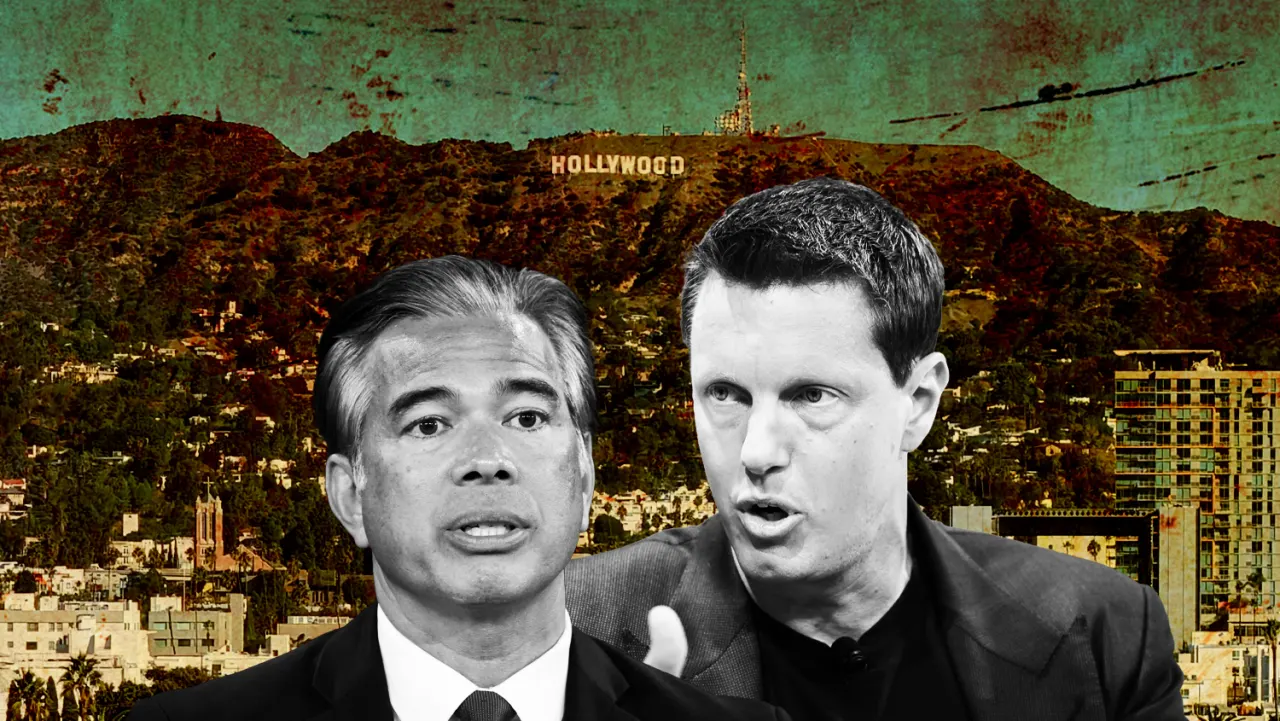
A federal magistrate judge ordered Paramount Skydance and Warner Bros Discovery to hold a two-day in-person settlement conference in late October, as the two sides sought to resolve the antitrust dispute threatening their $111 billion merger ahead of a trial scheduled for March in Oakland. Judge Thomas Hixson's order, issued at a scheduling conference, was described as a standard procedural step rather than a sign that a deal was imminent, though it came amid mounting financial pressure on Paramount, which had been racing to settle with California Attorney General Rob Bonta before 1 October, the date it would start paying Warner Bros shareholders a $7 million daily "ticking fee".
California and 11 other states allege the merger would illegally reduce competition in the theatrical and basic cable markets, and Bonta said he would accept a settlement only if it included "robust structural remedies", likely meaning a significant divestment of combined assets. A planned settlement meeting on 24 August collapsed after Bonta cancelled it, accusing Paramount of leaking details to the press, a claim Paramount denied. Paramount had separately agreed not to close the deal before the March trial, but then asked the court to require the plaintiff states to post a $1.88 billion bond to cover potential delay costs, a request the states called an attempt to renege on that agreement, with a hearing on the matter set for 24 September.
- Sources
- 2
- Outlets
- 2
- Left · Centre · Right
- 0 · 0 · 0
In short
- Judge orders late-October settlement talks in Paramount-Warner Bros antitrust case
- Paramount faces $7m daily fee to Warner shareholders from 1 October
- States demand major asset divestment; bond dispute hearing set for 24 September
How this story developed
- 2 months ago A federal magistrate judge has ordered Paramount Skydance and Warner Bros Discovery to hold a two-day in-person settlement conference in late October, as they seek to resolve the antitrust dispute blocking their $111 billion merger.
- 2 months ago A federal magistrate judge in Oakland has mandated a two-day in-person settlement conference between Paramount Skydance, Warner Bros Discovery, and a coalition of state attorneys general in late October to attempt resolving the antitrust dispute blocking their $111 billion merger.
- 2 months ago A federal magistrate judge ordered Paramount Skydance and Warner Bros Discovery to hold a two-day in-person settlement conference in late October, as the two sides sought to resolve the antitrust dispute threatening their $111 billion merger ahead of a trial scheduled for March in Oakland.
Full account
A federal court in Oakland has ordered Paramount Skydance and the coalition of state attorneys-general opposing its $111 billion (£88 billion) takeover of Warner Bros Discovery to hold in-person settlement talks over two consecutive days in late October. Magistrate Judge Thomas S. Hixson set the requirement during a virtual scheduling hearing, instructing lawyers for both sides, together with the states involved, to agree a firm timetable and submit it to the court. The order does not alter the substantive antitrust trial, which remains scheduled for March next year, also in Oakland.
The move follows the collapse of an earlier attempt to broker a resolution. A prior round of discussions pencilled in for late August fell apart after California's attorney-general, Rob Bonta, called off the meeting at the eleventh hour, alleging that Paramount had leaked details of preliminary discussions to journalists — a claim the company has firmly rejected. Bonta's office was quick to temper expectations around the newly ordered conference, stressing that a court-mandated meeting is a routine feature of litigation of this scale and should not be read as evidence that a settlement is close. Paramount, for its part, struck a more conciliatory tone, saying it welcomed the court's involvement and remained willing to work with the states towards a swift resolution that would allow the deal to close.
Underlying the manoeuvring are significant financial and regulatory pressures on both sides. Paramount is said to be keen to reach terms before the start of October, after which it becomes liable for a substantial daily payment to Warner Bros Discovery shareholders as compensation for the delay. Bonta has indicated he would only accept an agreement built around far-reaching structural changes — understood to mean the divestment of significant assets — to address concerns that the merger would weaken competition in both cinema distribution and basic cable television. Separately, the two sides are contesting a demand by Paramount that the states post a large bond to cover potential losses should the merger ultimately be cleared following any delay, with the states countering that this runs contrary to an earlier commitment Paramount made not to complete the deal before trial. That dispute is due to be heard by the court later this month.
The settlement order also arrives amid a wider legal tangle surrounding the case, including a separate effort by other states to challenge the standing of the coalition pursuing the antitrust action, which is working towards its own deadline in the same timeframe. Coverage of the story varies in emphasis: one account foregrounds the colourful procedural back-and-forth, the personalities involved and the parallel jurisdictional fight making its way towards the Supreme Court, while another concentrates more heavily on the commercial stakes — the daily cost of delay to Paramount and the specifics of the bond dispute. Precise details such as the exact trial date and the full roster of states involved are reported with varying levels of specificity across accounts.
Where outlets differ
From the full account, which is AI-written from the sources:
One account (Deadline) frames the story with more colour and detail — quoting Bonta's office and a Paramount spokesperson directly, naming all twelve states involved, and noting the reported involvement of the Writers Guild of America — while the other outlet omits the WGA angle entirely and does not quote either side directly.
Deadline links the settlement order to a broader jurisdictional battle at the Supreme Court involving Iowa and Montana challenging the blue states' antitrust suit, with a 25 September response deadline; the other source does not mention this SCOTUS dimension at all.
The second source goes into more financial detail than Deadline, specifying the $7 million daily 'ticking fee' Paramount would owe Warner Bros Discovery shareholders from 1 October, and detailing the $1.88 billion bond dispute and its 24 September hearing date — details largely absent from the Deadline account.
There is a minor discrepancy in how precisely the trial date is stated: one source gives an exact date of 2 March 2027, while the other refers only to 'next March' without specifying the year.
The two accounts differ slightly on the deadline for submitting proposed settlement-conference dates to the court (one cites end-of-day 15 September, the other 'next Tuesday'), likely reflecting the same date described differently relative to publication.
Steelman: both sides, in good faith
The strongest fair case each way — we don't pick a winner.
The case for
Those sympathetic to allowing the merger to proceed argue that the media landscape has been transformed by the rise of Netflix, Amazon and other streaming giants, meaning traditional definitions of the theatrical and cable markets understate how much genuine competition exists. On this view, Paramount and Warner Bros Discovery need combined scale to invest in content and compete globally, and prolonged litigation or forced divestments risk destroying shareholder value, jobs and productive assets for the sake of an outdated competitive framework. A negotiated settlement, they would argue, is preferable to a drawn-out trial that leaves both companies in costly limbo.
The case against
Those sympathetic to the states' position argue that combining two of a shrinking number of major studios and cable networks would meaningfully reduce competition, potentially raising prices for consumers and advertisers and narrowing the diversity of viewpoints and content available to the public. They would contend that antitrust enforcers have a duty to secure robust, structural remedies such as genuine divestment rather than accept softer behavioural promises that are harder to enforce over time. From this perspective, the pressure Paramount faces from mounting financial costs is not a reason to weaken the remedies needed to protect long-term market competition.
Explained simply
Paramount Skydance and Warner Bros Discovery are locked in a legal fight over Paramount's $111 billion bid to buy Warner Bros. A group of 12 US states, led by California Attorney General Rob Bonta, argue the merger would harm competition in cinema and cable television, and they have sued to block it. A federal court in Oakland is overseeing the case, with a trial due to start on 2 March if no settlement is reached first.
Paramount is under pressure to settle quickly, because a separate contractual clock means it must start paying Warner Bros shareholders $7 million a day from 1 October if the deal isn't closed by then. Bonta has indicated he would only accept a settlement that includes major structural changes, such as forcing the combined company to sell off some of its assets, rather than lighter conditions. Talks between the two sides broke down once already in August amid mutual accusations, and a court-ordered settlement conference has now been scheduled to try again.
The dispute matters because it will help determine how much control a handful of companies have over Hollywood studios and cable channels, affecting jobs, prices and choice for audiences. It also has financial stakes for both companies' shareholders, given the daily penalty payments and the costs of prolonged litigation.
Coverage · 2 sources
Art Business Companies Culture Markets Research Science