Politics news and discussion on TalkFuse.
FIFA boss Gianni Infantino pushed $20B ‘96-year’ World Cup selloff that left his own CFO in the dark
Developed over time first seen 17 hours ago
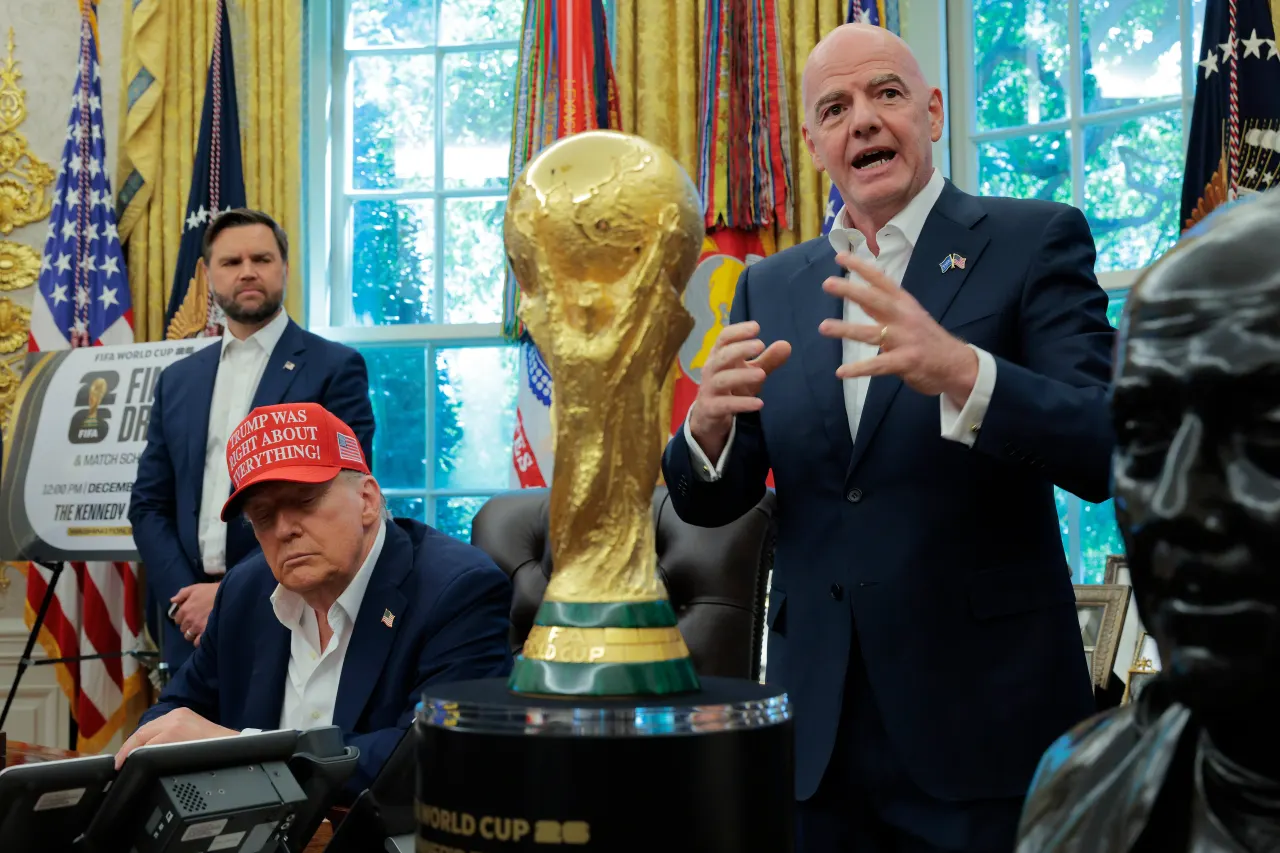
Leaked documents describe a proposal backed by FIFA president Gianni Infantino to sell outside investors a stake in a new company managing FIFA’s commercial rights, at a valuation of $20 billion. FIFA’s finance chief, Thomas Peyer, said he was briefed only the day before a vote and had not received the calculations behind the valuation; he also warned the deal could favour pay-to-view coverage over free-to-air broadcasting.
The proposal would have raised up to $4.22 billion for FIFA Forward Enterprises, while FIFA retained a majority stake. Investors would have had veto rights over major business decisions, and FIFA would have renewed the arrangement in 12-year blocks for up to 96 years, with limited grounds to terminate it. Thrive Capital’s backstop letter offered it priority in buying outside shares and could have required FIFA or rival buyers to provide about $250 million in stock if FIFA pursued another deal during a proposed exclusivity period; the article reports early management approval but does not establish that the deal was completed.
- Sources
- 2
- Outlets
- 2
- Left · Centre · Right
- 1 · 0 · 1
In short
- FIFA considered a $20 billion commercial rights deal.
- The proposed tie-up could have lasted up to 96 years.
- Finance chief Thomas Peyer said he lacked key valuation details.
How this story developed
- 8 hours ago Newly added details describe the proposed investors’ rights and the potential cost to FIFA of switching to a rival deal.
- 15 hours ago Gianni Infantino backed a proposal to bring private investors into a company managing FIFA’s commercial rights, with a proposed valuation of $20 billion.
- 15 hours ago Leaked documents describe a proposal backed by FIFA president Gianni Infantino to sell outside investors a stake in a new company managing FIFA’s commercial rights, at a valuation of $20 billion.
Full account
Leaked documents cited by The New York Post and The Guardian describe a proposal backed by Thrive Capital to place FIFA’s commercial rights in a new US company, FIFA Forward Enterprises (FFE). The plan was put forward shortly before the 2026 World Cup final. The Post reports that the proposed valuation was $20 billion and that outside investors could have contributed up to $4.22 billion. FIFA would have retained a majority stake, while the arrangement would have given investors influence over major business decisions.
The proposed licence could have continued for as long as 96 years, through successive 12-year periods. The Guardian says an internal FIFA document described the organisation’s 51% ownership as lasting in perpetuity. The Post reports that FIFA could end the agreement only following a serious breach by FFE that was not put right. The proposal also included a break fee for Thrive if FIFA violated the agreement or struck a deal with another party, and restricted FIFA from approaching other lead investors for a period.
Both reports describe a management incentive pool of up to 5% of FFE’s shares. Based on the initial $20 billion valuation, the documents indicate it could have delivered as much as $50 million for every additional $1 billion in value. FIFA’s memo said the pool was intended to motivate the new company’s management. The Post also highlights provisions concerning board duties and directors’ ability to vote in the interests of the party that appointed them, subject to conflict rules still to be set.
The reports differ in the details they foreground. The Post focuses on the process inside FIFA and the role of Wall Street: it says CFO Thomas Peyer was briefed only on 18 July, lacked the valuation calculations and abstained, warning that a private owner might favour short-term financial presentation and paid access over free-to-air coverage. It also reports that JPMorgan advised FIFA and helped establish the valuation, and that its executive Mary Erdoes met Infantino after an introduction by Robert Kraft. The Guardian centres on the long licence and potential management payouts, and notes FIFA’s denial that Infantino would have personally profited. Both accounts describe the proposal as having advanced without open bidding; the supplied reports do not establish that the deal was completed.
Where outlets differ
From the full account, which is AI-written from the sources:
The New York Post gives more attention to Peyer’s late briefing and objections, JPMorgan’s advisory role and the absence of open bidding. The Guardian focuses on the 96-year structure, the perpetual 51% stake and the management incentive pool; it also reports FIFA’s denial that Infantino would personally benefit.
The Post describes the arrangement as requiring FIFA to renew in 12-year blocks and says termination depended on a major, uncured breach by FFE. The Guardian quotes internal documents describing rolling 12-year licences up to 96 years and FIFA’s 51% ownership in perpetuity. The Guardian additionally reports a $250 million break fee and a restriction on speaking to other lead buyers.
Left-leaning outlets 1
Only here: 20bn, sell, plan, documents, show
Right-leaning outlets 1
- FIFA boss Gianni Infantino pushed $20B ‘96-year’ World Cup selloff that left his own CFO in the darkNew York Post
Only here: fifa, boss, gianni, pushed, selloff
Every side used: infantino, world
Headline columns compared word for word; nothing in them is AI-written.
Steelman: both sides, in good faith
The strongest fair case each way — we don't pick a winner.
The case for
Bringing in private investors could have unlocked up to $4.22 billion while allowing FIFA to retain a majority stake, potentially funding its work and sharing commercial risk. Supporters could argue that a long-term arrangement and investor safeguards make a large, complex investment viable, provided the terms are sound and FIFA’s leadership properly reviews them.
The case against
A deal lasting up to 96 years, with investors able to veto major decisions and limited grounds for termination, could constrain FIFA’s future choices and commit the organisation well beyond its current leadership. The reported lack of timely briefing and supporting valuation calculations for the finance chief raises legitimate concerns about oversight, accountability and whether the proposed terms were adequately scrutinised.
Explained simply
FIFA is the international body that governs football and organises the men’s and women’s World Cups. It earns money from selling broadcasting, sponsorship and other commercial rights, which help fund competitions and football programmes around the world.
Gianni Infantino has led FIFA since 2016, while its finance chief oversees the organisation’s finances. The reported proposal involved bringing outside investors into a company managing those commercial rights, while FIFA kept a majority stake; Thrive Capital was offered a leading role.
The proposed terms included a $20 billion valuation, investor vetoes over major decisions and renewals lasting up to 96 years. How such a long-term deal was assessed matters because FIFA’s commercial income supports its work, and the reported lack of detail shared with the finance chief raises questions about the review process.
Coverage · 2 sources
Bias meters
From 2 rated sources.
Elections Football Politics Sport World