Culture news and discussion on TalkFuse.
Five reasons to be cheerful despite England’s World Cup exit
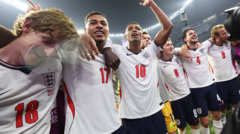
England's World Cup semi-final exit repeats a pattern of late-stage tournament disappointments, yet the squad displayed considerable attacking strength through two prolific forwards. Harry Kane and Jude Bellingham combined for twelve goals across the competition, with Kane maintaining elite form from his club season and Bellingham delivering significantly despite a quieter year at Real Madrid following injury. Both players provided crucial goals at decisive moments that prevented early elimination and secured progression through knockout stages.
The tournament highlights genuine improvement in England's tournament trajectory. The nation struggled to advance beyond quarter-finals before 2018 in World Cups and 2020 in European Championships, yet has now reached late stages in four of the past five major competitions. Beyond individual performances, the squad demonstrated tactical resilience by competing effectively under challenging external circumstances, from extreme heat and humidity to high-altitude venues, suggesting strategic capability that extends beyond player talent.
In short
- England's attack demonstrated depth with Kane and Bellingham each scoring six goals in key moments
- The nation has now reached semi-finals or finals in four of the last five major tournaments, showing substantial long-term progress
- Squad proved capable of performing effectively under difficult environmental conditions including heat, humidity, and altitude
Steelman: both sides, in good faith
The strongest fair case each way — we don't pick a winner.
The case for
England's trajectory warrants genuine optimism rooted in measurable progress. The nation has advanced from routinely failing to progress beyond quarter-finals to consistently reaching late-stage tournaments—four of the past five major competitions have seen significant advancement. Kane and Bellingham demonstrated elite-level performance on the tournament stage, whilst the squad showed tactical adaptability across challenging conditions. This sustained improvement, though not yet culminating in silverware, represents the foundation that historically precedes international tournament success.
The case against
A semi-final exit merits disappointment rather than cheerfulness, particularly given England's investment, resources, and stated ambitions. Whilst improved from previous decades, the pattern of reaching late stages without converting to titles reflects underperformance when measured against elite standards. The headline risks reframing a loss as encouragement through selective emphasis; honest assessment acknowledges that international teams are ultimately defined by trophies. England has not won a World Cup in over sixty years, making semi-final progression appropriate for sober reflection rather than celebration.
Explained simply
England has a long history of disappointing exits from major football tournaments at late stages. Before 2018, the nation rarely progressed beyond the quarter-finals in World Cups, and before 2020, it faced similar difficulties in European Championships. This semi-final exit continues a familiar pattern of underperformance at the crucial stages of these competitions.
The squad's attacking strength centred on two key players: forward Harry Kane and midfielder Jude Bellingham. Kane maintained the elite form he showed at club level, whilst Bellingham delivered significantly despite a quieter season at Real Madrid following injury. The two combined for twelve goals across the tournament, providing crucial strikes at key moments that helped England progress through earlier knockout rounds.
Beyond individual performances, England demonstrated tactical resilience when competing in challenging conditions across different venues, from extreme heat and humidity to high-altitude locations. This suggests the team is improving not just in player talent but in strategic preparation and adaptability. England has now reached the late stages in four of the past five major competitions, indicating genuine progress in the nation's tournament performance.
Art Culture Football Sport UK World