Flock Safety CEO calls for national ‘compromise’ amid camera sabotage and public revolt
Developed over time first seen 2 months ago
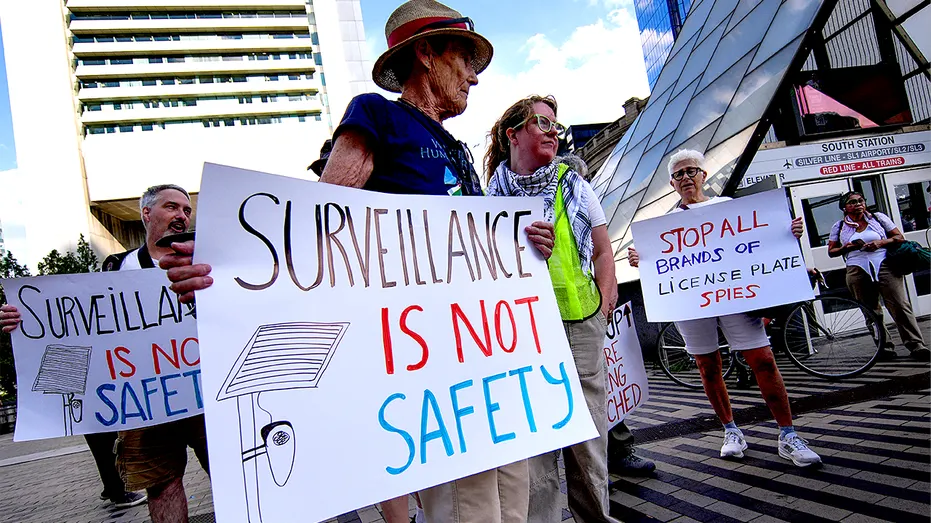
Flock Safety's chief executive, Garrett Langley, called for a national "compromise" between privacy and public safety as opposition to the firm's automated licence-plate reader cameras spread across the United States, culminating in an interview with Fox News host Kayleigh McEnany. Protesters vandalised or stole devices in states including New York, Minnesota, California and Illinois, while others staged peaceful demonstrations, such as a Florida man holding a "Down with the Flock" sign in front of a camera lens. The backlash also reached Capitol Hill, with Senator Bernie Sanders calling for the technology to be banned outright and Representative Tim Burchett pushing to strip its federal funding, reflecting a broader public unease over surveillance and potential misuse by law enforcement.
Langley rejected framing the debate as a binary choice between privacy and safety, arguing both must be balanced, and defended the cameras' record by citing support for more than a million law enforcement investigations and the recovery of over 10,000 missing people. He said Flock had introduced measures including recommended seven-day data retention limits and an audit-assistance tool to flag abnormal usage, and urged state regulators to focus on holding law enforcement accountable for misuse rather than banning the technology altogether. The episode leaves the underlying tension between the company's safety claims and public privacy concerns unresolved, with no new legislative or corporate developments reported since.
- Flock Safety CEO urges "compromise" as public backlash against surveillance cameras grows
- Cameras vandalised in several states; Sanders and Burchett push back in Congress
- Firm says cameras aided over a million investigations, 10,000+ missing person cases
New here? Start with this
Flock Safety makes automated licence-plate reader cameras used by police departments across the United States to help investigate crimes and locate missing people. The company has grown rapidly, and its cameras now sit in thousands of communities, capturing data on passing vehicles that law enforcement can search. That growth has brought scrutiny from people worried about mass surveillance and how the data is stored, shared and potentially misused.
In recent months, opposition has hardened, with some residents vandalising or removing the cameras in states such as New York, Minnesota, California and Illinois. The pushback has reached Washington too, where lawmakers from across the political spectrum, including Senator Bernie Sanders and Representative Tim Burchett, have raised objections, ranging from calls to ban the technology to cutting its federal funding.
Garrett Langley is Flock Safety's chief executive and the company's main public voice in this debate. He has been defending the cameras' record on solving crimes while acknowledging the need for safeguards against misuse, arguing that privacy and public safety can be balanced rather than treated as opposing goals. The dispute matters because it touches on wider questions about how much surveillance technology should be allowed in public spaces, and who gets to decide.
Both sides, in good faith
The strongest fair case each way — we don't pick a winner.
The case for
Supporters argue that automated licence-plate readers are a proportionate, evidence-based tool that has demonstrably helped solve crimes and reunite missing people with their families, and that abandoning the technology wholesale would discard real public-safety benefits to address hypothetical harms. They contend that concerns about misuse are better addressed through sensible safeguards, such as short data-retention limits, audit tools and accountability for police who overstep, rather than an outright ban that removes a proven investigative resource from communities that want it. On this view, a negotiated compromise preserves safety gains while responding seriously to legitimate privacy worries.
The case against
Critics argue that a nationwide network of cameras capable of tracking vehicle movements amounts to mass surveillance infrastructure that fundamentally alters the relationship between citizens and the state, regardless of any voluntary safeguards a private company chooses to offer. They point out that self-imposed policies like seven-day retention or internal audit tools are not legally binding, can be changed unilaterally, and still permit patterns of movement to be reconstructed for anyone, making the technology inherently prone to abuse by law enforcement or through data breaches and mission creep. For them, protecting civil liberties requires legislative bans or strict enforceable limits rather than trusting a vendor's internal governance, however well-intentioned the company's public safety claims may be.