Former Archbishop of Canterbury accuses Nigel Farage of using Christianity to channel anti-Muslim feeling
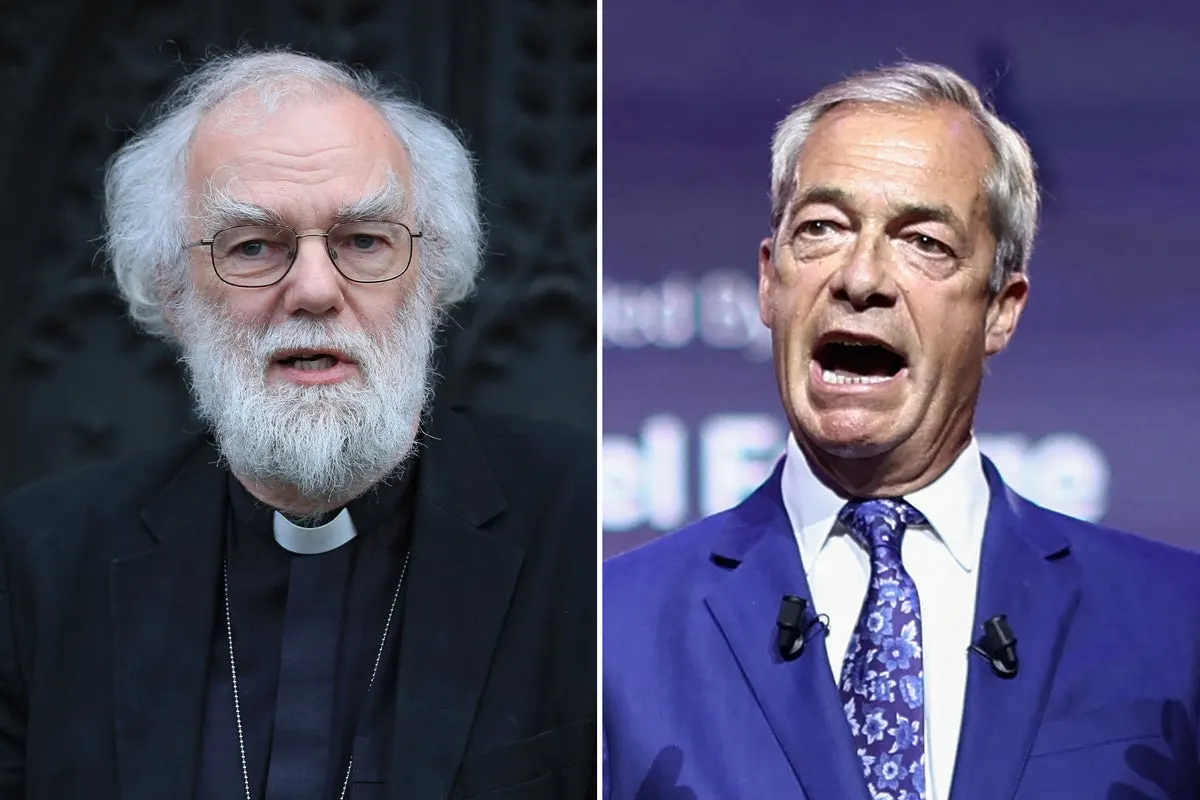
Rowan Williams, who led the Church of England as Archbishop of Canterbury until 2012, has accused Nigel Farage of invoking Christianity to "channel anti-Muslim feeling" in Britain. In an interview with New Humanist magazine, Williams suggested the Reform UK leader uses claims of a Christian society as "ballast" for anti-Islamic sentiment, while doubting Farage holds any genuine personal interest in theology or matters of faith.
Williams pointed to Farage's past remarks, including comments about young Britons "loathing" British values (which Farage confirmed referred to Muslims) and his criticism of a Trafalgar Square Iftar event as an attempt to "dominate" British life. He also addressed Reform UK's hiring of theologian James Orr as an adviser, saying he doubted Farage "lies awake at night thinking about his soul", and said he would want to ask activist Tommy Robinson, who describes himself as a Christian, how his faith squares with rhetoric he says fuels "hostility and violence". Reform UK has been contacted for comment.
- Rowan Williams says Farage exploits Christianity to stoke anti-Muslim feeling
- Cites Farage's Iftar criticism and comments on British values
- Williams also questions Tommy Robinson's professed Christian faith
New here? Start with this
The Archbishop of Canterbury is the senior bishop of the Church of England, the established church in England. Rowan Williams held the role from 2002 to 2012. Nigel Farage leads Reform UK, a political party that campaigns on issues including immigration and national identity.
Christianity has a long history in Britain, while the country is also home to people of many faiths, including Muslims. Political arguments about British identity can therefore involve questions about religion, immigration and what it means to share public life. Reform UK has also brought people with religious expertise into its circle of advisers.
Both sides, in good faith
The strongest fair case each way — we don't pick a winner.
The case for
Farage's invocation of Britain's Christian identity whilst simultaneously making critical remarks about Muslims and Islam suggests he uses religious framing instrumentally to legitimise political hostility to a religious minority. Critics argue this pattern—combining cultural nationalism with anti-Islamic rhetoric under the banner of Christian Britain—obscures sectarian politics as civilisational defence and risks fuelling prejudice whilst appropriating religious authority for partisan purposes.
The case against
Defending Britain's Christian cultural heritage and criticising Islamic practices or policies are both legitimate political positions that do not require bad-faith motives. One can genuinely hold Christian values whilst being concerned about cultural integration or specific Islamic doctrines; discussing British identity through its historical Christian context is mainstream political discourse, and the accusation that Farage instrumentalises religion imputes dishonesty without evidence whilst potentially delegitimising reasonable cultural commentary.