Fox News Power Rankings: South Carolina moves to toss-up
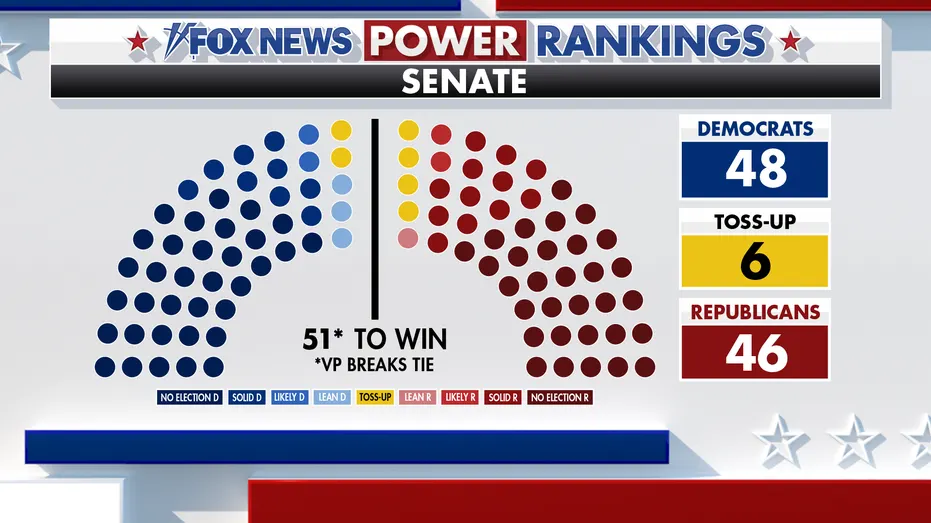
South Carolina’s Senate race has been moved from “Lean R” to “Toss-up” after polling showed Republican Sen. Darline Graham and Democratic challenger Annie Andrews tied at 48 per cent. The shift adds another competitive contest to a Senate map that could determine which party controls the chamber.
The article says six states remain in play, with Democrats potentially reaching 54 seats on a strong night and Republicans retaining control with as many as 52. It describes a wider Democratic advantage in House polling alongside closer Senate contests, partly because several battlegrounds are in states Donald Trump won by at least 11 points. It also links declining approval of Trump, from 44 per cent before the Iran conflict to 36 per cent afterwards, and voter concerns over inflation, petrol prices, government leadership and the war to Democratic advantages on key issues.
In short
- South Carolina’s Senate race is now rated a toss-up.
- Graham and Andrews are tied at 48 per cent.
- The Senate majority remains uncertain across six states.
Steelman: both sides, in good faith
The strongest fair case each way — we don't pick a winner.
The case for
Moving the race to a toss-up reflects the reported tie and recognises that a competitive contest could affect control of the Senate. Democrats can argue that voters’ concerns about inflation, petrol prices, government leadership and the Iran conflict, alongside falling approval of Trump, create an opening for their challenger even in a state he won comfortably.
The case against
A tied poll is only a snapshot and does not establish that the race has become genuinely even; Republicans can argue that their candidate retains the advantage of running in a state Trump won by a wide margin. They may also point out that national dissatisfaction or Democratic strength in House polling does not necessarily translate into a Senate victory, and that Republicans could still retain control under the article’s own range of outcomes.
Explained simply
The US Senate is part of Congress, which makes federal laws and oversees the government. Each state elects two senators, and the party with more seats usually has greater influence over legislation and government appointments.
South Carolina is a strongly Republican state, so a close Senate contest there could affect the balance of power. Senator Darline Graham is the Republican candidate, while Annie Andrews is challenging her for the seat as a Democrat.
Control of the Senate depends on results across several closely fought states, alongside races for the House of Representatives. Voters’ views on prices, government leadership and the Iran conflict may shape those contests.
Elections Geopolitics Government Politics World