France braces itself for a day of carnage with tens of thousands expected on the streets as trade unions join far-left ‘student protests’
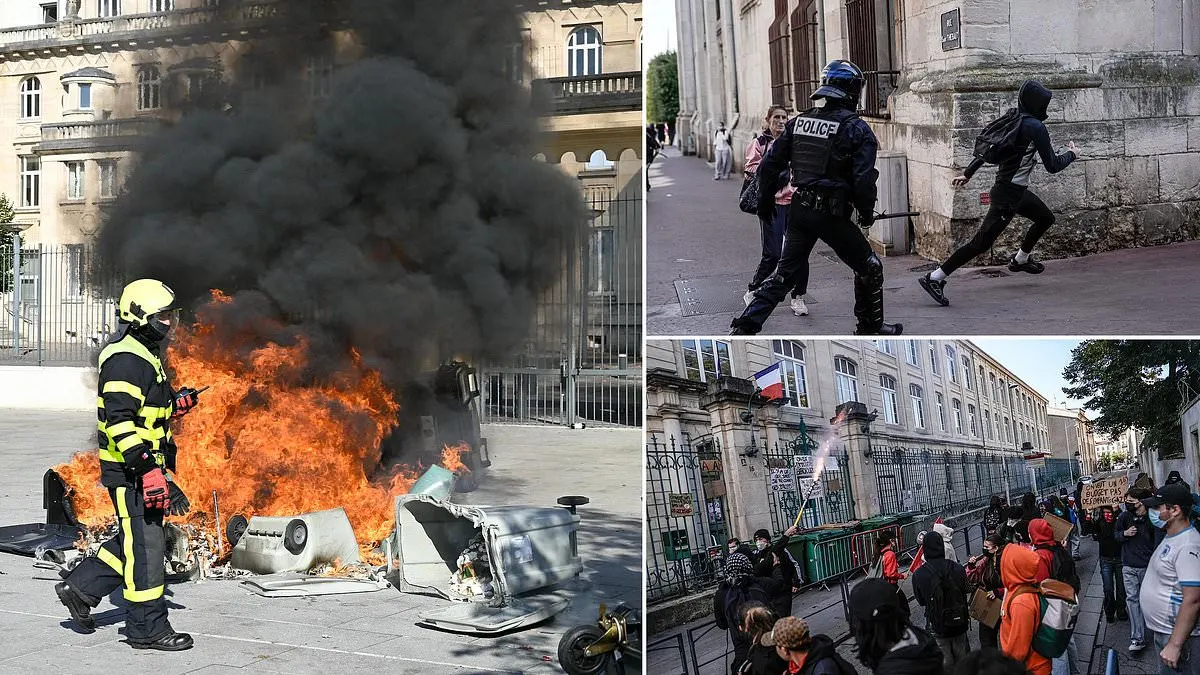
Tens of thousands of people are expected to demonstrate in Paris as trade unions join student protests over conditions in French schools. The unrest has spread across the country, disrupting education and adding to political pressure ahead of the 2027 presidential election.
Students have protested since late September over teacher shortages, crowded timetables and deteriorating school buildings. The government says 215 students and 715 police officers have been injured; a 15-year-old lost a hand after picking up a police-fired stun grenade. Teaching was disrupted at 589 of France’s 3,700 high schools and 32 universities, and around 100 pupils were evacuated after a fire at a Paris school.
- Unions are joining student protests across France.
- School conditions and teacher shortages prompted demonstrations.
- The government reports 215 students and 715 police injured.
New here? Start with this
French students have been protesting since late September over serious problems in their schools: not enough teachers, overcrowded timetables and deteriorating buildings. Trade unions representing workers have now joined the students, and demonstrations involving tens of thousands of people are expected across the country.
The protests have significantly disrupted education, with hundreds of schools and universities forced to suspend or reduce teaching. There have been clashes between protesters and police that have injured people on both sides, and serious incidents including school fires that forced evacuations.
The unrest comes ahead of France's 2027 presidential election, which is a politically significant time for the government. The involvement of trade unions alongside students suggests the issues extend beyond education to broader concerns about working conditions and public services.
Both sides, in good faith
The strongest fair case each way — we don't pick a winner.
The case for
Students are protesting genuine, documented problems affecting public education: teacher shortages, overcrowded classrooms, and deteriorating school buildings that directly harm their learning. These are legitimate grievances about a fundamental public service, and the involvement of trade unions underscores that broader working conditions are at stake. Peaceful protest is a democratic right, and disruption is sometimes the only means to force government attention to longstanding neglect of education funding and infrastructure.
The case against
Whilst the underlying concerns about school conditions merit serious attention, the scale of disruption—affecting 589 high schools and 32 universities—ultimately harms the students the protests claim to represent by interrupting their education. The violence and injuries, including a 15-year-old losing a hand to a police grenade, raise troubling questions about proportionality in both protest tactics and police response. Democratic societies offer formal channels for redress: legislative debate, election cycles, and negotiation with government—methods more likely to produce lasting policy change than widespread disruption that may alienate public support.