France passes law banning under-15s from social media
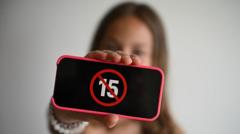
France's parliament has approved a law banning under-15s from social media from January 2027, making it the first European country to impose such a restriction. The move, championed by President Emmanuel Macron, requires everyone in France to verify their age to use social media, and arrives as the UK and EU develop their own child protection measures amid concerns about young people's mental health.
The Senate and National Assembly adopted the ban on Tuesday despite criticism from some on the left, with implementation staged in two phases: from September, under-15s will be barred from opening new accounts, with age verification required for all new sign-ups; from January 2027, the requirement extends to all existing accounts. Platforms will need to use age-verification tools approved by France's privacy regulator, though critics have raised concerns over privacy, the reliability of verification methods, and the pace of the law's introduction. France follows Australia, whose under-16s ban has seen widespread circumvention, with experts noting France's universal verification requirement may improve its chances of success but could heighten privacy risks.
In short
- France bans social media for under-15s from January 2027
- First European country to impose such a ban
- Follows Australia's under-16s ban, which saw wide circumvention
Steelman: both sides, in good faith
The strongest fair case each way — we don't pick a winner.
The case for
Supporters argue that the evidence linking heavy social media use among young teenagers to anxiety, depression, disrupted sleep and exposure to harmful content is now compelling enough to warrant decisive state action, and that waiting for platforms to self-regulate has repeatedly failed children. They contend that parents currently bear an unfair burden trying to police access alone against addictive design features engineered by well-resourced tech companies, and that a universal, legally-backed age-verification requirement gives families and schools a a clear, enforceable standard rather than a patchwork of easily ignored parental controls. For proponents, this is a proportionate exercise of the state's duty to protect children during a formative period of development, much as age limits exist for alcohol, tobacco or driving.
The case against
Critics, including some on the left, argue that mandatory age verification for all users, not just minors, creates a privacy and surveillance risk by requiring millions of adults to submit identifying data to access ordinary online services, with no guarantee that verification systems will be secure or that data won't be misused or breached. They point to Australia's experience, where under-16s have widely circumvented similar restrictions using VPNs and false details, suggesting the law may prove largely symbolic while still imposing real costs on privacy and civil liberties. Sceptics also worry that a blanket ban removes legitimate benefits of social media, such as community, creative expression and support networks, for young people who use it responsibly, and that lawmakers are moving faster than the evidence or technology can reliably support, rushing implementation without fully resolving how verification will work in practice.
Explained simply
Social media platforms such as Instagram, TikTok and Snapchat let people share posts, messages and videos. Governments across Europe are considering ways to protect children online, amid concerns about effects on young people’s mental health.
In France, President Emmanuel Macron has backed a minimum age for social media accounts. The new law requires platforms to check users’ ages, with France’s privacy regulator approving the tools they use.
The policy raises questions about how reliably age checks can work and what personal information they may require. Australia has introduced a similar age restriction, but some young people have found ways around it.