Free accounts can now access ChatGPT’s upgraded task scheduling tool
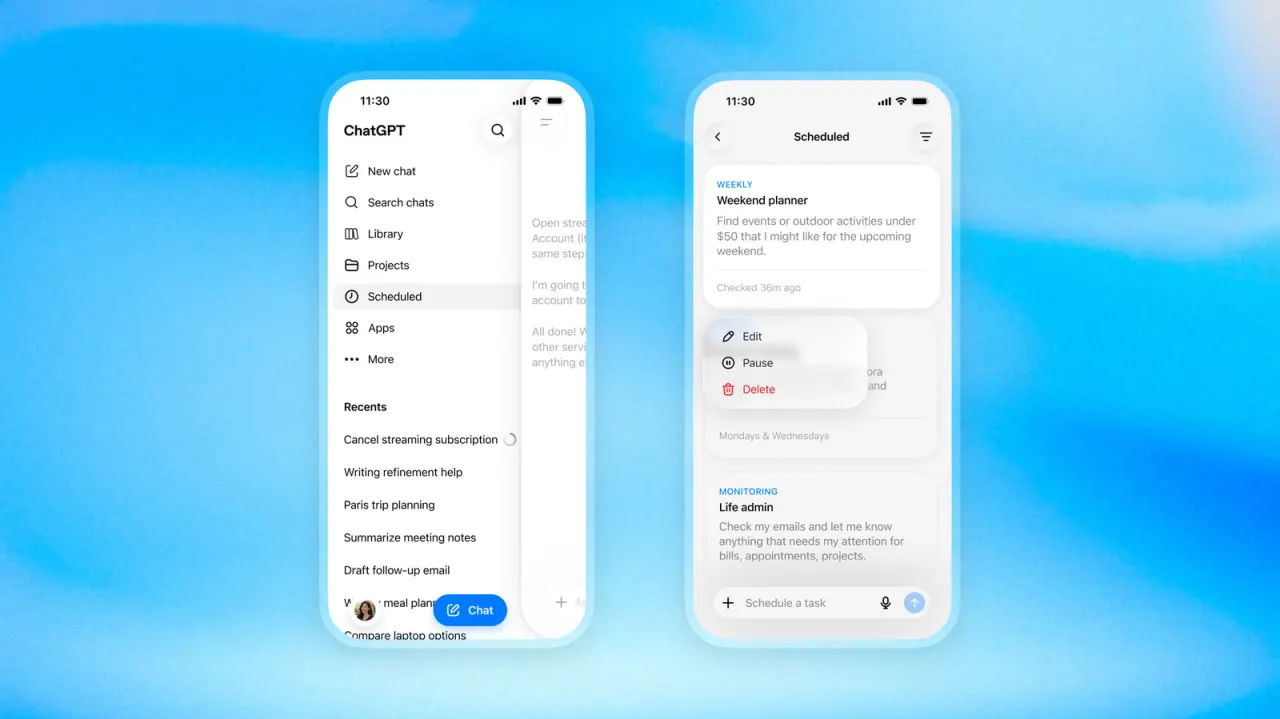
OpenAI has expanded ChatGPT's task scheduling feature, previously reserved for paying customers, so that users on the free tier can now access it too. The move builds on updates first introduced in June, when the company added a dedicated scheduling hub to ChatGPT's sidebar and improved the ability to track and edit future tasks, making it easier for users to automate reminders and recurring prompts.
Alongside the wider rollout, OpenAI has also made it possible to share scheduled tasks with other users, allowing useful setups to be passed on rather than recreated from scratch. Paid subscribers on Plus, Pro, Business and Enterprise plans gain an additional capability from today: the ability to trigger prompts automatically based on activity in Gmail, Slack or GitHub. Suggested uses include travel alerts, notifications about new releases on streaming services, and daily news digests.
- Free ChatGPT users now get task scheduling, previously paid-only
- Scheduled tasks can now be shared between users
- Paid users can trigger prompts from Gmail, Slack or GitHub activity
New here? Start with this
OpenAI's ChatGPT includes a feature that lets users set up tasks the assistant will carry out automatically at a later time or on a repeating schedule, such as sending reminders or generating regular summaries. Until now, this had only been available to people paying for a ChatGPT subscription, while those using the free version of the chatbot could not access it.
OpenAI is the company behind ChatGPT, one of the best-known artificial intelligence chatbots, which is used by both individuals and businesses for tasks ranging from answering questions to drafting text and automating simple workflows. The company offers several account tiers, including a free option and paid plans such as Plus, Pro, Business and Enterprise, with extra features typically reserved for paying customers.
This development matters because it changes what is available to users who do not pay for ChatGPT, potentially making automation tools more widely accessible, while also introducing new ways for the assistant to interact with other services people use for email, messaging and software development.