World news and discussion on TalkFuse.
French protests: ‘It’s only when public, private sector act together that you can make changes’
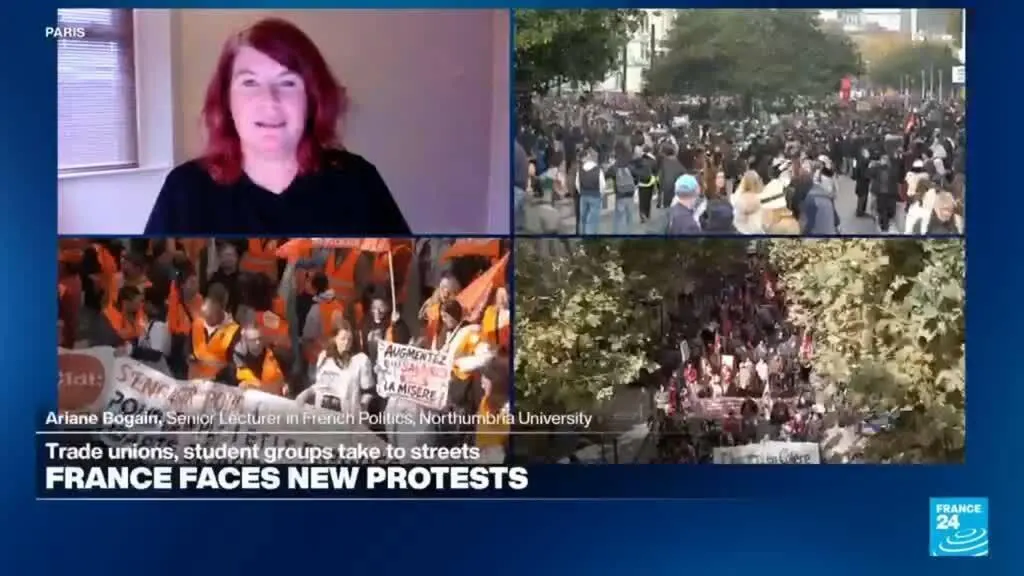
A protest movement in France has broadened from concerns about purchasing power, fuel prices and education into a wider challenge to the government. Lecturer Ariane Bogain says repression cannot restore political authority while the grievances behind public anger remain unresolved.
French politics editor Marc Perelman points to a political paradox: Marine Le Pen and Jean-Luc Mélenchon are ideological opponents, yet both have an electoral interest in weakening the political centre. The discussion frames cooperation between public and private sectors as important to making changes, while highlighting the difficulty of addressing persistent social and economic discontent.
In short
- French protests have grown beyond their initial demands.
- Bogain says repression leaves underlying grievances unresolved.
- Le Pen and Mélenchon share an interest in weakening the centre.
Steelman: both sides, in good faith
The strongest fair case each way — we don't pick a winner.
The case for
Supporters of the protests can argue that persistent concerns about living costs, fuel prices and public services deserve a serious political response, and that protest can bring neglected grievances to the fore. Ariane Bogain’s point is that restoring authority through repression alone risks deepening mistrust; cooperation between public and private sectors may help deliver changes that people experience in daily life.
The case against
Those wary of the movement’s broader challenge can argue that governments must balance competing demands and retain the ability to govern, especially when economic and social pressures are difficult to resolve quickly. They may also worry that protests can be politically exploited by parties with very different aims, including Marine Le Pen’s and Jean-Luc Mélenchon’s, weakening the political centre without offering a workable shared alternative.
Europe Government Politics World