World news and discussion on TalkFuse.
Friend zone: humiliated by US voters, Trump basks in company of autocrats
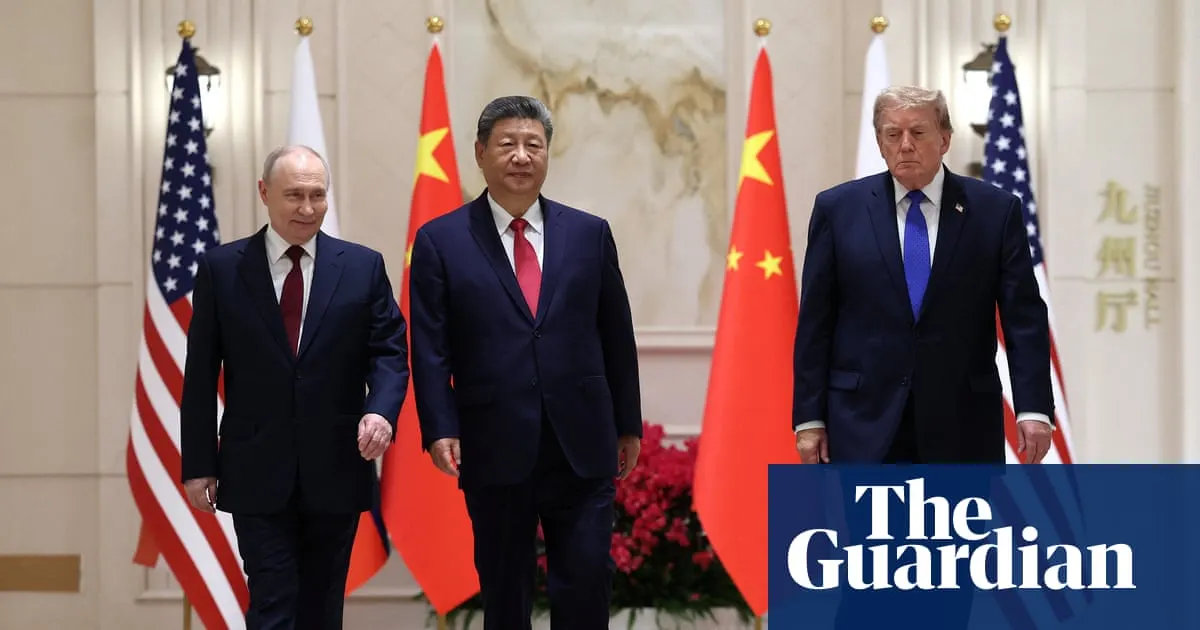
After a bruising midterm defeat weakened Donald Trump at home, he travelled to China and presented his meetings with Xi Jinping and Vladimir Putin as a personal success. The summit’s warm displays of friendship and lavish welcome drew criticism from observers who said the optics undermined America’s moral standing and raised doubts about its support for allies.
The leaders held their first trilateral summit in Shenzhen, but its 70-minute closed-door meeting produced only a four-point declaration that did not mention the wars in Iran or Ukraine. Trump rated the summit “12 out of 10”; his bilateral talks with Putin yielded no immediate commitments on Ukraine, while discussions with Xi touched on Iran, Taiwan, trade and AI safety. The article portrays China and Russia as gaining from the spectacle and Trump’s focus on personal rapport.
In short
- Trump called the summit a “12 out of 10”.
- The leaders’ declaration omitted Iran and Ukraine.
- Critics said the spectacle weakened America’s standing.
Steelman: both sides, in good faith
The strongest fair case each way — we don't pick a winner.
The case for
Supporters could argue that direct engagement with powerful rivals is a practical way to reduce tensions and protect US interests, even when leaders’ political systems and conduct differ sharply. Warm personal diplomacy may keep communication open, while discussions on trade, Taiwan, Iran and AI safety could create opportunities for later progress that a hostile public posture would foreclose.
The case against
Critics could argue that lavish displays of friendship with Xi and Putin, without concrete commitments on Ukraine or Iran, let those governments claim legitimacy and portray the US as less dependable to its allies. They may see the focus on personal rapport as a poor substitute for clear policy, especially when the summit’s declaration avoided major conflicts and offered little evidence of results.
Explained simply
Donald Trump is the US president, Xi Jinping leads China and Vladimir Putin leads Russia. The three countries have major economic and military influence, but their governments disagree over issues including trade, Taiwan and the war in Ukraine. The US also has security partnerships with countries in Europe and Asia.
Meetings between leaders can shape diplomacy through agreements, but public gestures and the way leaders describe their relationships can also affect how other governments judge them. A summit involving the US, China and Russia therefore matters to countries watching for signs of cooperation, rivalry or changes in support for allies.
Americas Asia Business Companies Elections Europe Geopolitics Government Politics World