From occupied Crimea to Oxfordshire: the Kremlin links to new £600m UK theme park
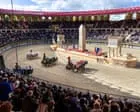
The Guardian has found new evidence that Puy du Fou, the French theme park company seeking planning approval for a £600m site in Oxfordshire, maintained a partnership with sanctioned pro-Kremlin oligarch Konstantin Malofeyev far longer than it has previously admitted. Documents show the collaboration on Russian theme park projects, including one in annexed Crimea, continued until August 2015, more than a year after EU sanctions targeted Malofeyev over his alleged role in backing Russia's 2014 seizure of the territory, raising questions about whether the firm tested the limits of European sanctions law.
Founders Philippe and Nicolas de Villiers met Vladimir Putin in Yalta in 2014 to discuss the planned parks, one of which was to be built on occupied Ukrainian land, and both men later spoke warmly of the Russian president. The newly disclosed documents reveal that Puy du Fou continued making payments to a key Malofeyev aide, that executives internally discussed sanctions risk, and that when the Russian venture collapsed the company went on to explore projects with Iran, while the Chinese Communist Party reportedly had script approval over a planned Shanghai park. The revelations come as Puy du Fou is expected to secure planning permission within days for its Oxfordshire attraction, which would feature historical re-enactments, mock castles and themed villages.
- Puy du Fou's Russia ties with sanctioned oligarch lasted until August 2015, documents show.
- Firm planned Crimea park with Putin ally despite EU sanctions taking effect.
- Company later courted Iran and gave China script approval, amid its £600m UK bid.
Both sides, in good faith
The strongest fair case each way — we don't pick a winner.
The case for
Those raising concerns argue that any Western cultural or leisure venture with historic ties to a sanctioned oligarch, or with dealings tied to occupied Crimea, deserves serious scrutiny, since such projects can lend an air of legitimacy to Kremlin-linked figures and interests. They contend that transparency about such links should have come sooner, and that a company later courting Iran and China raises fair questions about whether commercial ambition is outweighing due diligence on human rights and geopolitical risk. For them, public accountability and robust disclosure standards matter especially where large sums of British money and planning permissions are involved.
The case against
Those defending the company's position argue that international leisure and entertainment businesses routinely explore partnerships across many markets, and that early-stage discussions or past dealings, especially before sanctions were formally imposed, do not equate to ongoing complicity or wrongdoing. They point out that pursuing investment or expansion opportunities in large markets like Iran or China is standard commercial practice for global firms and does not by itself imply endorsement of those states' policies. From this view, journalists and campaigners should distinguish between legally compliant historic business contacts and genuine present-day sanctions violations, and avoid tarring a UK investment project with guilt by association.
Asia Business Europe Geopolitics Middle East Politics UK World