Culture news and discussion on TalkFuse.
From sensation to spectacular, to silence: the strange history of Coleridge-Taylor’s Song of Hiawatha
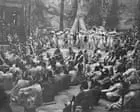
Samuel Coleridge-Taylor’s three-part choral work The Song of Hiawatha will receive its first performance at the Edinburgh International Festival, despite having made the composer internationally famous more than a century ago. The article argues that its revival matters because the work was once a major popular success and helped establish Coleridge-Taylor as the best-known Black classical composer of the Edwardian era, but has since largely vanished from professional concert programmes.
Based on Henry Wadsworth Longfellow’s poem, the cantata attracted hundreds of performances in Britain and the US in the early 20th century, before becoming the basis for enormous Royal Albert Hall stagings involving about 1,000 performers between 1926 and 1939. Those productions relied on racialised and exoticised portrayals of Indigenous people, reflecting the colonial assumptions embedded in Longfellow’s source material; after the second world war, performances became rare. Its original appeal lay in memorable melodies, direct choral writing and music accessible enough for amateur choirs while still rewarding to perform.
In short
- A once-famous Coleridge-Taylor work finally reaches the Edinburgh Festival.
- Its spectacular history included racialised Indigenous stereotypes.
- Its musical accessibility helped make it an early 20th-century sensation.
Steelman: both sides, in good faith
The strongest fair case each way — we don't pick a winner.
The case for
Those supporting the revival argue that Coleridge-Taylor's achievement merits preservation regardless of the source material's problems; the work remains musically significant and its performance with historical context allows contemporary audiences to understand both its genuine artistic value and the period's colonial assumptions. This approach honours an important Black composer's legacy whilst engaging honestly with its complications.
The case against
Critics contend that reviving a work fundamentally rooted in racialised and exoticised depictions of Indigenous peoples risks perpetuating harmful stereotypes, even with contextualisation. They argue that platforms and resources are finite and could be better directed towards works without such problematic foundations, or that revival should only proceed with substantial consultation with affected communities and specific measures to counteract the original work's colonial framing.
Explained simply
Samuel Coleridge-Taylor was a British composer whose music brought him international recognition in the early 20th century. He was the best-known Black classical composer of his era, and The Song of Hiawatha was among his most successful works.
The three-part choral work sets a poem by American writer Henry Wadsworth Longfellow. Its memorable tunes and accessible choral writing helped it become popular with amateur choirs and audiences in Britain and the United States.
Large performances at London’s Royal Albert Hall used about 1,000 performers and portrayed Indigenous people through the racialised conventions of the time. Such portrayals reflected colonial assumptions in the poem, and the work became rare in concert programmes after the second world war.
Culture Entertainment Music Offbeat Weird & Viral