George Clooney Says the Government Shouldn’t Regulate AI: ‘These Are Not the People You Want to Entrust the Holy Grail With’
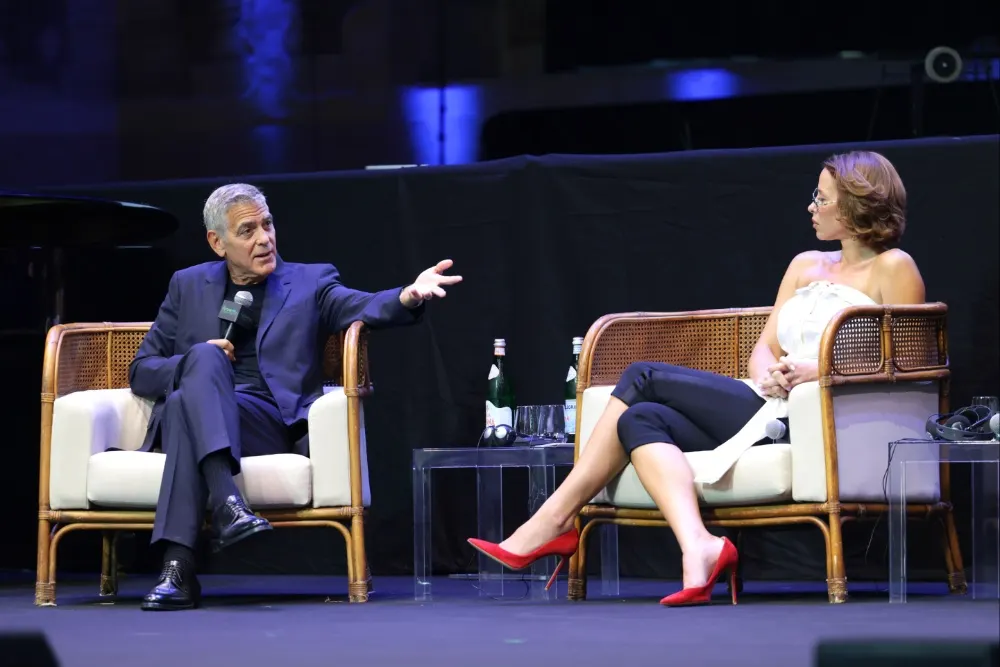
George Clooney has said governments should not be trusted to regulate artificial intelligence, arguing that lawmakers lack the technical understanding needed to oversee such powerful technology. Speaking at a Venice Film Festival symposium hosted by CAA and Finch & Partners, the actor joked about elderly politicians struggling to grasp basic technology while questioning AI executives, saying "these are not the people that you want to entrust the holy grail with." His comments highlight growing unease among public figures about who should be responsible for governing AI as it becomes more powerful and widespread.
Clooney warned that AI's greatest danger lies in eroding trust in reality itself, enabling both convincing fabrications and the dismissal of genuine events, including Holocaust denial being given false credibility. He cited his wife Amal Clooney's experience as a human rights lawyer encountering AI-generated fake legal cases, and raised concerns about deepfakes causing real-world harm, such as a fabricated video of a nuclear strike announcement. He noted AI tools are controlled by "the richest people in the world," and separately voiced support for potential Democratic presidential candidates including Senator Jon Ossoff, Governor J.B. Pritzker and Governor Andy Beshear, stressing the importance of democratic checks and balances.
In short
- Clooney doubts government officials understand AI well enough to regulate it
- Warns AI enables fake news, deepfakes and fabricated legal cases
- Also praised potential future Democratic presidential candidates
Steelman: both sides, in good faith
The strongest fair case each way — we don't pick a winner.
The case for
Governments have a duty to protect the public from harms such as deepfakes, fabricated evidence and attacks on trust, and democratic institutions can set rules that apply across powerful companies. Even if lawmakers lack technical expertise, they can draw on independent specialists and public scrutiny; leaving oversight mainly to wealthy AI executives risks concentrating decisions in private hands.
The case against
AI develops quickly and is technically complex, so lawmakers may impose rules they do not understand, struggle to update them or restrict useful research and applications. Those closest to the technology may be better placed to identify practical risks and design safeguards, while regulation could still be pursued through expert-led standards and accountability without entrusting broad control to government.
Explained simply
Artificial intelligence refers to computer systems that can generate text, images and video, or carry out tasks that usually need human judgement. Some systems can create convincing but false material, known as deepfakes, which can make it harder to tell what is real.
Governments, technology companies and researchers are among those involved in debates over how AI should be overseen. Clooney is an actor and public figure; his wife, Amal Clooney, is a human rights lawyer whose work has included cases involving fabricated legal material.
The debate matters because false information can affect public understanding, legal proceedings and trust in institutions. It also raises questions about who should set rules for powerful AI tools and how those rules can be enforced.