Germany blames Russia after explosive-laden drone found near Ukrainian cargo planes at major airport
Developed over time first seen 2 months ago
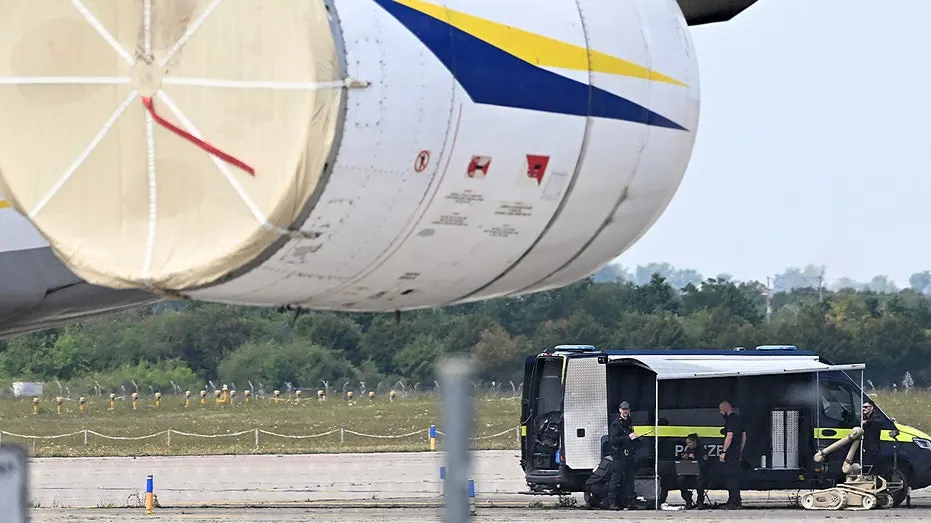
Germany has formally accused Russia of orchestrating a failed drone sabotage attempt at Leipzig/Halle Airport and responded by closing Russian diplomatic facilities, marking Berlin's first public attribution of blame for the August incident and a significant escalation in relations between the two countries. Interior Minister Alexander Dobrindt said forensic evidence and intelligence findings tied Moscow to the attack, calling it part of a "well-established pattern" of Russian hybrid operations across Europe, while Russia denied any involvement, branding the accusation "absurd" and vowing a "mirror-image" response. NATO and EU leaders, including Secretary-General Mark Rutte and Commission President Ursula von der Leyen, backed Germany's findings and signalled further sanctions against Russia.
On 4 August, investigators discovered a drone carrying an explosive device beside a Ukrainian Antonov cargo aircraft at the airport, a major European logistics hub supporting Ukraine's war effort; the device failed to detonate because of a faulty detonator, and officials believe a second drone struck another cargo plane. In response, Germany closed Russia's consulate in Bonn, terminated the lease of the Russian House cultural centre in Berlin, tightened entry rules for Russian nationals, imposed new measures targeting Russia's "shadow fleet," and summoned Russia's ambassador. The row unfolded alongside separate concerns about hybrid threats in Germany, including the discovery of unexploded devices at a power substation in Brandenburg, with no final resolution or further developments reported since Germany's announcement.
- Germany blamed Russia for a failed drone attack at Leipzig/Halle Airport
- Berlin closed Russian diplomatic sites and expelled cultural centre lease
- Russia denied involvement; NATO and EU backed Germany's findings
New here? Start with this
Germany's economic hub of Leipzig sits at the centre of this story because Leipzig/Halle Airport is a key cargo gateway used not just by commercial freight but by Germany's military and NATO allies, including logistics support for Ukraine. Since Russia's full-scale invasion of Ukraine in 2022, European security officials have grown increasingly concerned about so-called "hybrid" attacks: sabotage, drone incursions and other covert acts blamed on Moscow but carried out below the threshold of open warfare, allowing plausible deniability.
The drone incident itself dates back to early August, when a device was discovered near a Ukrainian cargo aircraft at the airport. Germany has since carried out a forensic and intelligence investigation before publicly naming Russia as responsible, a significant step given the diplomatic and legal weight of such an accusation. Russia has consistently denied any involvement in incidents of this kind across Europe.
Key figures include German Foreign Minister Johann Wadephul and Interior Minister Alexander Dobrindt, who represent Berlin's response, and Russia's ambassador to Germany, Sergei Nechayev. The case matters beyond Germany because it touches on wider tensions between Russia and NATO countries, several of which have reported similar drone or sabotage incidents in recent years, and because any formal attribution can trigger diplomatic and economic countermeasures.
Both sides, in good faith
The strongest fair case each way — we don't pick a winner.
The case for
Supporters of Germany's response argue that a well-established pattern of Russian sabotage, cyberattacks and hybrid operations across Europe justifies a firm and public reaction once intelligence services are confident in their assessment. They contend that failing to respond to an explosive device found beside a Ukrainian military-linked aircraft would signal weakness and invite further attacks on critical infrastructure and NATO logistics routes. Given that allies such as NATO and the EU have independently endorsed Germany's findings, proponents see the closure of diplomatic facilities and tightened restrictions on Russian nationals as a proportionate, coordinated deterrent rather than reckless escalation.
The case against
Sceptics of the government's approach caution that attributing a covert attack to a state actor carries enormous consequences and should rest on evidence robust enough to withstand independent scrutiny, not simply be asserted by ministers describing a 'pattern' without public detail. They worry that severing diplomatic ties, closing cultural institutions and expelling personnel narrows the channels available for de-escalation at a moment when miscommunication could spiral, particularly given Russia's promise of 'mirror-image' retaliation. Those urging caution also note that Russia has firmly denied involvement and that rushing to punitive measures before all facts are settled risks entrenching a diplomatic rupture that may prove difficult to reverse even if later clarification emerges.
Full account
Germany has publicly attributed responsibility for a foiled drone sabotage attempt at Leipzig/Halle Airport to Russia, announcing a package of diplomatic and security measures in response. The incident occurred on 4 August, when a drone carrying an explosive device was discovered on the ground close to a Ukrainian Antonov cargo aircraft at the airport, one of Europe's largest freight hubs and a facility used by both the German military and NATO allies for logistics. The device did not detonate, which officials attributed to a faulty detonator rather than any failure of intent. Investigators also believe a separate drone struck a nearby cargo plane around the same time, and one report noted that a further drone was reportedly located near the airport roughly ten days afterwards. Interior Minister Alexander Dobrindt said examination of the equipment involved, combined with intelligence assessments, had established Russian responsibility, describing the operation as consistent with what he called an established pattern of Russian hybrid activity across Europe.
In response, Foreign Minister Johann Wadephul announced that Germany would shut the Russian consulate in Bonn and terminate the contract underpinning the Russian House cultural centre in Berlin, a venue some commentators have long linked to espionage and propaganda efforts. He also confirmed tighter entry restrictions for Russian nationals travelling to Germany and additional measures aimed at Russia's so-called shadow fleet of ageing tankers used to circumvent Western sanctions. Wadephul said he had summoned Russia's ambassador, Sergei Nechayev, to account for the incident. Officials indicated this marked the first time Berlin had formally named Russia as the culprit, having previously referred more cautiously to unspecified "foreign powers" that might have been involved, even though American officials were reported to have privately reached the same conclusion earlier.
Moscow rejected the accusations. The Russian embassy in Berlin dismissed the claim as "absurd" and characterised Germany's countermeasures as an unprecedented escalation in bilateral relations, while foreign ministry spokeswoman Maria Zakharova said Russia would respond in a "mirror-image" manner and accused Berlin of effectively sponsoring terrorism through its military and economic backing of Ukraine. President Vladimir Putin went further, alleging that Germany had fabricated or planted evidence to pin blame on Moscow, though he offered no supporting detail for that claim. Separately, there was speculation that any closure of the Russian House could prompt reciprocal action against the Goethe-Institut in Moscow, Germany's own cultural and language institute in Russia.
The affair drew swift backing for Berlin from its allies. NATO Secretary-General Mark Rutte said the alliance stood in full solidarity with Germany, describing the evidence as clear and welcoming the measures announced. European Commission President Ursula von der Leyen indicated the EU was working on further sanctions against Russia, framing the bloc's response as a show of unity, while Poland's Prime Minister Donald Tusk accused Moscow of stoking tensions more broadly across the region. The episode adds to growing concern in Germany over a wider campaign of suspected hybrid interference targeting military and critical infrastructure, with Dobrindt suggesting further attempts against German targets should be anticipated.
Where outlets differ
Only one account reports Putin's personal, unevidenced counter-claim that Germany fabricated or planted evidence against Russia — the other omits any direct comment from Putin.
Only one account mentions a third drone reportedly found near the airport about ten days after the initial incident, and Zakharova's specific line accusing Berlin of 'sponsoring terrorism'.
Only one account frames this as Germany's first-ever public attribution of the attack to Russia and notes that US media had earlier reported American officials privately blamed Moscow.
Reactions from EU and regional leaders differ in emphasis: one account highlights Polish PM Donald Tusk's comments and the EU's sanctions plans in more detail, while the other cuts off before fully quoting von der Leyen.
One account notes the specific speculation that Russia's Goethe-Institut counterpart in Moscow could face reciprocal closure, a detail absent from the other.