Giant meat-eating crabs with crushing grip complicate Amelia Earhart expedition on remote island
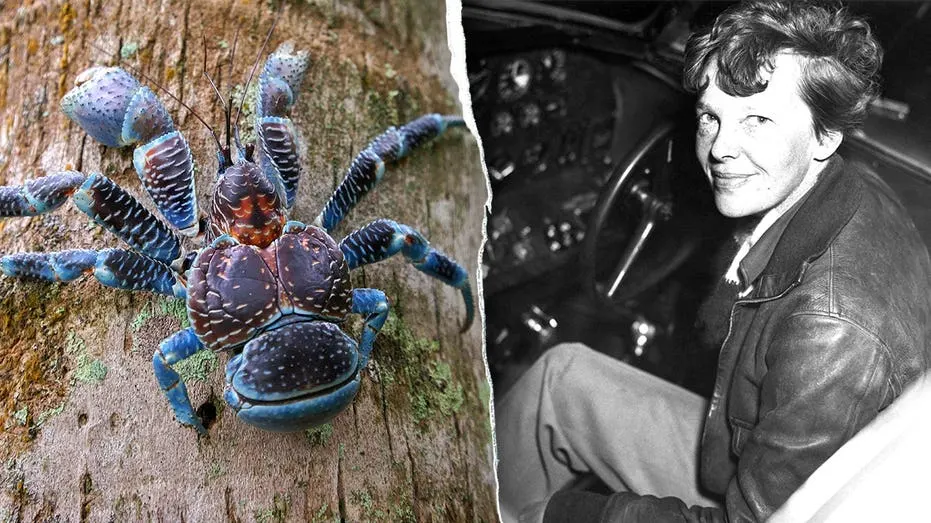
A search team investigating a possible clue to Amelia Earhart’s missing plane has reached the remote Pacific island of Nikumaroro. Giant coconut crabs are one reason the 17 expedition members will sleep aboard their vessel, rather than camp on the island.
Researchers encountered at least four crabs while clearing a two-hour route to the lagoon with machetes and hand chainsaws, but Purdue University said the animals have not disrupted the operation. Coconut crabs are the largest land-dwelling arthropods; their pincers can exert more than 1,765 newtons of force. The expedition is examining a satellite-image anomaly that some researchers believe could be Earhart’s Lockheed Electra.
- Earhart search team has reached Nikumaroro.
- Coconut crabs are among the reasons the crew will sleep aboard its vessel.
- Researchers are investigating a satellite-image anomaly that may be her plane.
New here? Start with this
Amelia Earhart was a US pilot who disappeared in 1937 while attempting to fly around the world with navigator Fred Noonan. Their plane was never found, and researchers have proposed several possible explanations and search locations.
Nikumaroro is a remote island in the Pacific that some researchers think may be linked to the disappearance. The current search is focused on an unusual shape seen in satellite images, which they believe might be part of Earhart’s Lockheed Electra aircraft.
Coconut crabs live on the island and are the world’s largest land-dwelling arthropods. Their powerful pincers are one practical challenge for the team, which is staying aboard its vessel while it investigates the island.