Technology news and discussion on TalkFuse.
Google announces new experimental “CC” AI agent for families
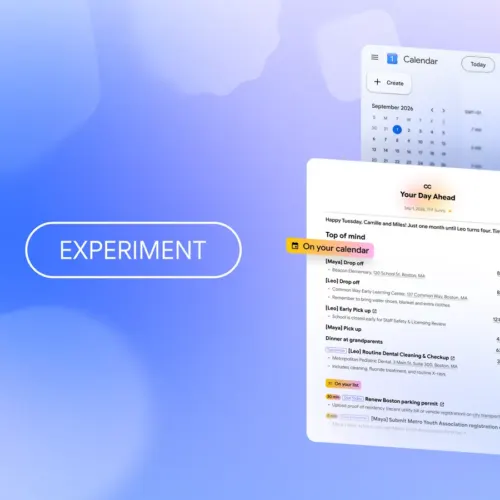
Google has launched an experimental AI agent called CC for families, designed to help coordinate household tasks and planning for up to six family members. The new tool represents an evolution of an earlier experiment that became Gemini's Daily Brief, but now expands personalised AI assistance to a shared family resource, leveraging Google's advantage in having extensive data about users already embedded in its ecosystem.
CC operates with its own Google account and allows family members to choose their level of engagement. The agent collects data from designated Gmail addresses, Google Chat, shared Google Drive folders, and other explicitly shared sources. Each morning, registered users receive a "Your Day Ahead" email summarising events and task updates, whilst the agent can manage shared calendars, set reminders, and complete tedious household tasks like filling out school permission forms. Currently powered by Gemini 3.8 Flash on isolated cloud instances, CC is available to waitlist signups now and is restricted to personal Gmail accounts for users aged 18 and over.
In short
- Google launches CC, a shared family AI agent to coordinate household tasks and planning
- Agent learns family preferences and handles calendars, reminders, and administrative tasks
- Limited to adults managing households; not tied to paid subscriptions
Steelman: both sides, in good faith
The strongest fair case each way — we don't pick a winner.
The case for
A shared AI assistant could reduce the routine work of coordinating calendars, school forms and household tasks, giving families more time and helping ensure that important details are not missed. Because members choose what to share and how much to engage, supporters could see CC as a practical, optional service that builds on tools many households already use.
The case against
A family assistant that draws on email, chats, files and calendars could bring sensitive household information into one system, creating privacy and security concerns even when sharing is designated. Critics could also question whether reliance on Google’s ecosystem gives the company too much influence over family routines, and whether convenience may encourage people to share more data than they otherwise would.
Explained simply
Google has been testing AI tools that use information from its services to offer personalised help. One earlier experiment developed into Gemini’s Daily Brief, which gives users a summary of what is ahead.
CC extends that idea to a household: up to six family members can share information with it and use it to organise plans and tasks. It has a separate Google account, and people choose which sources, such as email, chat or shared files, it can access.
The tool matters because it brings AI assistance into shared family routines, while relying on information held across Google’s services. Its usefulness and privacy depend in part on what each household chooses to share.
AI Cricket Research Science Sport Technology