Google reveals Gemini Robotics 2.0, promising improved dexterity and safety
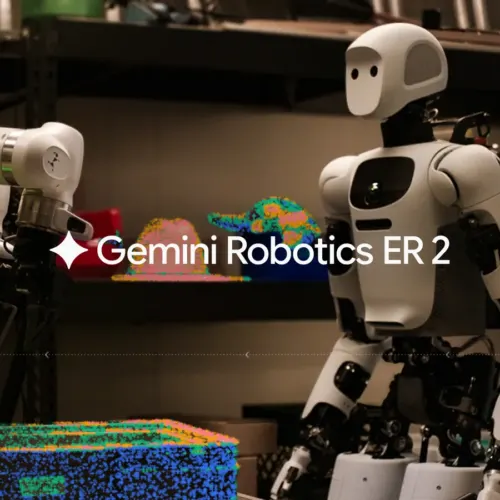
Google has unveiled Gemini Robotics 2.0, a suite of AI models intended to make robots more capable of handling complex, changing real-world tasks. The company says the system improves dexterity, whole-body control, real-time reasoning and cooperation between robots, advancing its longer-term aim of creating general-purpose “physical AGI”.
The central model, Gemini Robotics ER 2, interprets instructions and live video from a robot’s cameras, enabling it to monitor progress and correct individual failed steps without restarting a task. Google says it identifies key moments in video with almost 90% accuracy and assesses task completion frames with nearly 60% accuracy, while the action-generating Gemini Robotics 2 and offline On-Device 2 versions remain available only to a limited set of testers.
In short
- Google introduced Gemini Robotics 2.0 for more adaptable robots.
- ER 2 uses live video to reason through tasks.
- Most action models remain limited to selected testers.
Explained simply
Robots have typically been built for specific jobs, needing different programming for each task they're asked to do. Google is developing software to change this, enabling robots to adapt and learn how to handle new and changing situations.
Gemini Robotics 2.0, the latest version of Google's system, allows robots to watch themselves work through cameras and understand whether they're completing tasks correctly. If a robot encounters a problem with part of a task, it can attempt to fix just that portion rather than starting over completely.
Google's long-term vision is to create robots flexible enough to perform many different types of work without needing to be reprogrammed each time. The company considers progress in this area vital to the future of practical robotics.