Google’s experimental Playground platform uses AI to create games for you
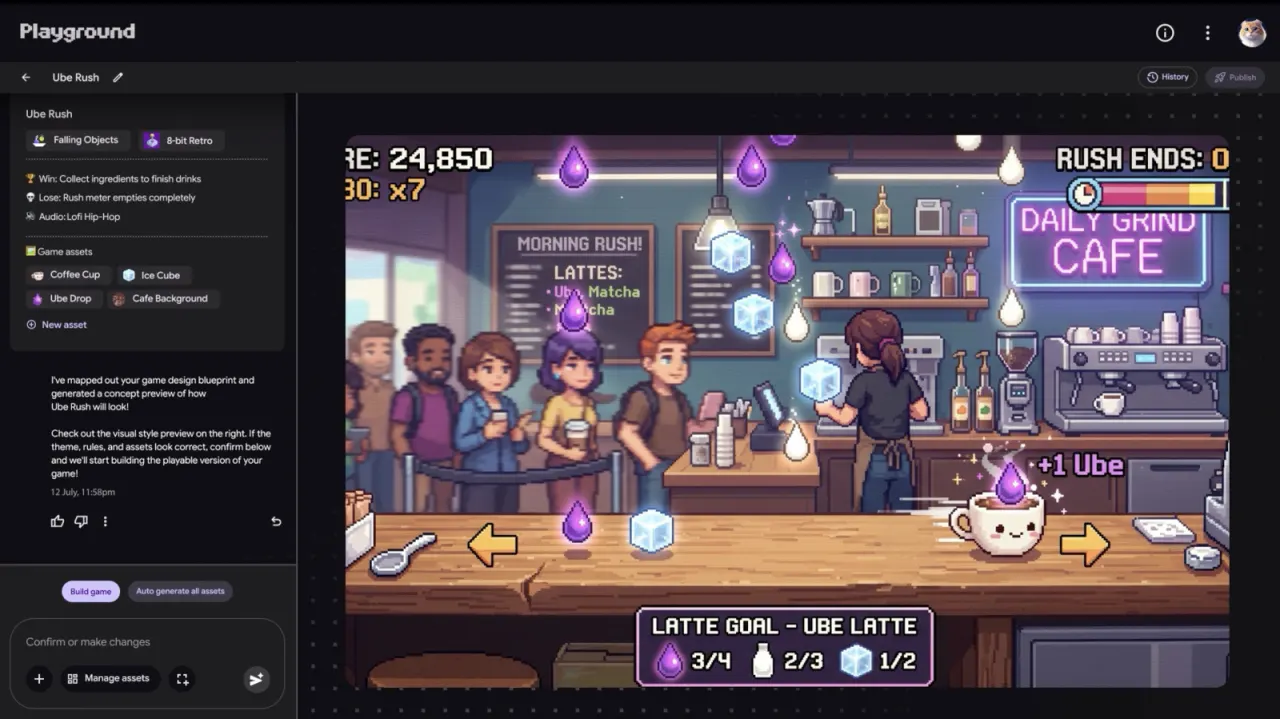
Google has launched Playground, an experimental AI platform that lets people create games by describing them in prompts, without needing coding or drawing skills. It could make game creation more accessible, while giving users ways to refine how their games look and play.
Users can choose 2D or 3D and, in some genres, single-player or multiplayer, then adjust mechanics, physics and graphics with further prompts. Games can stay private, be shared by link or appear in a community gallery, where published games support leaderboards. Google plans to add Unity Spark integration; access is currently limited to US residents aged 18 and over, with availability tiered by Google One membership.
- Google’s Playground creates games from text prompts.
- Users can refine mechanics, physics and graphics.
- US access is limited to adults and tiered by Google One membership.
New here? Start with this
Google has launched an experimental platform called Playground that creates video games based on descriptions you type. Users can simply write what kind of game they want—such as "a space adventure" or "a puzzle game"—and artificial intelligence builds a playable game automatically, without the creator needing to know how to code or draw.
Creating games has traditionally required technical expertise in programming, graphic design, and art, or hiring professional teams to do this work. Playground removes this barrier by using artificial intelligence to generate the game automatically. Users can then refine their creation by typing additional requests to adjust how it plays, looks, or behaves.
This matters because game development has remained inaccessible to most people. Platforms like Playground that lower these barriers could allow many more people to create games. Currently, access is limited to residents of the US aged 18 and over, with fuller features available to people who pay for Google One subscriptions.
Both sides, in good faith
The strongest fair case each way — we don't pick a winner.
The case for
This represents genuine democratisation of creative expression – just as consumer photography and home recording made creative fields accessible to those without specialised training, lowering barriers to game creation unlocks ideas from people with creative vision but no coding skills. Rapid iteration through natural language prompts could foster experimental design and diverse games, with imagination rather than technical ability as the limiting factor.
The case against
Whilst democratisation has value, substantially lowering barriers risks devaluing professional expertise and labour central to quality game development, and could flood markets with derivative content rather than genuinely novel work. Legitimate concerns remain about whether such tools expand creative possibility or primarily recombine existing patterns, the sustainability of free creation at scale, and the ethics of training AI on professional creative work.