Guinea-Bissau referendum approves new constitution that expands president’s powers
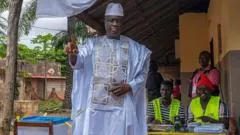
Voters in Guinea-Bissau have approved a new constitution that significantly expands presidential powers, in a referendum organised by the military government that seized control last November after a disputed election. The changes let the president appoint and dismiss the prime minister and cabinet, create or abolish ministries, and dissolve parliament during a "grave political crisis", shifting the balance of power in the country's semi-presidential system away from parliament and the premiership. The vote matters because it will shape governance ahead of presidential and parliamentary elections due in December, which the junta says are meant to restore civilian rule, though critics fear it instead entrenches military-backed authority.
Provisional results showed 70% backed the changes against 30% opposed, on turnout of nearly 60%, though the main opposition party, the PAIGC, boycotted the vote and its leader accused organisers of undermining democracy; some activists claimed roughly 90% of registered voters stayed away. The new charter also cuts parliamentary seats from 102 to 65, reduces electoral constituencies from 29 to 12, and requires presidential candidates to have lived in the country continuously for the previous five years, while keeping the five-year, two-term presidential limit. Guinea-Bissau, among the world's poorest nations and dubbed a "narco-state" by the UN due to drug trafficking through its islands, has seen at least nine coup attempts since independence from Portugal in 1974, and the December elections will test whether the military follows through on its pledge to hand back power.
In short
- Guinea-Bissau referendum approves constitution boosting presidential powers
- 70% voted yes on nearly 60% turnout; opposition boycotted
- Changes precede December elections meant to restore civilian rule
Steelman: both sides, in good faith
The strongest fair case each way — we don't pick a winner.
The case for
Supporters could argue that a stronger presidency may make government more coherent and accountable by giving the elected head of state clear authority to appoint a cabinet and respond to serious political crises. They may also see the referendum result as a public mandate for institutional change ahead of promised elections, and argue that fewer parliamentary seats and constituencies could simplify a persistently unstable system.
The case against
Critics could argue that concentrating power in a president appointed by a military-led transition weakens parliament and makes it easier for military-backed authorities to entrench their influence. The boycott by the main opposition, disputed claims about participation and new barriers affecting political representation give reason to question whether the vote reflects broad consent, while the powers to dismiss the government or dissolve parliament could undermine checks on the executive.
Explained simply
Guinea-Bissau has a semi-presidential system, in which power is shared between the president, prime minister and parliament. Since independence from Portugal in 1974, the country has experienced repeated coup attempts and political instability.
The PAIGC is a major opposition party, and its leader opposed the referendum. The country has also been a route for drug trafficking, an issue that has drawn international concern. The planned December elections are intended to return the country to civilian rule after the military took power.