Have physicists finally discovered glueballs? New evidence points to yes.
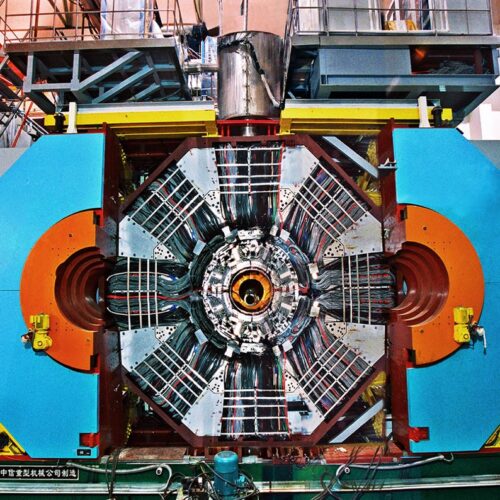
Physicists working on the Beijing Spectrometer III experiment have reported strong new evidence for glueballs: hypothetical particles made entirely of gluons, the force-carrying particles that bind quarks together. Their finding matters because glueballs are predicted by quantum chromodynamics, the theory of the strong nuclear force, but have remained unconfirmed despite decades of searches.
The leading candidate is X(2370), first identified at BES III in 2011. Using a dataset exceeding 10 billion J/ψ particles, researchers measured its mass at 2.395 GeV/c², matching the lattice-QCD prediction for the lightest glueball state; the results were posted as an arXiv preprint and presented at ICHEP.
- BES III reports compelling evidence for the long-sought glueball.
- X(2370)’s measured mass matches theoretical predictions.
- Confirmation would strengthen quantum chromodynamics.