International break injuries leave leading clubs short of key players
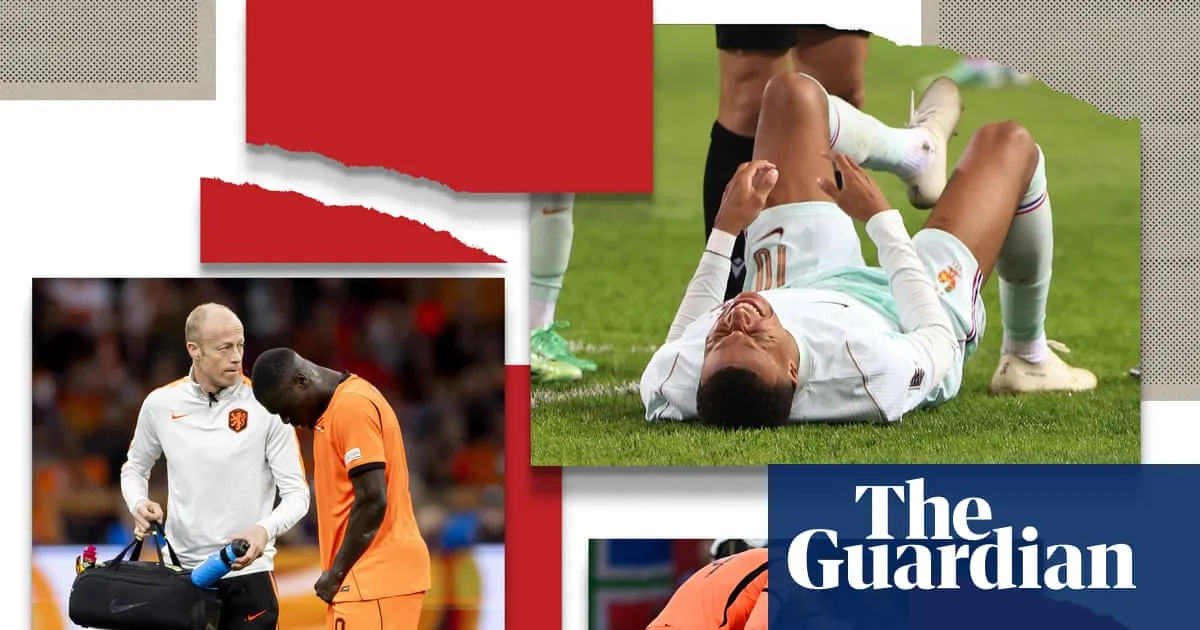
A packed international break has left Premier League clubs and European rivals facing a growing list of injured players, renewing concerns about the demands placed on elite footballers. The injuries have frustrated clubs who rely on those players for crucial league fixtures, while “load management” and the intensity of international schedules have become part of the debate.
Among the players affected are Bournemouth’s Alex Scott, who could miss up to two months with a worsening quadriceps injury, and Sunderland’s Brian Brobbey and Dan Ballard, both sidelined with strains. Arsenal are monitoring Kai Havertz, Christos Tzolis and Ezri Konsa after withdrawals or injuries, while Liverpool’s Alexander Isak and Cody Gakpo also picked up injuries on international duty. Declan Rice played 69 matches and 5,394 minutes last season; Manchester City’s Erling Haaland was given a brief rest, while Elliot Anderson, Marc Guéhi and Harry Kane started all four England matches.
- A gruelling international break has added to clubs’ injury concerns.
- Alex Scott could be out for up to two months.
- Isak, Havertz, Brobbey and others are among the players affected.
New here? Start with this
An international break is a scheduled pause in the football season when players leave their clubs to play for their national teams. During these breaks, players travel internationally and often play multiple matches in quick succession, sometimes with less recovery time than they experience at their clubs.
Injuries that occur during international duty can significantly impact clubs, particularly when several teams lose key players at the same time. Since the domestic season continues after the break, clubs face fixtures with weakened squads, affecting their ability to compete for league points and other trophies.
The timing of these injuries has sparked renewed debate about fixture congestion and player welfare. Football's packed calendar requires elite players to balance club and international commitments with minimal rest, raising ongoing questions about whether the current demands are sustainable for player health.
Both sides, in good faith
The strongest fair case each way — we don't pick a winner.
The case for
The current schedule demands too much of elite players, who face relentless fixture congestion between club and country. When injuries mount during international breaks—particularly to key players like Scott, Isak and others—it damages both player welfare and the integrity of club competitions that supporters and clubs invest in. Better rest protocols or modified international schedules are necessary to protect players' long-term health and allow clubs to compete fairly.
The case against
International football serves crucial purposes beyond clubs and deserves protection in the football calendar. Countries have legitimate rights to call upon their players, and international matches generate essential revenue and fan engagement whilst providing competitors with important preparation and national pride. Rather than diminishing international football, the solution lies in better coordination between club and country regarding load management and injury prevention—both parties share responsibility for player welfare without sacrificing either the club game or international competition.
Europe Football Sport UK World
Read the full article at the source →
Originally published by The Guardian as “Havertz, Isak, Dorgu … spate of injuries with national teams leaves sour taste for top clubs”.