Science news and discussion on TalkFuse.
Paramount Skydance plans to combine three streaming services in one platform
Developed over time first seen 2 months ago
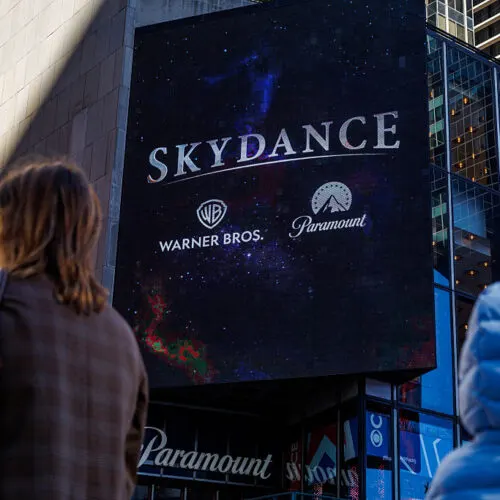
Paramount Skydance has completed its $111 billion acquisition of Warner Bros. Discovery and announced plans to combine three streaming services—HBO Max, Paramount+, and Discovery+—into a single unified platform. This consolidation could improve content recommendations and user experience by eliminating the content fragmentation that forces current subscribers to juggle multiple services.
The combined platform may streamline technology infrastructure and enable more advanced features, but could also lead to higher subscription prices and reduced programming diversity. Beyond streaming, Skydance now owns major media outlets CBS and CNN, which will maintain editorial independence, as well as rival children's channels Cartoon Network and Nickelodeon, whose future remains unclear.
- Sources
- 2
- Outlets
- 2
- Left · Centre · Right
- 0 · 0 · 0
In short
- Paramount Skydance merges HBO Max, Paramount+, Discovery+ into one platform
- Combined service could improve recommendations but potentially raise prices
- Skydance also now owns CBS, CNN, Cartoon Network, and Nickelodeon
How this story developed
- 2 months ago Paramount Skydance has completed its $111 billion acquisition of Warner Bros. Discovery and says its streaming services will eventually unite on one platform.
- 2 months ago Paramount Skydance has completed its $111 billion acquisition of Warner Bros. Discovery and announced plans to combine three streaming services—HBO Max, Paramount+, and Discovery+—into a single unified platform.
- 2 months ago Paramount Skydance says HBO Max, Paramount+ and Discovery+ will eventually become one streaming service, following its completion of the Warner Bros. Discovery acquisition.
Full account
Skydance has completed its acquisition of Warner Bros. Discovery in a $111 billion transaction, creating a media conglomerate that now oversees multiple streaming platforms. The newly formed company, which simply goes by Skydance, has announced its intention to eventually consolidate its direct-to-consumer video services into a single unified platform. This consolidation will bring together HBO Max, Paramount+, and Discovery+—a move that concludes months of speculation about the fate of these rival streaming operations.
The rationale behind the merger emphasises both practical and commercial considerations. By operating a single streaming service rather than three separate platforms, Skydance can eliminate technological redundancy and develop more sophisticated content recommendation systems that function across the combined catalogue. The unified approach should theoretically reduce subscriber churn caused by content fragmentation, as viewers no longer need multiple subscriptions to access comprehensive entertainment options. With a combined base of over 200 million direct-to-consumer subscribers, the company positions itself to compete more effectively against larger rivals such as Netflix, Disney, and Amazon.
However, consolidation presents considerable trade-offs. While streamlining operations may eventually yield technological improvements and enhanced features, it could simultaneously drive price increases as customers face bundled offerings they may not desire. Subscribers interested primarily in prestige dramas like The Last of Us or House of the Dragon may resist paying for unscripted content and children's programming. Additionally, merging diverse content libraries under one service could result in reduced programming variety and editorial independence.
Skydance has indicated that the integration process will unfold gradually. Initially, the services will continue operating independently, though bundling options may become available relatively soon. Company leadership has indicated that artificial intelligence developments may accelerate the technical integration process. Separately, Skydance's ownership of CBS and CNN—which will remain independently operated—further expands the company's media footprint beyond streaming.
Where outlets differ
From the full account, which is AI-written from the sources:
SOURCE 1 explicitly mentions all three services (HBO Max, Paramount+, Discovery+) consolidating into one; SOURCE 2 concentrates primarily on HBO Max and Paramount+ merging without emphasising Discovery+.
SOURCE 2 specifically references AI technology as a means to accelerate integration; SOURCE 1 does not mention technological acceleration mechanisms.
SOURCE 1 includes discussion of news platforms (CBS, CNN) operating independently; SOURCE 2 omits this detail.
SOURCE 2 notes an apparent contradiction between Casey Bloys' previous statements favouring separate services with bundling options and Ellison's announcement of full consolidation; SOURCE 1 presents Bloys' comments without highlighting this shift.
SOURCE 1 emphasises potential drawbacks including higher prices and reduced programming diversity; SOURCE 2 emphasises competitive positioning against major streaming rivals.
Steelman: both sides, in good faith
The strongest fair case each way — we don't pick a winner.
The case for
The case for consolidation rests on genuine consumer and operational benefits. Combining services eliminates subscription fatigue—customers today face overwhelming choice and inflated monthly costs juggling multiple platforms. A unified service with HBO dramas, Paramount franchises and Discovery's content can deliver superior recommendations through pooled data, whilst eliminating duplicate infrastructure. Greater scale strengthens negotiating power with content creators and reflects consumer demand for simplicity over endless fragmentation.
The case against
The case against consolidation emphasises that competition drives innovation and protects consumers. When each service must differentiate to survive, quality and investment improve across the ecosystem. Reducing alternatives to a single gatekeeper invites price increases—corporate consolidation historically benefits shareholders rather than consumers. A monopolistic platform also concentrates cultural power dangerously and threatens creative independence. The promised efficiency gains rarely translate to genuine consumer value when competitive pressure disappears.
Explained simply
Streaming services are platforms where viewers pay to watch films and television programmes on demand. Over the past decade, different entertainment companies have launched their own services, meaning customers often need multiple subscriptions to access different libraries of content.
Paramount Skydance has agreed to purchase Warner Bros. Discovery in a $111 billion deal that would bring three major streaming services under one company: HBO Max, Paramount+ and Discovery+. Currently, these services are separate, so viewers wanting access to all their content must pay for three different subscriptions.
Merging the services into a single platform could simplify things for viewers and potentially reduce costs for those subscribing to all three. However, fewer streaming services could reduce consumer choice and potentially lead to higher prices overall as licensing costs rise.
Coverage · 2 sources
Read the full article at the source →
Originally published by Ars Technica as “HBO Max, Paramount+, and Discovery+ “will unify into a single service””.