HBO’s Lanterns Rewrites John Stewart’s Family Legacy With Father’s Failed Guardian Test
Developed over time first seen 2 months ago
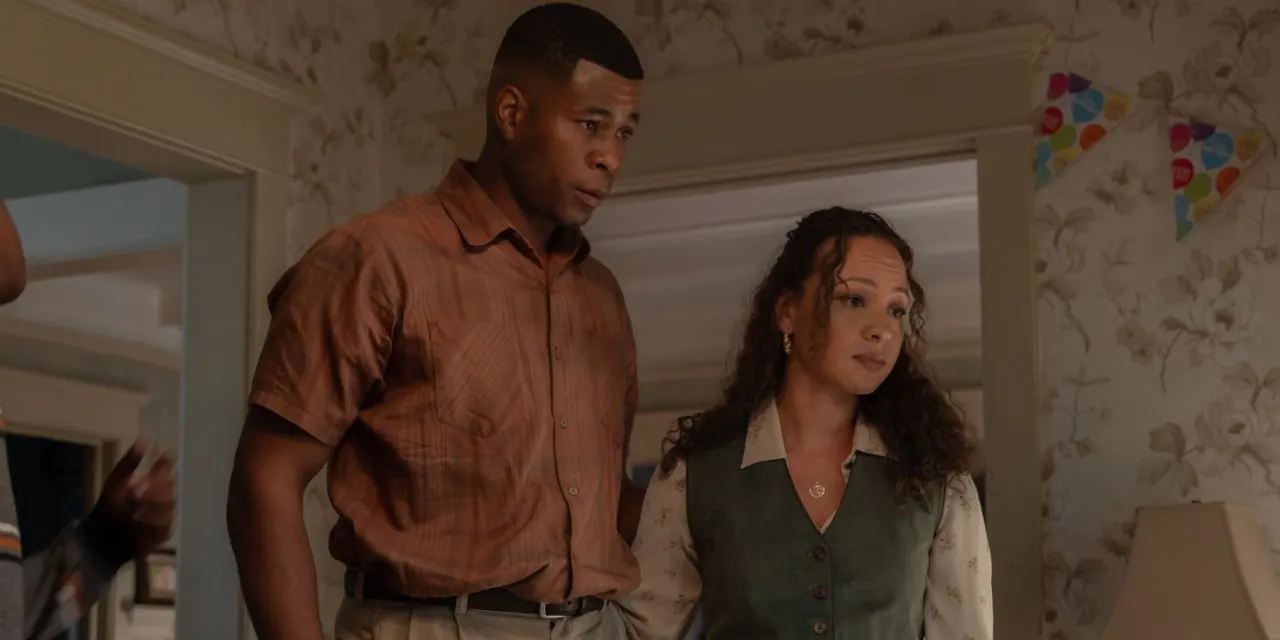
HBO's Lanterns series introduced a significant reimagining of John Stewart's origin in its third episode, 'OutKast,' by adding a familial connection to the Green Lantern mythos that has no precedent in DC Comics canon. The episode reveals that Stewart's father was selected by the Guardians of the Universe to undergo a trial decades before his son's induction, but failed the test of courage, an experience that left him deeply traumatised and fundamentally altered his life.
This creative departure marks a deliberate shift in the show's narrative direction, pivoting the central focus toward John Stewart whilst recontextualising his path as part of a larger family story. By tying Stewart's destiny to his father's rejection by the Guardians, the series is crafting an entirely original backstory that diverges from decades of established comic book lore, suggesting that HBO's adaptation intends to chart its own course rather than strictly adapting existing material.
- Episode 3 introduces John Stewart's father as a failed Green Lantern candidate who was tested and rejected by the Guardians of the Universe
- This entire backstory is original to the HBO series and has no basis in DC Comics canon
- The show uses this family trauma to reframe John Stewart's journey and shift narrative focus away from Hal Jordan
New here? Start with this
John Stewart is one of several characters who have carried the title of Green Lantern in DC's comics and cartoons, drawing his powers from a ring given by an ancient order called the Guardians of the Universe. HBO's new television series Lanterns is a live-action take on this mythology, and it has been developing its own version of events rather than following the comics scene for scene.
The point of interest here is that the show has invented a new piece of backstory: it suggests John Stewart's father was once tested by the Guardians for the same role his son later takes on, and that he failed. Nothing like this exists in the original comics, so it represents the show's writers making a deliberate choice to build new family history around the character.
This matters for viewers and long-time fans because it signals how far HBO is willing to diverge from decades of established Green Lantern lore, shaping expectations for how faithful or original the rest of the series will be.
Both sides, in good faith
The strongest fair case each way — we don't pick a winner.
The case for
Supporters of the change argue that television adaptations succeed by earning emotional stakes in visual, serialised form rather than replicating decades of comic continuity panel-for-panel, and that grounding John Stewart's heroism in an inherited, generational struggle gives the series a distinct dramatic engine and thematic depth. They point out that great adaptations, from other superhero television, have long taken similar liberties and been praised for using new backstory to explore themes of legacy, trauma and redemption that resonate with viewers unfamiliar with the source material. For them, fidelity to a character's spirit matters more than fidelity to plot details that were themselves the product of one era's storytelling choices.
The case against
Critics who value canon fidelity contend that inventing a father-son mythology found nowhere in the comics risks overwriting the character's established identity and the specific cultural and historical context that made Stewart's introduction as a Black Green Lantern significant in the first place. They worry that when adaptations feel free to fabricate major biographical elements, they weaken the trust between long-time readers and the property, and substitute a more generic 'chosen family trauma' arc for the harder, more original work of adapting what already existed. For these fans, the choice signals a preference for formulaic television tropes over the distinctiveness that drew audiences to the character and its history in the first place.
Full account
Episode three of HBO’s Lanterns, titled “OutKast”, shifts attention from the Rushville investigation involving Hal Jordan and John Stewart to an account of Stewart’s early life. It presents a substantially revised version of John’s route to becoming a Green Lantern: the Guardians initially approach his father, John Stewart Sr., in the 1990s, during the search for a successor to Abin Sur. The encounter ends badly when the elder Stewart is overcome by fear, while Hal Jordan ultimately proves suitable for the role.
The failed selection leaves John Sr. deeply affected and places strain on the Stewart household. Lianna, a Guardian played by Laura Linney, later visits the family and tells John’s mother, Bernadette, that their young son could still have the potential to serve as a Lantern. Bernadette and John Sr. respond by shaping John’s upbringing around the prospect of that future, subjecting him to demanding attempts to make him fearless and hoping the Guardians will continue to observe him.
The episode follows that pressure into John’s adulthood, linking his path through the US Marine Corps, his later dishonourable discharge and art school to the expectation that he will eventually take Hal’s place. When the Guardians finally contact him, John succeeds where his father did not. Cast comments reported alongside the episode frame Bernadette’s behaviour as an effort to regain control after family trauma and to turn a painful disappointment into a purpose for her youngest child.
This interpretation markedly departs from the character’s established comic-book history. In his 1970s debut, John was introduced as an unemployed architect and a more openly anti-establishment figure, selected after Guy Gardner was incapacitated to act as Hal’s reserve. He later became Earth’s principal Green Lantern. Later comics added difficult elements to his Detroit childhood, but the television version’s premise that his parents deliberately trained him from infancy for the ring creates a new family legacy and a far closer, predetermined link between John and Hal.
Where outlets differ
Source 1 concentrates on the Stewart family’s emotional dynamics and quotes Jasmine Cephas Jones on Bernadette’s motives, stressing trauma, powerlessness and her drive to direct John’s future.
Source 2 places greater emphasis on the contrast with DC comics continuity, outlining John’s original debut, his work as an architect and subsequent revisions to his background. It also describes the parents’ arrangement with the Guardian more explicitly as a bargain.
Both reports agree that John Sr. fails a Guardian test, that Bernadette helps mould John for a possible Lantern role, and that John later passes his own test.
Coverage
- Collider — HBO’s ‘Lanterns’ Stars Break Down John Stewart’s Unforgettable Origin Story in Episode 3
- Collider — HBO’s ‘Lanterns’ Just Made a Major Departure From DC Comics With This Character’s Backstory