World news and discussion on TalkFuse.
Henry Nowak killer Vickrum Digwa applies to appeal against murder conviction after he stabbed student to death
Developed over time first seen 2 days ago
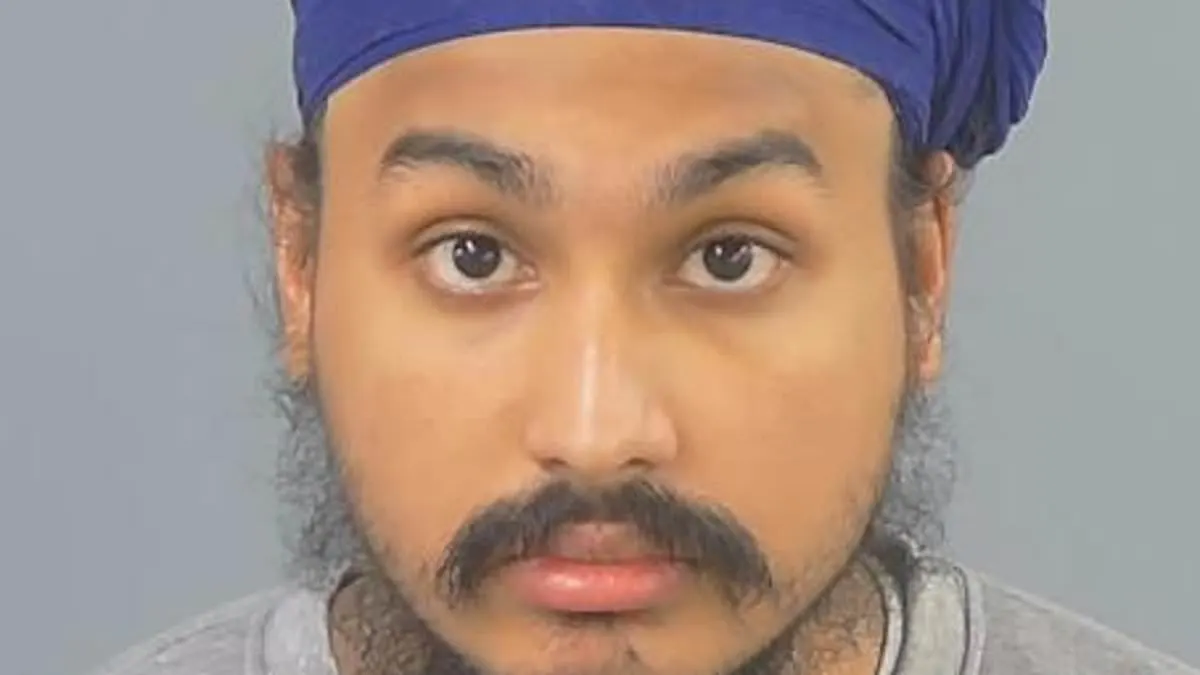
Vickrum Digwa has formally applied to appeal his conviction for murdering 18-year-old Henry Nowak, arguing that the verdict is unsafe. The application is separate from his challenge to his sentence and does not guarantee a further hearing.
Digwa stabbed Nowak with a Sikh ceremonial dagger in Southampton on 3 December 2025, then falsely claimed the student had racially abused him. He says the trial judge wrongly excluded old WhatsApp messages and that jurors should not have heard a secret recording of his confession. Digwa was jailed for life, with his minimum term increased from 21 to 25 years; his mother received a three-year sentence for hiding the murder weapon.
- Sources
- 2
- Outlets
- 2
- Left · Centre · Right
- 0 · 0 · 2
In short
- Digwa has applied to appeal his murder conviction.
- His minimum term was raised to 25 years.
- The appeal application does not guarantee another hearing.
How this story developed
- 1 day ago Vickrum Digwa has formally applied to appeal his conviction for murdering Henry Nowak, arguing that the verdict is unsafe. The application is separate from his challenge to his sentence and does not automatically mean there will be another hearing.
- 2 days ago Vickrum Digwa has applied to appeal his conviction for murdering 18-year-old Henry Nowak, arguing that it is unsafe. The application follows a separate appeal over his sentence, which led to a longer minimum prison term.
- 2 days ago Vickrum Digwa has formally applied to appeal his conviction for murdering 18-year-old Henry Nowak, arguing that the verdict is unsafe. The application is separate from his challenge to his sentence and does not guarantee a further hearing.
Full account
Vickrum Singh Digwa has formally applied to appeal against his murder conviction for killing 18-year-old Henry Nowak in Southampton on 3 December 2025. His lawyers, Imran Khan and Partners, said the application concerns whether the conviction is safe and is separate from the proceedings over his sentence. Making an application does not guarantee that a further hearing will be granted.
Digwa was found guilty of repeatedly stabbing Nowak with a Sikh ceremonial dagger. He was sentenced to life imprisonment in June, with a minimum term initially set at 21 years. The Court of Appeal later raised the minimum to 25 years after the Attorney General argued that the original term was too lenient. Digwa has also sought a Supreme Court review of his sentence, though the reports describe the sentence challenge at different stages.
In his conviction application, Digwa is reported to dispute the trial judge’s decision to exclude WhatsApp messages Nowak sent when he was about 13. Digwa says the messages would have supported his claim that Nowak had used racist language. The judge ruled the material irrelevant and inadmissible, and found Digwa had lied about the alleged abuse. Digwa is also reported to argue that the jury should not have heard a police recording in which he confessed to the stabbing, on the grounds that it breached evidence rules.
After the attack, Digwa told police that Nowak had racially abused him. Officers handcuffed the wounded student before he received medical attention. Body-worn camera footage of the incident later became public and prompted protests; it captures Nowak saying he had been stabbed and an officer doubting him. The coverage also recalls Digwa filming Nowak as he lay dying. Nowak’s father, Mark, has described earlier reports of a planned conviction challenge as shocking.
Where outlets differ
From the full account, which is AI-written from the sources:
Source 1 says Digwa’s intention to challenge the conviction had been known for some time, but that he has only now formally lodged an application. Source 2 focuses on the application and attributes the account of its proposed grounds to the BBC.
Source 2 says Digwa intends to argue the conviction is unsafe on four grounds, but the supplied report details only the arguments about the WhatsApp messages and the recorded confession. Source 1 describes those two arguments without specifying four grounds.
The accounts differ in how they describe the sentence proceedings: Source 1 says the Court of Appeal increased the minimum term from 21 to 25 years after the Attorney General challenged it as unduly lenient. Source 2 also mentions a separate request for Supreme Court review and gives the revised term after time already served as 24 years and 190 days.
Source 2 specifies the dagger’s blade as 21cm and includes the Attorney General’s argument that Digwa misused a religious exemption for carrying it in public. Source 1 instead gives more space to the body-worn footage, public reaction and the officers’ treatment of Nowak.
Steelman: both sides, in good faith
The strongest fair case each way — we don't pick a winner.
The case for
Digwa’s application can be seen as a legitimate safeguard: a murder conviction should be reviewed if relevant messages were wrongly excluded or a confession recording was admitted unfairly. An appeal would allow a court to assess whether those trial decisions could have affected the verdict’s safety.
The case against
The conviction followed a jury trial, and the reported account says Digwa stabbed Nowak and then falsely claimed Nowak had racially abused him. The rules of evidence require judges to weigh relevance and fairness, and the appeal process should not reopen a conviction unless there is a sound legal basis to doubt the trial’s outcome.
Explained simply
A murder conviction is a jury’s finding that a person is guilty of unlawful killing. In England and Wales, someone convicted of a crime can ask the Court of Appeal to review the verdict, but an application must be considered before any appeal hearing is granted.
Vickrum Digwa was convicted of murdering 18-year-old Henry Nowak, who was stabbed in Southampton in December 2025. Digwa says evidence and instructions at his trial affected the safety of the verdict; an appeal court would decide whether those points justify changing the conviction.
The conviction and sentence are separate matters: a challenge to one does not automatically overturn the other. The case matters because the appeal process is intended to check whether a criminal trial was fair and its outcome reliable.
Coverage · 2 sources
Bias meters
From 2 rated sources.