‘He’s forcing higher bills’: Trump spends billions to kill clean energy and keep coal alive
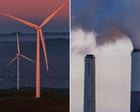
The Trump administration has directly spent $2.7bn of taxpayer money working to shut down offshore wind power while allocating a further $1.125bn to prop up coal, moves critics say are pushing up Americans' energy bills. Opponents argue the president is prioritising fossil-fuel companies — including those that donated record sums to his campaign — over the working-class voters he promised to help, with former Washington governor Jay Inslee accusing him of "fattening the wallets of his cronies" with public funds. The administration denies spending taxpayer money, framing the wind payments as returned bid money that firms are voluntarily redirecting to other energy projects.
Since March, the Department of the Interior has struck four deals paying companies to cancel eight offshore wind projects and invest in fossil fuels, the first with TotalEnergies and the latest with Duke Energy; seven Democratic-led states have sued, calling it an illegal use of public money. On coal, the Department of Energy announced $625m in September to extend the life of coal plants, up to $500m via the Defense Production Act for 13 plants and an Oakland export terminal, and a further $3.6m to retrofit nine plants. Analysts note there is no precedent for the government directly paying developers to give up legally acquired leases, and point out that coal is the dirtiest and most expensive fossil fuel — one 2023 study linked up to 460,000 US deaths from 1999 to 2020 to coal-plant air pollution.
In short
- Trump spent $2.7bn against wind and $1.125bn boosting coal.
- Critics say the moves raise bills and favour donors.
- Seven Democratic-led states are suing over the wind deals.
Steelman: both sides, in good faith
The strongest fair case each way — we don't pick a winner.
The case for
Proponents argue that reliable, affordable baseload power remains essential for grid stability and keeping electricity costs manageable for ordinary Americans, and that coal has legitimately employed generations of workers whose communities deserve government support during energy transition. They contend that rapidly shifting to renewables without protecting established industries harms working-class voters, and that using returned bid funds—rather than new appropriations—addresses fiscal concerns whilst allowing companies flexibility in their investment strategies.
The case against
Opponents argue the government should not artificially sustain an economically declining industry, particularly by paying companies to abandon legally held renewable leases, which sets a troubling precedent and wastes resources better invested in renewable sectors now generating cheaper electricity and significant employment. They contend this approach prioritises fossil fuel interests—many major donors to the administration—over public health and climate stability, especially given coal's documented link to hundreds of thousands of deaths from pollution, and that it contradicts free-market economics by subsidising an increasingly expensive technology.
Explained simply
The Trump administration has announced a significant policy shift, directing billions of dollars towards shutting down offshore wind power projects whilst funding coal power plants instead. This represents a change from the previous administration's renewable energy focus and signals a return to fossil fuels as America's primary energy source. The decisions have sparked controversy over government spending, consumer energy costs, and environmental priorities.
A central point of dispute is whether public funds should support these initiatives and what effect they will have on Americans' energy bills. The administration maintains that payments tied to cancelled wind projects are not new taxpayer money but rather returned bid funds, whilst critics argue that public resources are being used to prop up a declining coal industry. Seven Democratic-led states have challenged the legality of the arrangements, contending they represent an improper use of government funds.
The disagreement reflects fundamental differences in views about America's energy future and which industries deserve government backing. Coal power is expensive to operate and presents environmental and health concerns, yet has been significant as an employer in particular regions. The administration's approach prioritises these traditional energy sources, whilst opponents argue it will raise consumer energy costs and hinder the shift towards cleaner forms of power generation.