High-speed footage shows detached bee stingers pumping venom autonomously
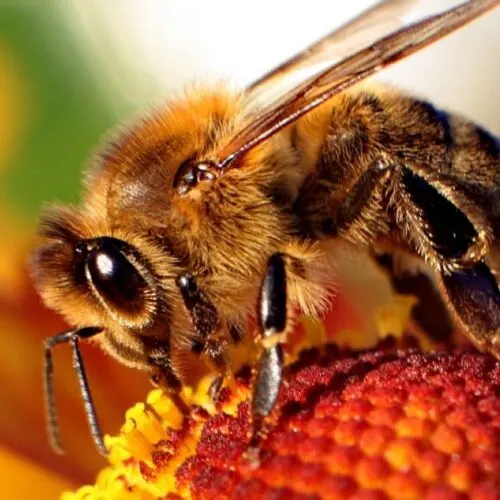
High-speed video has revealed how a honey bee’s detached stinger can keep pumping venom after the worker bee flies away. The finding explains how the stinger works as an autonomous delivery system and adds detail to how different animals have evolved to inject venom.
The stinger’s two lancets slide back and forth inside a chamber, while flexible valves attached to them inflate on each downstroke to push venom forward and deflate on the upstroke. Their alternating, piston-like action produces a continuous flow and limits backflow. Researchers filmed stingers in artificial gel and found the same movement in a 3D-printed model based on micro-CT scans; they say future work could examine valve elasticity, friction and capillary action.
- A detached honey bee stinger keeps pumping venom.
- Flexible valves act as two alternating pistons.
- High-speed footage and a 3D-printed model confirmed the mechanism.
New here? Start with this
Honey bees use their stingers to defend themselves. A worker bee’s stinger has two slender parts, called lancets, that move against each other and help drive venom into the target.
In honey bees, the stinger can remain in the skin after the bee flies away. Its venom-delivery parts can keep working on their own, so removing the stinger promptly can limit how much venom enters.
Researchers study how different animals deliver venom to understand how these systems work and evolved. The bee’s stinger is one example of an injection mechanism built from moving parts rather than a single pump.
Read the full article at the source →
Originally published by Ars Technica as “High-speed video reveals how honey bee stingers pump venom”.