Highest paid world leader to get salary increase of $1 million
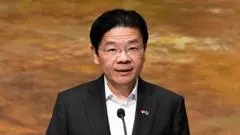
Singapore's government is raising the salaries of its prime minister and other ministers, cementing Lawrence Wong's position as the world's highest-paid political leader. Wong's pay package will rise by S$1.4 million (roughly $1.1m; £818,000) to S$3.6 million a year, an increase of more than 60%, though he has pledged to donate the additional amount to charity over the next five years. The government argues higher pay is needed to attract top talent into politics and to deter corruption, but the move has drawn criticism amid public concern over job security and living costs.
Wong's current S$2.2 million salary already dwarfs that of other world leaders, including Hong Kong's John Lee ($719,000), Switzerland's Guy Parmelin ($606,000), US President Donald Trump ($400,000) and British PM Andy Burnham ($230,000). Ministers' base pay will rise from around S$1.1m to S$1.2m, potentially reaching S$1.35m with performance-linked increases tied to targets such as unemployment, income growth and GDP. The issue has long been contentious in Singapore, contributing to the ruling People's Action Party's worst election result in 2011 and a subsequent pay cut in 2012; this time, criticism has focused on the timing, given recent retrenchments have hit a five-year high alongside broader concerns about inflation and jobs for graduates.
In short
- Singapore PM Lawrence Wong's pay rises over 60% to S$3.6m annually
- He will donate the increase to charity over five years
- Move criticised amid rising living costs and record retrenchments
Steelman: both sides, in good faith
The strongest fair case each way — we don't pick a winner.
The case for
Supporters argue that Singapore needs to offer competitive pay to attract capable people from business and public service into demanding political roles, and that fair, transparent salaries can reduce incentives for corruption. They may also point to performance-linked ministerial pay as a way to connect compensation with outcomes, while Wong’s pledge to give the increase to charity may reassure some about his personal motives.
The case against
Critics argue that a rise of more than 60% is hard to justify when households are facing higher living costs and workers are confronting job insecurity and retrenchments. They may question whether exceptionally high salaries are necessary to recruit honest, capable leaders, and see the timing as insensitive when many people are worried about their own prospects.
Explained simply
Singapore is a city-state in south-east Asia, governed by the People’s Action Party, which has been in power since independence. Lawrence Wong became prime minister in 2024, succeeding Lee Hsien Loong, who had led the country for two decades.
Singapore sets public-sector pay at levels it says can attract skilled people into government and reduce the risk of corruption. Ministers’ salaries can also be linked to measures such as economic growth and unemployment, while the prime minister’s pay is tied to the ministerial scale.
The level of political pay has been debated for years: public criticism contributed to a cut in ministers’ salaries in 2012. The debate touches on how Singapore balances recruiting for government with public expectations, especially when households are concerned about living costs and jobs.