Horror as buses are destroyed by Russian strike, killing at least 30 passengers in Ukrainian frontline town
Developing story first seen 18 hours ago
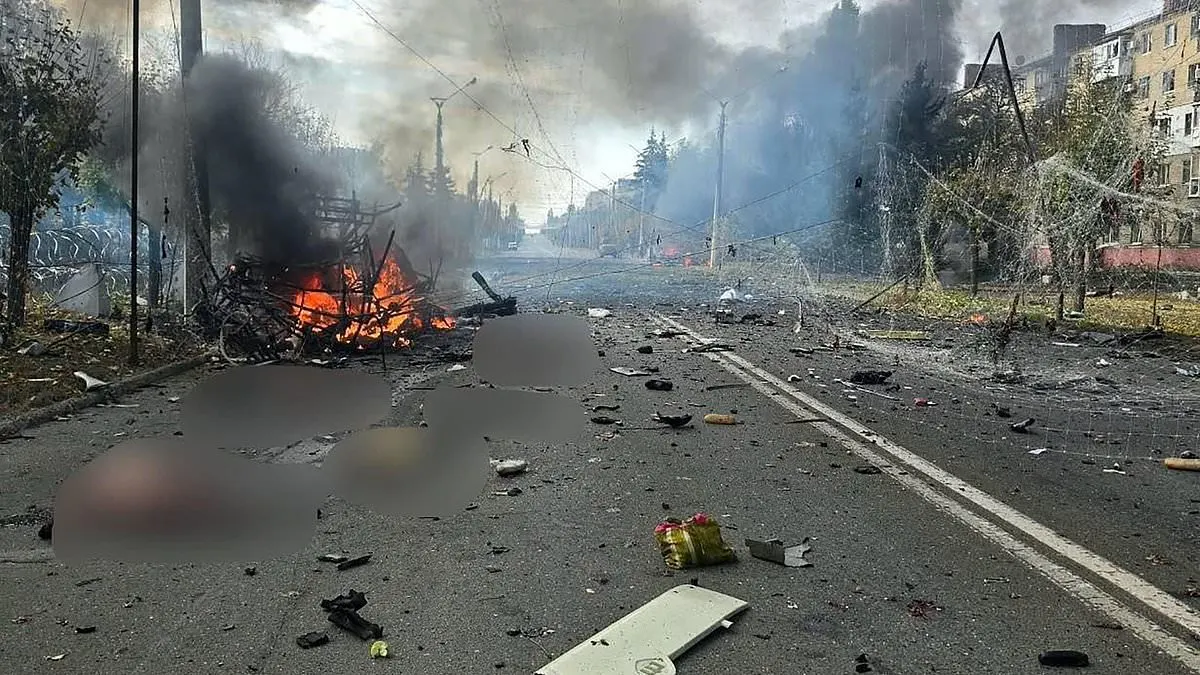
The key new information is that at least 33 people were killed and dozens injured when a Russian glide bomb struck two passenger buses in Kramatorsk on Thursday morning. The attack hit a frontline city in eastern Ukraine, where authorities said there were no military targets at the site, highlighting the danger to civilians from Russia’s continuing aerial campaign.
Kramatorsk is a major logistics hub for Ukrainian forces and part of the area known as the “fortress belt” in Donetsk, which Ukraine is trying to hold. The strike followed a missile attack on an apartment block in Chernigiv that killed 22 people, including five children; President Volodymyr Zelensky had warned of a possible large-scale Russian attack. Ukraine says shortages of Patriot air-defence ammunition leave it unable to stop some Russian ballistic missiles, while peace efforts offer little prospect of immediate relief.
- At least 33 people died when two buses were struck in Kramatorsk.
- The attack hit a key Ukrainian hub near the eastern frontline.
- Ukraine faces limits in defending against Russia’s aerial strikes.
New here? Start with this
Russia invaded Ukraine in February 2022, and fighting has continued ever since, though combat on the ground has largely stalled over the past four years. Rather than making territorial gains, Russia has increasingly turned to aerial bombardment, using long-range missiles, glide bombs and drones to strike targets across Ukraine. These attacks affect both military installations and civilian areas.
Kramatorsk is a major city in the Donetsk region of eastern Ukraine, positioned near the front lines of the conflict. It has become a key logistics centre for Ukrainian military operations and remains a focal point for Russian strikes. The city's location and strategic importance make it a regular target, putting its civilian population in considerable danger.
Ukraine has struggled to defend against this aerial campaign because it lacks sufficient ammunition for its American-supplied air-defence systems. Russia's ballistic missiles and drone attacks are difficult to intercept, allowing strikes to reach populated areas that might otherwise be safer. This disparity in air power has made civilian populations particularly vulnerable throughout the war.
Both sides, in good faith
The strongest fair case each way — we don't pick a winner.
The case for
Kramatorsk functions as a critical logistics hub supplying Ukrainian military operations, making its transport infrastructure a legitimate military target under international law. International humanitarian law permits attacks on military objectives in populated areas if the anticipated military advantage justifies civilian casualties; Russia would argue such strikes are lawful military operations and that Ukraine bears responsibility for concentrating military logistics in civilian areas.
The case against
Civilian buses are protected under international humanitarian law and cannot be targeted regardless of location; the direct strike on buses indicates targeting of civilians rather than military infrastructure. The pattern of intensive bombardment of populated Kramatorsk causing mounting civilian casualties suggests either deliberate targeting of civilians or reckless indifference to civilian protection, both grave violations of international humanitarian law.